
Estonia has produced more startups and unicorns per capita than almost any other country in the world. From a nation of just 1.3 million people have emerged globally significant companies including Skype, Wise (formerly TransferWise), Bolt, Pipedrive, and Veriff, collectively valued at tens of billions of euros. This success is not accidental. It reflects decades of investment in digital infrastructure, a culture of entrepreneurship forged in the post-Soviet transition, government programs designed to support innovation, and a regulatory environment that makes starting and scaling a technology company straightforward.
This guide examines Estonia's startup ecosystem in detail as of 2026, covering the startup visa program, government support initiatives, accelerators and incubators, venture capital funding, and the practical infrastructure that makes Estonia an effective base for building a technology company. For founders considering Estonia as their startup home, this analysis provides the information needed to evaluate the opportunity realistically.
The Startup Visa
Overview
Estonia's startup visa is a temporary residence permit (TRP) specifically designed for non-EU/EEA founders who want to establish and build a scalable technology startup in Estonia. Unlike e-Residency, which provides only digital access, the startup visa grants physical residency rights, allowing founders to live and work in Estonia.
The visa was introduced in 2017 as part of Estonia's broader strategy to attract international talent to its startup ecosystem. It provides an 18-month residence permit with the possibility of extension, creating a pathway for founders to establish their company, develop their product, and potentially transition to long-term residency.
Eligibility Requirements
To qualify for the startup visa, applicants must meet several criteria:
Startup definition: The business must be a startup in the Estonian legal sense, meaning it is technology-driven, innovative, and designed for scalable growth. Traditional businesses (restaurants, consulting firms, import/export) do not qualify.
Startup Committee evaluation: The business idea must be positively evaluated by the Estonian Startup Committee, an expert panel that assesses the viability, scalability, and innovation of proposed ventures.
Financial resources: Applicants must demonstrate sufficient financial resources to support themselves in Estonia during the initial period. The specific amount varies but is generally aligned with the Estonian cost of living.
Clean background: Standard immigration checks including criminal background verification.
The Startup Committee evaluation is the critical gatekeeping step. The committee looks for genuine innovation, a clear technology component, a scalable business model, and a founding team capable of execution. Ideas that are incremental improvements to existing services, or businesses that rely primarily on local physical operations, are typically rejected. The committee publishes its evaluation criteria on the Startup Estonia website, and applicants are encouraged to review successful applications for guidance.
Application Process
| Step | Description | Timeline |
|---|---|---|
| Startup Committee evaluation | Submit business plan for expert review | 2-4 weeks |
| Residence permit application | Apply through Police and Border Guard Board | 1-2 months |
| Document preparation | Passport, photos, financial proof, insurance | Concurrent |
| Visa issuance | Receive startup visa TRP | Upon approval |
| Arrival and registration | Register address in Estonia, obtain ID card | Within 30 days of arrival |
Duration and Extension
The initial startup visa grants an 18-month temporary residence permit. This can be extended if the startup demonstrates progress (revenue, funding, team growth, product development). After the initial period, founders may transition to other residence permit categories such as the entrepreneur TRP or apply for long-term residence if they meet the general requirements.
For a detailed comparison of residence options, see our guide on Estonia e-Residency vs physical residency.
Startup Estonia
What It Does
Startup Estonia is a government initiative under Enterprise Estonia (EAS) dedicated to developing and promoting Estonia's startup ecosystem. It serves as the central coordination body for startup-related policy, programs, and international promotion. Key functions include:
- Managing the Startup Committee and startup visa program
- Maintaining the startup database and ecosystem mapping
- Organizing events and connecting founders with resources
- Representing the Estonian ecosystem internationally
- Publishing ecosystem reports and data
Programs and Resources
Startup Estonia provides several direct support programs:
Startup visa support: Guidance through the visa application process, including preparation for the Startup Committee evaluation.
Startup database: A comprehensive database of Estonian startups, investors, and service providers that facilitates connections within the ecosystem.
Event calendar: A coordinated schedule of startup events, meetups, pitch competitions, and networking opportunities across Estonia.
International promotion: Representation at major international startup events (Web Summit, Slush, TechCrunch Disrupt) to attract talent and investment to Estonia.
Accelerators and Incubators
Startup Wise Guys
Startup Wise Guys is one of the leading B2B startup accelerators in Europe, headquartered in Tallinn. Founded in 2012, it has accelerated over 300 startups from more than 50 countries.
Investment: EUR 50,000 to EUR 100,000 per startup Equity taken: Typically 6-10% Program duration: 3-5 months Focus areas: B2B SaaS, fintech, sustainability, defense tech Selection: Competitive application process, approximately 2-3% acceptance rate
The program includes intensive mentorship, access to a network of corporate partners, fundraising preparation, and demo day presentations to international investors.
Buildit Accelerator
Based in Tartu, Estonia's second-largest city and home to the University of Tartu, Buildit focuses on hardware, IoT (Internet of Things), and deep tech startups.
Investment: EUR 15,000 to EUR 36,000 Program duration: 3 months Focus areas: Hardware, IoT, robotics, deep technology Unique offering: Access to prototyping facilities and engineering resources at the University of Tartu
Prototron
Prototron is a prototype development fund that provides grants to help early-stage startups build their first prototypes. It is funded by the major Estonian banks (Swedbank, SEB, LHV) and coordinated by Tallinn University of Technology.
Grant amounts: Up to EUR 35,000 per project Equity: No equity taken (grant, not investment) Eligibility: Teams with innovative technology ideas at the prototype stage Application: Competitive process with pitch events
Garage48
Garage48 organizes intensive 48-hour hackathon-style events where teams form, build prototypes, and pitch their ideas. While not a traditional accelerator, Garage48 events have produced several successful Estonian startups and serve as a talent pool and idea generation engine for the broader ecosystem.
Estonia's accelerator ecosystem punches well above its weight for a country of its size. The combination of local programs (Startup Wise Guys, Buildit, Prototron) and access to pan-European accelerator networks gives Estonian founders multiple pathways to early-stage funding and mentorship. The key advantage over larger ecosystems is accessibility: founders can realistically connect with key ecosystem players, investors, and mentors within weeks of arriving in Estonia.
Venture Capital and Funding
SmartCap
SmartCap (formerly Estonian Development Fund's VC arm) is Estonia's state-backed fund of funds that invests in private venture capital funds focusing on Estonian and Baltic startups. Rather than investing directly in startups, SmartCap invests in VC funds that then make direct investments, leveraging public capital to attract private investment into the ecosystem.
SmartCap's portfolio funds include several of Estonia's most active VC investors, amplifying the available funding pool for Estonian startups.
Enterprise Estonia (EAS) Grants
Enterprise Estonia offers various grants and support programs for companies at different stages:
| Program | Amount | Purpose |
|---|---|---|
| Innovation voucher | Up to EUR 6,000 | External expertise for product development |
| Development voucher | Up to EUR 20,000 | Product and service development |
| Export development | Varies | International market entry support |
| Digital transformation | Varies | Adoption of digital technologies |
| Startup grant | Up to EUR 15,000 | Early-stage startup support |
Private VC Firms
Estonia's private VC ecosystem includes several active firms:
Karma Ventures: Technology-focused VC based in Tallinn, investing across the Baltics and Nordics. Focus on deep tech, enterprise software, and fintech.
Tera Ventures: Early-stage VC investing in Baltic startups, with a focus on SaaS, marketplaces, and developer tools.
Superangel: Angel-stage investment fund backing pre-seed and seed stage startups with Estonian connections.
Lemonade Stand: Micro-VC focusing on very early stage (pre-seed) investments in Baltic startups.
Change Ventures: Baltic-focused VC investing at seed and Series A stages across technology sectors.
Investment Statistics
Estonia's venture capital performance is remarkable relative to its population:
| Metric | Value |
|---|---|
| Total VC invested (2024) | Approximately EUR 1.2 billion |
| VC per capita | Among highest in Europe |
| Number of unicorns produced | 10+ |
| Number of active startups | 1,500+ |
| Startup employment | Over 10,000 |
| Percentage of GDP from startups | Approximately 6% |
EU Funding Programs
Estonian startups can access pan-European funding programs:
Horizon Europe: The EU's main research and innovation program, with over EUR 95 billion in funding for 2021-2027. Estonian companies and research institutions can apply individually or as part of international consortia.
EIC Accelerator: The European Innovation Council's flagship program provides grants of up to EUR 2.5 million and equity investments of up to EUR 15 million for breakthrough innovations.
InvestEU: Provides guarantees backing investment and lending to innovative companies through financial intermediaries.
Digital Europe Programme: Funding for digital infrastructure, AI, cybersecurity, and digital skills relevant to Estonia's technology sector.
Estonian startups benefit from a favorable funding environment where government support (SmartCap, EAS grants), European programs (Horizon, EIC), and private venture capital all operate in a concentrated ecosystem. The small size of the market means founders can access multiple funding channels efficiently, and the strong track record of Estonian exits (Skype to Microsoft, Pipedrive to Vista Equity) gives international investors confidence in the ecosystem.
Physical Infrastructure
Tallinn
Tallinn is the primary hub of Estonia's startup ecosystem. The city offers:
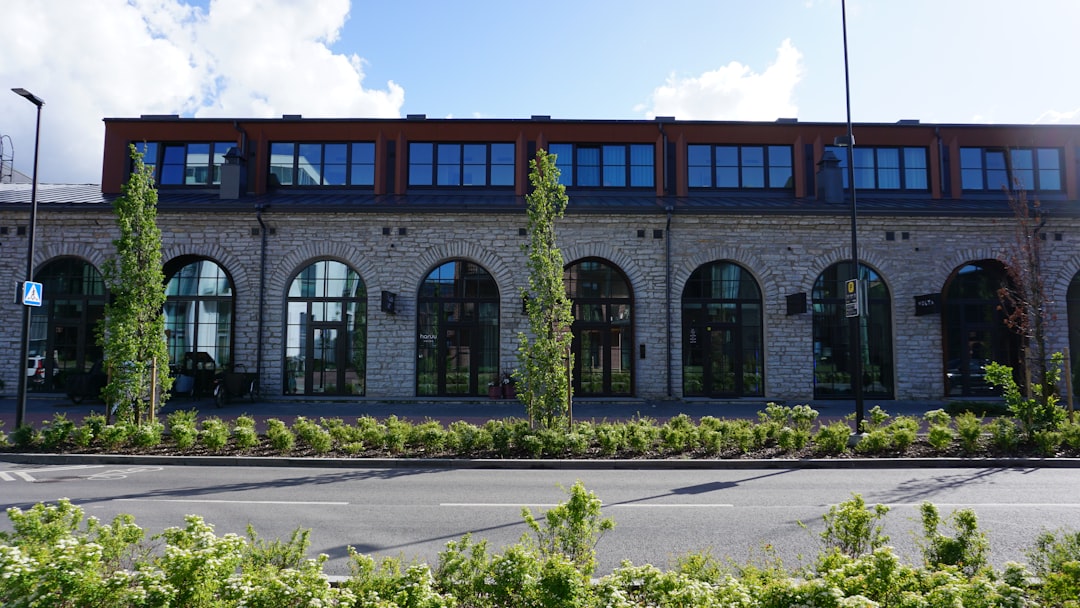
- Telliskivi Creative City: A converted industrial complex housing co-working spaces, startups, and creative businesses
- Tehnopol Science and Business Park: Estonia's largest technology park, adjacent to Tallinn University of Technology
- Lift99 Hub: A prominent co-working space specifically catering to startups and the e-Residency community
- Startup incubators: Multiple university-affiliated and private incubators
Tartu
Estonia's second city and intellectual capital, home to the University of Tartu and the University of Tartu's UT Idea Lab. Tartu hosts Buildit Accelerator and a growing cluster of deep tech and biotech startups.
Cost of Living
Estonia offers a significantly lower cost of living compared to Western European startup hubs, while providing comparable digital infrastructure and quality of life.
| Expense | Tallinn Monthly (EUR) | Helsinki Monthly (EUR) | Berlin Monthly (EUR) |
|---|---|---|---|
| One-bedroom apartment | 600 - 900 | 1,000 - 1,500 | 800 - 1,200 |
| Co-working space | 150 - 300 | 300 - 500 | 200 - 400 |
| Monthly transport pass | 30 (free for residents) | 62 | 86 |
| Meal at mid-range restaurant | 12 - 20 | 18 - 30 | 12 - 20 |
| Internet (fiber, unlimited) | 25 - 35 | 30 - 45 | 30 - 40 |
Talent and Workforce
Technical Talent Pool
Estonia produces a disproportionately high number of technical graduates relative to its population. The University of Tartu and Tallinn University of Technology are the primary sources, supplemented by Tallinn University and several professional higher education institutions. Estonia's education system consistently ranks highly in PISA assessments, particularly in science and mathematics.
International Talent
The startup visa and digital nomad visa programs bring international talent into the Estonian ecosystem. English proficiency is high among Estonian professionals, particularly in the technology sector. Russian speakers also constitute a significant portion of the technical talent pool.
Talent Challenges
Despite its strengths, Estonia faces talent constraints due to its small population. Competition for experienced software engineers is intense, and salary expectations in the startup sector have risen to approach Nordic levels. Many Estonian startups address this by hiring remote international teams while maintaining an Estonian headquarters.
Success Stories
Estonia's startup ecosystem has produced a remarkable number of successful companies:
- Wise (formerly TransferWise): International money transfer platform, valued at over EUR 9 billion
- Bolt: Ride-hailing and delivery platform operating in 45+ countries
- Pipedrive: CRM platform acquired by Vista Equity Partners for approximately USD 1.5 billion
- Veriff: Identity verification platform serving major financial institutions globally
- Skeleton Technologies: Ultracapacitor manufacturer for energy storage solutions
- Starship Technologies: Autonomous delivery robot company operating in multiple countries
- Zego: Insurance technology company for the gig economy
- Glia: Digital customer service platform serving financial institutions
These success stories create a virtuous cycle: successful founders become investors and mentors, their employees start new companies, and international talent is attracted by the demonstrated track record.
Conclusion
Estonia's startup ecosystem offers a compelling combination of government support, accessible funding, low operating costs, digital infrastructure, and a culture of entrepreneurship that has produced world-class technology companies. The startup visa provides a practical pathway for non-EU founders to establish themselves in the ecosystem, while the broader support infrastructure (accelerators, grants, VC funds) provides resources at every stage of company development.
The ecosystem's primary limitation is talent availability, constrained by Estonia's small population. However, the remote-friendly culture and international reputation increasingly attract global talent, and the efficiency of operating in a small, interconnected ecosystem often compensates for the smaller absolute talent pool.
For related guidance, see our articles on Estonia startup visa details, R&D incentives and grants, and how to register a company in Estonia.
Related Corpy Resources
- Estonia business guide for a full overview of doing business in Estonia
- Free zones in Estonia for related articles on this topic
- Company formation in Estonia to explore adjacent considerations
- Corporate tax in Estonia to explore adjacent considerations
- Business laws in Estonia to explore adjacent considerations
References
- Enterprise Estonia (EAS). https://www.eas.ee/
- Invest in Estonia. https://investinestonia.com/
- OECD Inclusive Framework on BEPS. https://www.oecd.org/tax/beps/
- World Bank Doing Business Archive. https://archive.doingbusiness.org/
Frequently Asked Questions
What is the Estonia startup visa?
The Estonia startup visa is a temporary residence permit that allows non-EU founders to live and work in Estonia for up to 18 months while building a scalable startup. Applicants must have their startup idea evaluated and approved by the Startup Committee, demonstrate that their business is technology-driven and scalable, and show sufficient financial resources. The visa can be extended and may lead to long-term residency. It is distinct from e-Residency, which provides only digital access without physical residency rights.
What funding is available for startups in Estonia?
Estonian startups can access funding from multiple sources: SmartCap (state-backed VC fund of funds), Enterprise Estonia grants and innovation vouchers, Prototron prototype development funding, EU programs like Horizon Europe and EIC Accelerator, private VC firms (Karma Ventures, Tera Ventures, Superangel), and international investors attracted to Estonia's tech reputation. Total VC investment into Estonian startups has exceeded EUR 1 billion annually in recent years, an exceptional figure for a country of 1.3 million people.
What are the top accelerators in Estonia?
The leading startup accelerators in Estonia include Startup Wise Guys (one of Europe's top B2B SaaS accelerators, offering EUR 50,000-100,000 investment), Buildit Accelerator (hardware and IoT focused, based in Tartu), Prototron (prototype development grants up to EUR 35,000), and Garage48 (hackathon-style startup weekends). International accelerators like Techstars and Plug and Play also run programs connected to the Estonian ecosystem.