
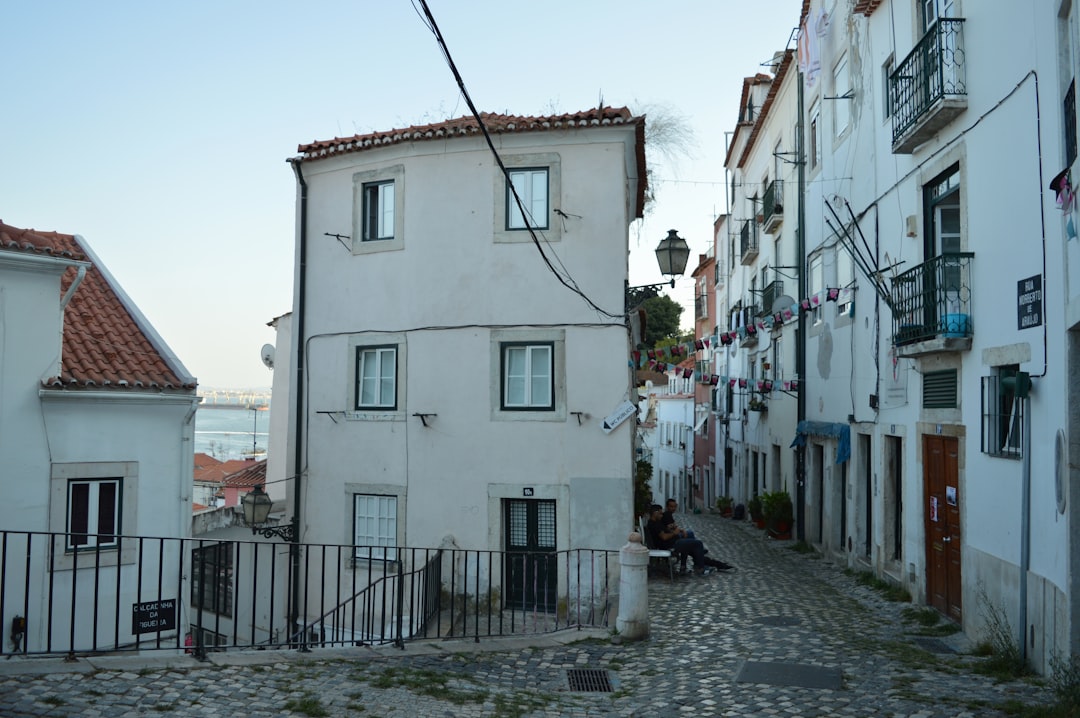
Portugal introduced its Digital Nomad Visa in late 2022, joining a growing number of countries offering dedicated residency pathways for remote workers. The visa targets non-EU nationals who earn their income from employers or clients based outside Portugal and wish to live in Portugal while working remotely. With a minimum income requirement of four times the Portuguese minimum wage (approximately EUR 3,280 per month), the visa is designed for skilled professionals with established remote careers rather than early-stage freelancers or digital nomads living on modest budgets.
Portugal's appeal for digital nomads extends well beyond the visa itself: the combination of affordable cost of living relative to Western Europe, high-quality internet infrastructure, a growing co-working ecosystem, year-round mild climate, safety, and an English-speaking professional environment has made Lisbon and Porto among the most popular remote work destinations globally.
This guide covers the Digital Nomad Visa requirements, application process, tax considerations, and practical aspects of remote work in Portugal as of 2026.
For the lower-income D7 visa alternative, see Portugal D7 Visa. For citizenship, see Portugal Citizenship by Naturalization.
Eligibility Requirements
Income Threshold
The primary eligibility criterion is a minimum monthly income of four times the Portuguese minimum wage. Based on the 2026 minimum wage of EUR 870:
Minimum monthly income: approximately EUR 3,280 (EUR 39,360 annually)
The income must be derived from:
- Employment with a non-Portuguese company
- Freelance or consulting work for non-Portuguese clients
- Self-employment activities serving non-Portuguese markets
Income from Portuguese sources does not qualify for this visa.
Employment or Contract Documentation
Applicants must provide evidence of their remote work arrangement:
| Employment Type | Required Documentation |
|---|---|
| Employed (remote employee) | Employment contract specifying remote work authorization, employer letter confirming the arrangement |
| Freelance/contractor | Client contracts or agreements, invoices for the past 6-12 months, tax returns showing self-employment income |
| Business owner (foreign company) | Company registration documents, evidence of income from the company, shareholder/director documentation |
Other Requirements
| Requirement | Details |
|---|---|
| Nationality | Non-EU/EEA national |
| Criminal record | Clean record from country of origin and any country of residence in past year |
| Health insurance | Valid in Portugal for the duration of the visa |
| Tax compliance | No outstanding tax obligations in country of origin |
| Portuguese NIF | Must be obtained before or during application |
Application Process
Two Pathways
Portugal offers two mechanisms for digital nomads:
1. Temporary Stay Visa (for stays up to 1 year):
- Applied for at the Portuguese consulate
- Valid for 1 year
- Does not require AIMA residence permit process
- Suitable for nomads who want a fixed period in Portugal
2. Residence Visa (D8) (for longer-term residence):
- Applied for at the Portuguese consulate
- Followed by residence permit application at AIMA
- Initial permit for 2 years, renewable for 3-year periods
- Path to permanent residency and citizenship
Application Steps
| Step | Action | Timeline |
|---|---|---|
| 1 | Obtain Portuguese NIF (via fiscal representative if non-resident) | 1-2 weeks |
| 2 | Gather and apostille all required documents | 2-6 weeks |
| 3 | Schedule consular appointment | 1-4 weeks (varies by location) |
| 4 | Submit application at Portuguese consulate | 1 day |
| 5 | Visa processing | 30-60 days |
| 6 | Enter Portugal with visa | Within validity period |
| 7 | Apply for residence permit at AIMA (D8 route only) | 2-6 months for appointment |
| 8 | Receive residence card | 2-4 weeks after appointment |
Fees
| Fee | Amount |
|---|---|
| Visa application fee | EUR 90 |
| Residence permit fee (if applicable) | EUR 72 |
| NIF application (via fiscal representative) | EUR 150-300 |
| Document apostille and translation | EUR 200-500 |
| Health insurance (annual) | EUR 600-2,400 |
| Total initial costs | EUR 1,100-3,400 |
The Digital Nomad Visa application process is relatively straightforward compared to other Portuguese visa categories, but consular processing times vary dramatically by location. Consulates in countries with high demand for Portuguese visas (Brazil, India, South Africa, the United States) may have longer waiting times for appointments and slower processing. Applicants should begin the documentation process well in advance and submit their application at least 3 months before their intended arrival date. Using a Portuguese immigration lawyer can accelerate the process and reduce the risk of document-related delays.
Tax Implications
Tax Residency
Digital nomad visa holders who spend 183 or more days per year in Portugal become Portuguese tax residents and are subject to Portuguese income tax (IRS) on their worldwide income.
Standard Taxation
Under the standard progressive IRS regime, remote work income is taxed at rates ranging from 14.5% to 48%, depending on income level. Social security contributions may also apply.
IFICI Regime
Digital nomad visa holders who meet the IFICI criteria (not been Portuguese tax residents in the previous 5 years, engaged in qualifying activities) may access the 20% flat tax rate on Portuguese-source income from qualifying professional activities. However, the IFICI is more restrictive than the former NHR and may not cover all types of remote work.
Double Taxation
Remote workers remain potentially subject to taxation in both Portugal (as tax residents) and their employer's country (as the source of income). Double tax treaties between Portugal and the employer's country determine how this conflict is resolved. In most cases, employment income is taxable in the country of residence (Portugal), with the source country providing a credit or exemption.
| Scenario | Tax Treatment |
|---|---|
| Remote employee of US company, living in Portugal | Portuguese tax resident; US-Portugal treaty allocates taxing rights to Portugal; US may withhold but provides credit |
| Remote employee of UK company, living in Portugal | Portuguese tax resident; UK-Portugal treaty allocates to Portugal |
| Freelancer with global clients, living in Portugal | Portuguese tax resident; taxed on worldwide income in Portugal; credits for foreign tax paid |
Tax planning for digital nomads is significantly more complex than many applicants anticipate. The interaction between Portuguese tax residency, the NHR/IFICI regime, double tax treaties, social security coordination agreements, and the tax rules of the employer's jurisdiction creates a multi-layered compliance challenge. Digital nomads should obtain professional tax advice from an advisor specializing in international personal tax before establishing Portuguese tax residency. The cost of proper tax planning (typically EUR 500-2,000 for initial consultation and structuring) is modest compared to the potential cost of unexpected tax liabilities or penalties for non-compliance.
Practical Aspects of Remote Work in Portugal
Internet and Connectivity
Portugal has excellent internet infrastructure for remote work:
| Service | Typical Speed | Monthly Cost |
|---|---|---|
| Home fiber (NOS, MEO, Vodafone) | 200-1000 Mbps | EUR 30-60 |
| Mobile data (unlimited) | 4G/5G | EUR 20-40 |
| Co-working space internet | 100-500 Mbps | Included in membership |
Fiber coverage is extensive in urban areas (Lisbon, Porto, Braga, Coimbra, Faro) and increasingly available in suburban and rural areas.
Co-Working Spaces
| City | Notable Spaces | Monthly Cost (Hot Desk) |
|---|---|---|
| Lisbon | Second Home, Outsite, Heden, Selina | EUR 150-350 |
| Porto | CRU, Porto i/o, Selina | EUR 100-250 |
| Madeira (Funchal) | Digital Nomads Madeira, Cowork Funchal | EUR 90-200 |
| Algarve (Faro/Lagos) | Various seasonal spaces | EUR 80-200 |
| Ericeira | Surf-focused co-working spaces | EUR 120-250 |
Cost of Living Comparison
| Expense | Lisbon | Porto | Rural/Small City |
|---|---|---|---|
| 1-bedroom apartment (city center) | EUR 900-1,500 | EUR 600-1,000 | EUR 350-600 |
| 1-bedroom apartment (outside center) | EUR 600-1,000 | EUR 450-750 | EUR 250-450 |
| Meal at mid-range restaurant | EUR 12-20 | EUR 10-18 | EUR 8-15 |
| Monthly groceries (1 person) | EUR 250-350 | EUR 200-300 | EUR 180-250 |
| Monthly public transport | EUR 40-50 | EUR 30-40 | EUR 20-30 |
| Gym membership | EUR 30-50 | EUR 25-45 | EUR 20-35 |
| Total monthly (single person, moderate) | EUR 1,800-3,000 | EUR 1,300-2,200 | EUR 900-1,500 |
Time Zone Advantages
Portugal operates on Western European Time (WET/WEST), which provides excellent overlap with:
- UK and Ireland: Same time zone (GMT/BST) or 0-1 hour difference
- Western Europe: 1-2 hours behind CET
- US East Coast: 5 hours ahead (significant overlap for afternoon work)
- Brazil: 3-4 hours ahead (strong overlap for business hours)
This time zone positioning makes Portugal particularly attractive for remote workers serving US, UK, and Brazilian clients or employers.
Digital Nomad Community
Portugal, particularly Lisbon, has one of the largest and most established digital nomad communities in Europe:
- Active meetup groups and networking events
- Facebook and Slack communities for nomads in Portugal
- Regular tech and startup events (beyond Web Summit)
- International schools for families
- Multilingual environment (English widely spoken in professional settings)
Popular Neighborhoods for Digital Nomads
Lisbon:
- Principe Real: Trendy, walkable, many cafes with wifi
- Santos/Cais do Sodre: Waterfront, co-working spaces, nightlife
- Alcantara/LX Factory: Creative area, coworking, affordable
- Campo de Ourique: Village-like, quiet, good cafes
Porto:
- Cedofeita/Boavista: Central, good value, hip scene
- Foz do Douro: Beach access, relaxed, good cafes
- Baixa/Ribeira: Historic, tourist-heavy but walkable
Renewal and Long-Term Residency
Renewal Requirements
To renew the Digital Nomad Visa or residence permit:
- Continued employment or freelance activity with non-Portuguese entities
- Income maintained at or above the threshold
- Portuguese tax compliance (filed tax returns)
- No criminal record
- Valid health insurance
Path to Permanent Residency and Citizenship
| Milestone | Timeline | Requirements |
|---|---|---|
| Initial visa | Year 0 | Application and approval |
| First renewal | Year 1 (temporary) or Year 2 (residence) | Continued eligibility |
| Permanent residency | After 5 years | A2 Portuguese, clean record |
| Citizenship | After 5 years | A2 Portuguese, clean record, ties to Portugal |
For detailed citizenship information, see Portugal Citizenship by Naturalization.
Portugal's Digital Nomad Visa is best viewed not as a temporary travel document but as the first step in a potential long-term residency and citizenship journey. The relatively high income threshold (EUR 3,280/month) filters for applicants who are likely to contribute positively to the Portuguese economy and tax base. For remote workers who commit to living in Portugal, the combination of EU residency, access to the Portuguese and EU healthcare systems, a 5-year path to EU citizenship, and a favorable quality of life makes the Digital Nomad Visa a strategic decision with long-term benefits that extend far beyond the convenience of working from a Lisbon cafe.
For starting a business alongside remote work, see How to Register a Company in Portugal. For banking setup, see Opening a Business Bank Account in Portugal.
Related Corpy Resources
- Portugal business guide for a full overview of doing business in Portugal
- Visas & residency in Portugal for related articles on this topic
- Company formation in Portugal to explore adjacent considerations
- Corporate tax in Portugal to explore adjacent considerations
- Business laws in Portugal to explore adjacent considerations
References
- SEF Serviço de Estrangeiros e Fronteiras. https://imigrante.sef.pt/
- Portugal Golden Visa (AIMA). https://www.aima.gov.pt/
- OECD Inclusive Framework on BEPS. https://www.oecd.org/tax/beps/
- World Bank Doing Business Archive. https://archive.doingbusiness.org/
Frequently Asked Questions
What is the income requirement for the Portugal Digital Nomad Visa?
The Portugal Digital Nomad Visa requires a minimum monthly income of approximately EUR 3,280, which is four times the Portuguese minimum wage. This income must come from work performed for employers or clients based outside Portugal. Applicants must provide evidence of employment contracts or client agreements with non-Portuguese entities and bank statements demonstrating regular income at or above this threshold for the preceding months.
Can I start a business in Portugal on a Digital Nomad Visa?
The Digital Nomad Visa is specifically designed for individuals working for foreign employers or clients. Starting a Portuguese company or engaging in local business activities goes beyond the scope of this visa. However, once you obtain a residence permit, you may explore other visa categories or transition to a different residency basis that permits local business activity. For entrepreneurship in Portugal, the D7 visa or Startup Visa may be more appropriate options.
How long can I stay in Portugal with a Digital Nomad Visa?
The Digital Nomad Visa provides an initial residence permit valid for 1 year, which is renewable for successive 1-year periods as long as the income and employment requirements continue to be met. After 5 years of legal residency, holders can apply for permanent residency or Portuguese citizenship. The visa requires the holder to maintain habitual residence in Portugal, meaning extended absences may affect renewal eligibility.