

What types of residency permits are available for business owners in Turkey?
Business owners in Turkey can apply for several types of residency permits: the Short-Term Residence Permit (valid for 1 to 2 years, renewable, suitable for company owners and investors), the Long-Term Residence Permit (available after 8 consecutive years of legal residence, provides indefinite stay rights), and the Family Residence Permit (for spouses and dependents of permit holders).
Foreign nationals who own businesses in Turkey but do not require a work permit, or who need to reside in the country while their work permit is being processed, must obtain a residency permit (ikamet izni).
Turkey’s residency permit system provides several pathways for business owners, from short-term permits valid for one to two years to long-term permits granting indefinite residence after eight years of continuous legal stay.
This guide covers the complete residency permit framework for business owners in Turkey, including permit types, eligibility criteria, the ikamet application process, required documents, costs, family permits, and the path from short-term residence to long-term or permanent status, compiled specifically for foreign entrepreneurs and investors navigating the Turkish immigration system in 2026.
Work Permit vs. Residency Permit: Which Do You Need?
Before diving into residency permits, it is essential to understand when you need one versus a work permit.
Work permit (calisma izni): Required if you actively work in or manage your Turkish company. The work permit simultaneously serves as a residence permit, so you do NOT need a separate ikamet if you hold a valid work permit. See our work permit guide for details.
Residency permit (ikamet izni): Required if you live in Turkey but do not work there (passive investors, retired shareholders, family members), if you are waiting for a work permit decision and need legal residence, or if you are establishing a business and need to be present in Turkey during the setup phase before the work permit is obtained.
Many foreign business owners are confused about whether they need a work permit, a residency permit, or both. The rule is straightforward: if you perform any work in Turkey (including managing your own company), you need a work permit, which also covers your residence. If you are a passive investor or shareholder who does not work in the company, a residency permit is sufficient.
If you hold a Turquoise Card, you need neither a separate work permit nor a residency permit, as the card covers both.
Types of Residency Permits
Short-Term Residence Permit (Kisa Donem Ikamet Izni)
The short-term residence permit is the most common permit type for foreign business owners. It is issued under several categories relevant to entrepreneurs.
Business establishment purpose: For foreign nationals who own or are establishing a business in Turkey. This is the primary category for passive investors and shareholders.
Property ownership: For foreign nationals who own real estate in Turkey. If you have purchased property (whether for business or personal use), this provides an alternative basis for residence.
Investment purpose: For foreign nationals making significant investments that do not qualify for the Turquoise Card but demonstrate economic ties to Turkey.
Short-term residence permits are initially issued for up to 2 years and can be renewed. Each renewal can extend the permit for up to 2 years, allowing continuous legal residence as long as the basis for the permit remains valid.
Long-Term Residence Permit (Uzun Donem Ikamet Izni)
The long-term residence permit provides indefinite residence rights in Turkey. It is available to foreign nationals who have resided in Turkey continuously for at least 8 years on valid residence permits.
Family Residence Permit (Aile Ikamet Izni)
Family residence permits are available for the spouse and dependent children (under 18) of a foreign national holding a valid residence or work permit in Turkey.
Student Residence Permit
Relevant if a business owner’s children will attend educational institutions in Turkey. This permit type is straightforward and tied to enrollment at a Turkish educational institution.
| Permit Type | Duration | Key Requirement | Renewal |
|---|---|---|---|
| Short-term (business) | Up to 2 years | Business ownership/investment | Renewable |
| Short-term (property) | Up to 2 years | Real estate ownership | Renewable |
| Long-term | Indefinite | 8 years continuous residence | Not required |
| Family | Matches sponsor’s permit | Valid relationship to permit holder | With sponsor’s renewal |
Eligibility Requirements for Short-Term Residence
To qualify for a short-term residence permit under the business establishment category, applicants must meet the following criteria.
Valid passport: Must be valid for at least 60 days beyond the requested permit duration.
Health insurance: Mandatory health insurance coverage valid in Turkey for the entire permit period. This can be private health insurance from a Turkish insurer, international health insurance recognized in Turkey, or bilateral social security agreement coverage (for citizens of certain countries).
Financial means: Sufficient income or assets to support yourself during the residence period without relying on social assistance. There is no fixed minimum, but immigration authorities typically expect evidence of regular income or substantial savings.
Clean criminal record: No serious criminal convictions that would constitute a threat to public order or security.
Proof of purpose: Documentation supporting the reason for residence, such as company registration documents (Trade Registry Gazette, tax certificate), property ownership deed (tapu), or investment documentation.
Turkish address: A registered address in Turkey where you will reside. This address will be recorded in the address registration system (adres beyan).
The health insurance requirement is strictly enforced and is one of the most common reasons for application delays. Obtaining health insurance from a Turkish provider before applying for the residence permit is recommended, as the immigration authority specifically requires coverage valid in Turkey.
International policies may or may not be accepted depending on the insurance company and the coverage terms. Annual health insurance premiums for a standard policy range from approximately 3,000 TRY for individuals under 35 to 8,000 TRY or more for older applicants, with pricing varying by insurer and coverage level.
The Ikamet Application Process
Step 1: Online Appointment
All residence permit applications in Turkey begin with an online appointment through the Directorate General of Migration Management’s e-ikamet system (e-ikamet.goc.tr). The system is available in English and Turkish.
During the online appointment process, you will select the permit type, choose the Provincial Directorate of Migration Management where you will submit your application, select an available appointment date and time, and upload scanned copies of required documents.
Step 2: Gather Required Documents
The complete document package for a short-term residence permit (business category) includes:
| Document | Details | Notes |
|---|---|---|
| Residence permit application form | Generated by the e-ikamet system | Printed and signed |
| Passport (original + copy) | All pages with entries | Must be valid 60+ days beyond permit |
| 4 biometric photographs | White background, 50mm x 60mm | Recent, within last 6 months |
| Health insurance policy | Valid in Turkey, covers permit period | Turkish or recognized international |
| Proof of financial means | Bank statements, income documentation | Last 3-6 months |
| Proof of address | Lease agreement or property deed | Turkish address |
| Company documents | Trade Registry Gazette, tax certificate | For business establishment category |
| Fee payment receipt | Government fee payment | Paid before appointment |
Step 3: Appointment at Provincial Migration Office
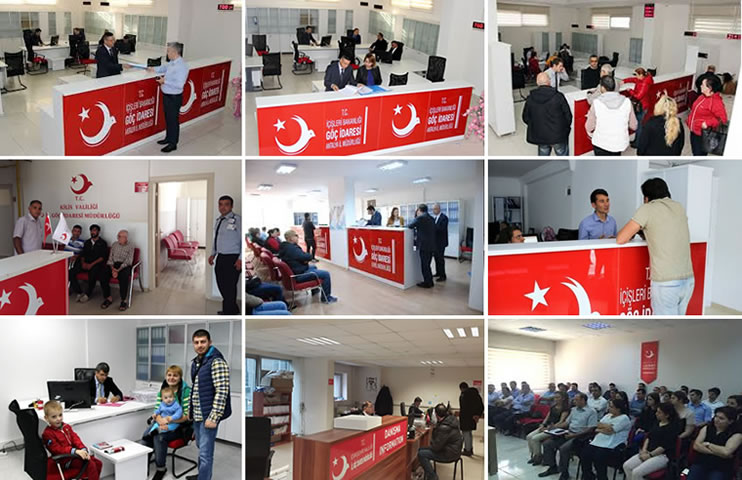
Attend your appointment at the Provincial Directorate of Migration Management (Il Goc Idaresi Mudurlugu) on the scheduled date. Bring all original documents and copies. The officer will review your documents, take your biometric data (fingerprints), and may conduct a brief interview about your reasons for residing in Turkey.
Step 4: Processing and Decision
After the appointment, the application is processed by the migration authority. Processing typically takes 30 to 90 days depending on the province and application volume. During this period, the applicant receives a “document indicating the application for a residence permit” which serves as temporary proof of legal residence while the application is pending.
Step 5: Card Delivery
Upon approval, the ikamet card is produced and delivered to the applicant’s registered address in Turkey via registered mail (PTT). The card contains the holder’s photograph, personal information, permit type, and validity dates.
Costs
Residence permit costs have several components that vary by nationality and permit duration.
| Cost Component | Amount | Notes |
|---|---|---|
| Residence permit card fee | 450 - 700 TRY | Varies by permit duration |
| Application/service fee | 200 - 500 TRY | Administrative processing |
| Residence permit tax (harc) | $30 - $150 USD equivalent | Varies by nationality (reciprocity) |
| Health insurance (annual) | 3,000 - 8,000+ TRY | Mandatory, varies by age/coverage |
| Biometric photograph | 50 - 100 TRY | If not self-prepared |
| Sworn translation (if needed) | 500 - 1,500 TRY | For foreign-language documents |
| Notarization (if needed) | 200 - 500 TRY | For document copies |
| Total first-year cost | 5,000 - 15,000+ TRY | Excluding health insurance renewal |
The residence permit tax (harc) is determined by reciprocity agreements between Turkey and the applicant’s home country. Citizens of some countries pay minimal fees, while others face higher charges. The exact amount is calculated during the online appointment process.
Renewal Process
Short-term residence permits must be renewed before they expire. The renewal application should be submitted within 60 days before the permit’s expiration date.
The renewal process follows the same steps as the initial application: online appointment, document preparation, appointment at the migration office, and card delivery.
Required documents for renewal are similar to the initial application but also include a copy of the current (expiring) residence permit and evidence of continued eligibility (ongoing business operations, valid insurance, financial means).
Renewals are generally faster than initial applications, typically taking 2 to 6 weeks, and the applicant receives a temporary document allowing legal stay while the renewal is processed.
A critical rule for residence permit holders is the absence threshold. If you spend more than 120 consecutive days outside Turkey, or more than a total of 365 days outside Turkey during the permit period, your permit may be revoked. For business owners who travel frequently, this requires careful tracking of entry and exit dates.
Extended absences can also reset the 8-year clock for long-term residence eligibility.
Long-Term Residence: The 8-Year Path
Foreign nationals who have resided in Turkey continuously for at least 8 years on valid residence permits can apply for a long-term residence permit (uzun donem ikamet izni), which provides indefinite residence rights.
Eligibility Criteria
- 8 years of continuous legal residence in Turkey
- No social assistance received in the last 3 years
- Sufficient and stable income or assets
- Valid health insurance
- No threat to public order or national security
- Absence rule compliance throughout the 8-year period
Benefits of Long-Term Residence
Long-term residents enjoy most rights of Turkish citizens except voting and holding public office. Benefits include indefinite residence without renewal, access to public social services, exemption from certain work permit requirements, and enhanced protection against deportation.
Calculating the 8 Years
Time spent in Turkey on the following permits counts toward the 8-year requirement: short-term residence permits, family residence permits, and long-term work permits. Time spent on student residence permits counts at 50% (8 years of student residence counts as 4 years). Time spent on humanitarian residence permits does not count.
Family Permits
Foreign business owners with families can bring their spouse and dependent children to Turkey through family residence permits.
Eligibility
- Legal marriage (for spouse) or birth certificate (for children under 18)
- The sponsoring family member must hold a valid residence or work permit
- Adequate financial means to support family members
- Suitable housing in Turkey
Documents for Family Permits
In addition to standard residence permit documents, family applications require a marriage certificate (apostilled and translated) for spouses, birth certificates (apostilled and translated) for children, proof of relationship, and proof of adequate income to support all family members.
Family permits are tied to the sponsor’s permit duration and must be renewed alongside the sponsor’s renewal. If the sponsor’s permit is revoked or not renewed, family permits are also affected.
Family members holding residence permits are not automatically authorized to work in Turkey. A spouse who wishes to work must obtain a separate work permit through their employer. Children over 18 must apply for their own residence permits independent of the family permit.
Alternative Faster Paths
For business owners who find the 8-year path to long-term residence too slow, Turkey offers faster alternatives.
Citizenship by investment: With qualifying investments starting at $400,000 (property) or $500,000 (capital), foreign nationals can obtain Turkish citizenship in 3 to 6 months, which provides permanent and unconditional residence rights. See our detailed guide on Turkey citizenship by investment.
Turquoise Card: For high-value investors and exceptional professionals, the Turquoise Card provides indefinite work and residence rights without the 8-year waiting period. See our work permit guide for Turquoise Card details.
Marriage to a Turkish citizen: Foreign nationals married to Turkish citizens for at least 3 years can apply for Turkish citizenship, though this pathway has been subject to increasing scrutiny and longer processing times.
Common Issues and Solutions
Application rejection: The most common reasons for rejection are incomplete documentation, insufficient financial means, and gaps in health insurance coverage. If rejected, applicants can file an administrative appeal within 60 days.
Processing delays: Provinces with high foreign populations (Istanbul, Antalya, Ankara) typically have longer processing times. Applying in smaller provinces where the business is registered may result in faster processing.
Address registration problems: Turkey requires all residents to register their address with the Nufus Mudurlugu (civil registry). Ensure your address registration is complete before your ikamet appointment, as the migration office will verify it.
Health insurance complications: Some international health insurance policies are not accepted by migration offices. To avoid issues, obtain a policy from a Turkish insurer before your appointment.
E-devlet system technical issues: The online appointment system can experience high traffic and technical difficulties, particularly during peak application periods. If you cannot find available appointments in your preferred province, try booking during off-peak hours (early morning or late evening Turkish time) or check appointments in neighboring provinces.
Some applicants have reported better availability on weekday mornings compared to evenings and weekends.
For information on the company formation process that may trigger the need for residence, see our guide on how to register a company in Turkey. For banking setup needs, see our guide on opening a business bank account in Turkey.
Conclusion
Turkey’s residency permit system provides a clear and well-defined pathway for foreign business owners who need to establish legal residence in the country. The short-term residence permit offers renewable 2-year authorization for passive investors and shareholders, while the long-term residence permit provides indefinite rights after 8 years of continuous legal stay.
Family permits ensure that spouses and children can accompany the business owner.
The key to a smooth residency process is thorough preparation of documentation (particularly health insurance and financial proof), timely applications and renewals, and compliance with absence requirements.
For business owners planning significant long-term investments, the citizenship by investment program or Turquoise Card may provide faster and more comprehensive solutions than the standard residency pathway.
For comprehensive guidance on all aspects of establishing a business presence in Turkey, explore our guides on company registration, corporate tax, work permits, and free zone benefits.
Related Corpy Resources
- Turkey business guide for a full overview of doing business in Turkey
- Visas & residency in Turkey for related articles on this topic
- Company formation in Turkey to explore adjacent considerations
- Corporate tax in Turkey to explore adjacent considerations
- Business laws in Turkey to explore adjacent considerations