

What are the investment options for Turkish citizenship?
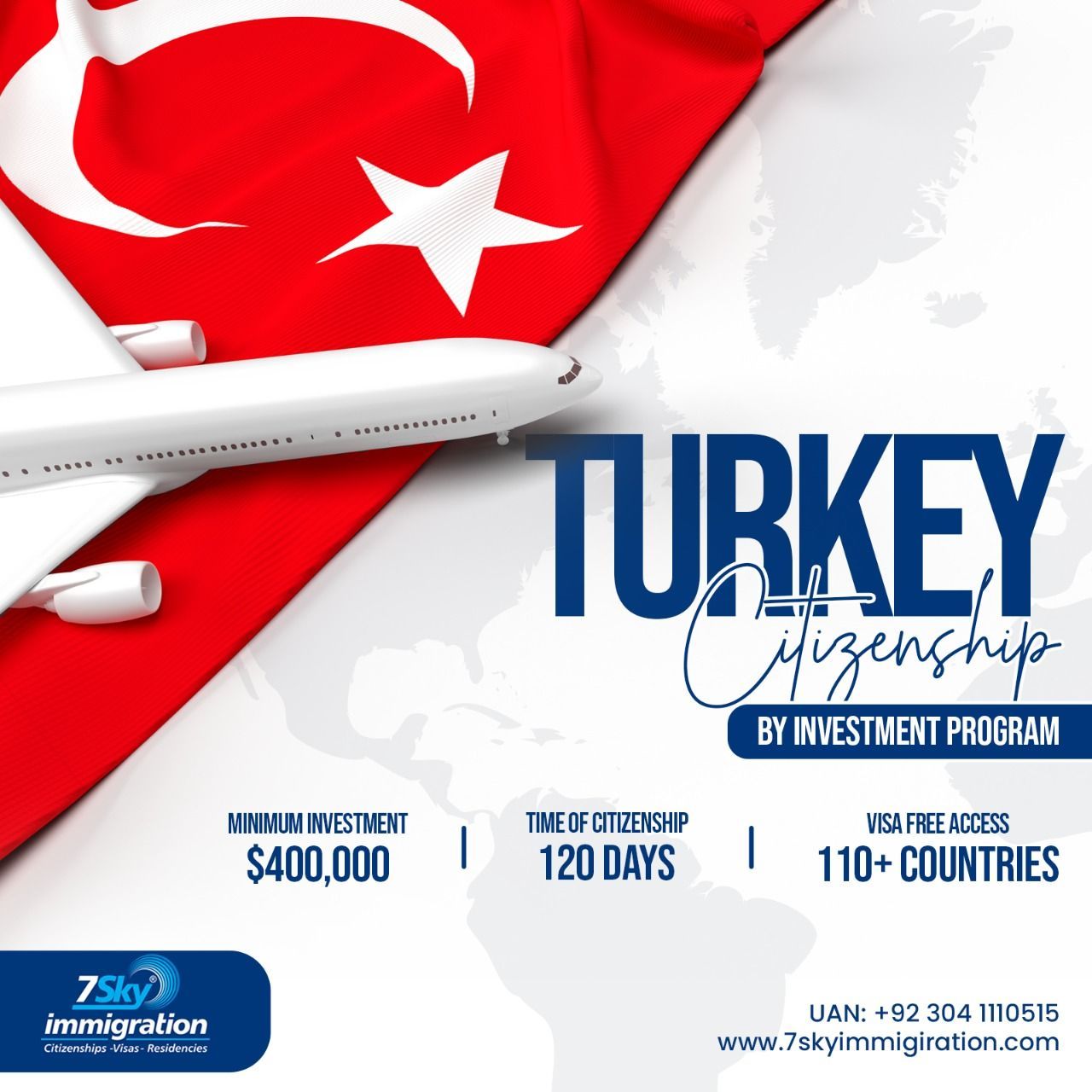
Turkey offers several investment pathways to citizenship: purchase real estate worth at least $400,000 USD (must be held for minimum 3 years), make a fixed capital investment of at least $500,000 USD, deposit at least $500,000 USD in a Turkish bank (must be maintained for 3 years), purchase at least $500,000 USD in Turkish government bonds (held for 3 years),.
Turkey’s Citizenship by Investment (CBI) program has become one of the most popular golden visa alternatives in the world, offering a direct path to a Turkish passport through qualifying investments.
With processing times of 3 to 6 months, full dual citizenship recognition, and investment thresholds that remain competitive compared to European alternatives, the program attracts thousands of applicants annually from across the globe.
For foreign business owners already operating in Turkey, or investors considering the country as a base, citizenship provides benefits that extend far beyond immigration convenience.
A Turkish passport grants visa-free or visa-on-arrival access to over 110 countries, eliminates the need for work permits and residence permits, and provides the full rights of a Turkish citizen including property ownership without restrictions. This guide covers every investment pathway, the application process, timelines, dual citizenship rules, and practical considerations for 2026.
Investment Pathways
Turkey offers five distinct investment options for citizenship. Each pathway has specific requirements regarding the investment amount, holding period, and verification process.
Option 1: Real Estate Purchase ($400,000 Minimum)
The real estate pathway is by far the most popular, accounting for over 80% of all citizenship by investment applications.
Requirements include purchasing real property (residential or commercial) with a total value of at least $400,000 USD, maintaining ownership for a minimum of 3 years from the date of purchase, and registering a title deed annotation preventing sale during the 3-year holding period.
The property can be a single unit or multiple properties whose combined value meets the threshold. New construction and resale properties both qualify. The property must be purchased from a Turkish citizen or a Turkish company; purchases between foreign nationals do not qualify.
The $400,000 real estate threshold was increased from $250,000 in June 2022, reflecting both rising property values and the program’s popularity. Despite the increase, Turkey’s program remains significantly more affordable than comparable European citizenship programs.
Portugal’s golden visa starts at EUR 500,000, Greece requires EUR 250,000 but offers only residency (not citizenship), and Malta’s citizenship program requires approximately EUR 750,000 in combined investments and contributions. Turkey’s program is also substantially faster, with citizenship typically granted in 3 to 6 months compared to years in most European programs.
Option 2: Fixed Capital Investment ($500,000 Minimum)
Foreign nationals who make a fixed capital investment of at least $500,000 USD in Turkey qualify for citizenship. This can include establishing a new company with the required capital, investing in an existing Turkish company, or acquiring shares in a Turkish company valued at the required minimum.
The investment must be verified by the Ministry of Industry and Technology. Unlike real estate, there is no mandatory 3-year holding period specified for capital investments in the same way, though the investment must be genuine and sustained.
Option 3: Bank Deposit ($500,000 Minimum)
Depositing at least $500,000 USD (or equivalent in Turkish Lira or other currencies) in a Turkish bank qualifies for citizenship. The deposit must be maintained for a minimum of 3 years. The bank issues a certificate confirming the deposit and the commitment to maintain it for the required period. Interest earned on the deposit belongs to the depositor.
Option 4: Government Bond Purchase ($500,000 Minimum)
Purchasing Turkish government bonds with a value of at least $500,000 USD qualifies for citizenship. The bonds must be held for a minimum of 3 years. This option provides a government-backed return during the holding period, though yields on Turkish government bonds fluctuate with market conditions and monetary policy.
Option 5: Employment Creation (50 Jobs)
Creating employment for at least 50 Turkish citizens qualifies the business owner for citizenship. The employees must be registered with the Social Security Institution (SGK) and employment must be maintained. This pathway is most relevant for large-scale investors establishing manufacturing or service operations.
| Investment Option | Minimum Amount | Holding Period | Verification Body |
|---|---|---|---|
| Real estate | $400,000 USD | 3 years | Land Registry (Tapu) |
| Fixed capital | $500,000 USD | Verified genuine | Ministry of Industry |
| Bank deposit | $500,000 USD | 3 years | Depositary bank |
| Government bonds | $500,000 USD | 3 years | Capital Markets Board |
| Employment | 50 jobs | Ongoing | Social Security (SGK) |
Application Process: Step by Step
Step 1: Complete the Qualifying Investment
The process begins with completing the qualifying investment and obtaining the necessary certification.
For real estate: Complete the purchase, receive the title deed (tapu), and have the Land Registry office annotate the deed with the 3-year sale restriction. A sworn appraiser must assess the property value, and the assessment must confirm the value meets or exceeds $400,000 USD.
For capital investment: Make the investment and obtain a conformity certificate from the Ministry of Industry and Technology confirming the investment meets the requirements.
For bank deposit: Deposit the funds and obtain a letter from the bank confirming the deposit amount and 3-year commitment.
For bonds: Purchase the bonds through a licensed Turkish brokerage and obtain confirmation from the Capital Markets Board.
Step 2: Apply for a Conformity Certificate
Submit the investment documentation to the relevant government body to obtain a conformity certificate (uygunluk belgesi). This certificate confirms that the investment meets the citizenship by investment requirements. Processing of the conformity certificate typically takes 1 to 4 weeks.
Step 3: Apply for a Residence Permit
Before the citizenship application can proceed, the applicant must hold a valid Turkish residence permit. If you do not already have one, apply for a short-term residence permit through the Provincial Directorate of Migration Management. The residence permit application references the citizenship by investment process and is typically expedited.
For details on the residence permit process, see our guide on Turkey residency permits for business owners.
Step 4: Submit the Citizenship Application
File the citizenship application with the General Directorate of Civil Registration and Nationality (Nufus ve Vatandaslik Isleri Genel Mudurlugu).
The application package includes the conformity certificate, the residence permit, passport copies and photographs for all applicants, birth certificates (apostilled and translated), marriage certificate if applicable (apostilled and translated), criminal background check from home country (apostilled and translated), and completed application forms.
The application covers the main applicant, their spouse, and children under 18 in a single filing.
Step 5: Security Clearance
Turkish security and intelligence agencies conduct background and security checks on all applicants. This is typically the longest phase of the process, taking 2 to 3 months. The checks cover criminal records, international sanctions lists, and security databases.
Step 6: Presidential Approval
Following security clearance, the application is forwarded for Presidential approval. This is a formal step in the process, with approvals typically issued within 1 to 2 months of security clearance completion.
Step 7: ID and Passport Issuance
Upon Presidential approval, the applicant is registered as a Turkish citizen and can apply for a Turkish national ID card (T.C. Kimlik Karti) and passport. The ID card is issued within days of registration, and the passport typically follows within 1 to 2 weeks.
Timeline Summary
| Phase | Duration | Cumulative |
|---|---|---|
| Investment completion | 1-4 weeks | Week 1-4 |
| Conformity certificate | 1-4 weeks | Week 2-8 |
| Residence permit (if needed) | 2-4 weeks | Week 4-12 |
| Citizenship application filing | 1 week | Week 5-13 |
| Security clearance | 2-3 months | Month 3-6 |
| Presidential approval | 1-2 months | Month 4-8 |
| ID and passport issuance | 1-2 weeks | Month 4-8 |
| Total typical timeline | 3-6 months |
The 3 to 6 month timeline assumes smooth processing without complications. Delays can occur during the security clearance phase, particularly for applicants from countries subject to enhanced screening. The median processing time is approximately 4 months from investment completion to passport issuance. Applicants should not make time-sensitive plans based on the minimum 3-month timeline.
Dual Citizenship
Turkey fully recognizes and permits dual (and multiple) citizenship. Key points include:
No renunciation required: Acquiring Turkish citizenship does not require giving up your existing nationality. Turkey will not ask you to renounce another citizenship.
No notification to home country: Turkey does not notify your home country when you acquire Turkish citizenship. Whether to disclose your new citizenship to your home country is your decision (though some countries’ laws may require disclosure).
Home country rules matter: While Turkey allows dual citizenship, your home country may not. Countries that generally prohibit or restrict dual citizenship include China, India, Singapore, Indonesia, Saudi Arabia, and the United Arab Emirates. Citizens of these countries should consult immigration lawyers in both jurisdictions before proceeding.
Equal rights: Citizens by investment have the same legal rights as citizens by birth, including property ownership without restrictions, right to vote (after establishing residence), access to public healthcare and education, right to work without permits, and right to establish and operate businesses.
Benefits of Turkish Citizenship
Visa-Free Travel
The Turkish passport provides visa-free or visa-on-arrival access to over 110 countries and territories as of 2026. Key destinations include Japan (visa-free), South Korea (visa-free), Singapore (visa-free for 30 days), most of South America (visa-free), and all of Central Asia (visa-free).
The Turkish passport does require visas for the Schengen area, the United Kingdom, Canada, the United States, and Australia, though Turkey’s ongoing EU accession process and bilateral negotiations may change Schengen access in the future.
Business Advantages
Turkish citizenship eliminates the need for work permits and residence permits when operating businesses in Turkey, provides access to Turkey’s bilateral investment treaties with over 80 countries, enables participation in government contracts and tenders reserved for Turkish companies, and removes foreign ownership restrictions in sectors where they apply (broadcasting, aviation, maritime).
Personal Advantages
Access to Turkey’s public healthcare system (SGK), property ownership without foreign ownership restrictions or reciprocity requirements, the right to purchase agricultural land (restricted for foreign nationals), access to Turkish public education institutions, and the right to pass citizenship to future children.
Financial Considerations
For businesses operating in Turkey, citizenship can simplify many operational aspects. Citizens do not face the enhanced KYC requirements that banks apply to foreign-owned companies, are not subject to foreign direct investment reporting requirements, and can enter into domestic contracts without the complexities that sometimes arise with foreign parties.
See our guides on business banking and foreign exchange regulations for details on these operational considerations.
Real Estate Investment: Practical Details
Since real estate is the most popular pathway, additional guidance on the property purchase process is warranted.
Property Selection
The $400,000 threshold applies to the appraised value, not the declared purchase price. A sworn appraiser (licensed by the Capital Markets Board) must assess the property, and the appraised value must meet or exceed $400,000 USD at the exchange rate on the assessment date.
Properties in Istanbul, Ankara, Izmir, Antalya, and Bursa are the most common choices. Istanbul properties tend to hold value well and offer the strongest rental yield potential, while Antalya and coastal properties may offer lifestyle advantages.
Important Restrictions
- The property cannot be purchased from another foreign national for citizenship purposes
- Properties previously used for citizenship applications (bought and sold after the 3-year holding period) may face additional scrutiny
- The appraised value must be at or above $400,000; transaction prices below this amount do not qualify
- The 3-year annotation is mandatory and prevents any sale, transfer, or mortgage during the holding period
Ongoing Costs
Property owners should budget for annual property tax (0.1% to 0.6% of assessed value), building maintenance fees (for apartments), property insurance, and income tax on rental income if the property is rented out (at progressive rates from 15% to 40%).
For detailed tax information, see our guide on Turkey corporate tax rates and tax incentives.
Costs Summary
| Cost Item | Amount | Notes |
|---|---|---|
| Investment (minimum) | $400,000 - $500,000 USD | Depending on pathway chosen |
| Property appraisal fee | 5,000 - 10,000 TRY | For real estate pathway |
| Title deed transfer fee | 4% of declared value | Split between buyer and seller (negotiable) |
| Notary and translation fees | 2,000 - 5,000 TRY | Document preparation |
| Residence permit fees | 1,500 - 3,000 TRY | If not already held |
| Citizenship application fee | Varies | Relatively modest government fees |
| Legal representation | $3,000 - $10,000 USD | Immigration lawyer (recommended) |
| Total (excluding investment) | $5,000 - $15,000 USD | Approximate ancillary costs |
Engaging an experienced immigration lawyer for the citizenship by investment process is strongly recommended. While the process is well-defined, the documentation requirements are extensive, the stakes are high (a rejected application means delays and potential loss of investment advantages), and having professional representation ensures that applications are filed correctly the first time.
Legal fees for citizenship by investment typically range from $3,000 to $10,000 USD depending on the complexity of the case.
Common Questions and Concerns
Can I sell the property after 3 years? Yes. Once the 3-year holding period expires and the title deed annotation is lifted, you can sell the property. Your citizenship is not affected by the subsequent sale.
What if the property value drops below $400,000? The value is assessed at the time of purchase. Subsequent market fluctuations do not affect your citizenship status.
Can my family also get citizenship? Yes. The main applicant’s spouse and children under 18 are included in the same application at no additional investment requirement.
Do I need to live in Turkey? No. There is no minimum residency requirement to maintain Turkish citizenship once granted. You can live anywhere in the world.
Can I work in Turkey with citizenship? Yes. Turkish citizens have unrestricted right to work, unlike residence permit holders who may need separate work permits. This eliminates the complexities described in our work permit guide.
Is the program likely to continue? Turkey’s CBI program has operated since 2017 and has been expanded and refined over time. The government views it as an important source of foreign investment. While thresholds may be adjusted, it is unlikely that the program will be discontinued.
Conclusion
Turkey’s Citizenship by Investment program offers a practical and relatively fast pathway to a second passport for foreign investors and entrepreneurs. The $400,000 real estate threshold makes it accessible compared to European alternatives, while the 3 to 6 month processing timeline is among the fastest in the world for investment-based citizenship.
Full dual citizenship recognition, visa-free access to over 110 countries, and the elimination of work and residence permit requirements make Turkish citizenship a valuable asset for internationally mobile business owners.
The key to a successful application is choosing the right investment pathway for your circumstances, ensuring all documentation meets the strict requirements, and working with qualified legal professionals throughout the process.
For business owners already operating in Turkey, citizenship represents the logical endpoint of a long-term commitment to the market, providing maximum operational flexibility and the full rights of a Turkish national.
For related guidance, explore our articles on residency permits, work permits, company registration, and tax incentives for foreign investors.
Related Corpy Resources
- Turkey business guide for a full overview of doing business in Turkey
- Visas & residency in Turkey for related articles on this topic
- Company formation in Turkey to explore adjacent considerations
- Corporate tax in Turkey to explore adjacent considerations
- Business laws in Turkey to explore adjacent considerations