



Can a Mexican citizen form a US LLC without being in the US?
Yes. A Mexican citizen can form a Delaware, Wyoming, Texas, or other US LLC entirely remotely from Mexico. No US visit, US address, or Social Security Number is required. However, Mexican founders have the unique advantage of being able to visit US bank branches in border states (Texas, California, Arizona) during short business trips to open traditional accounts in person,.
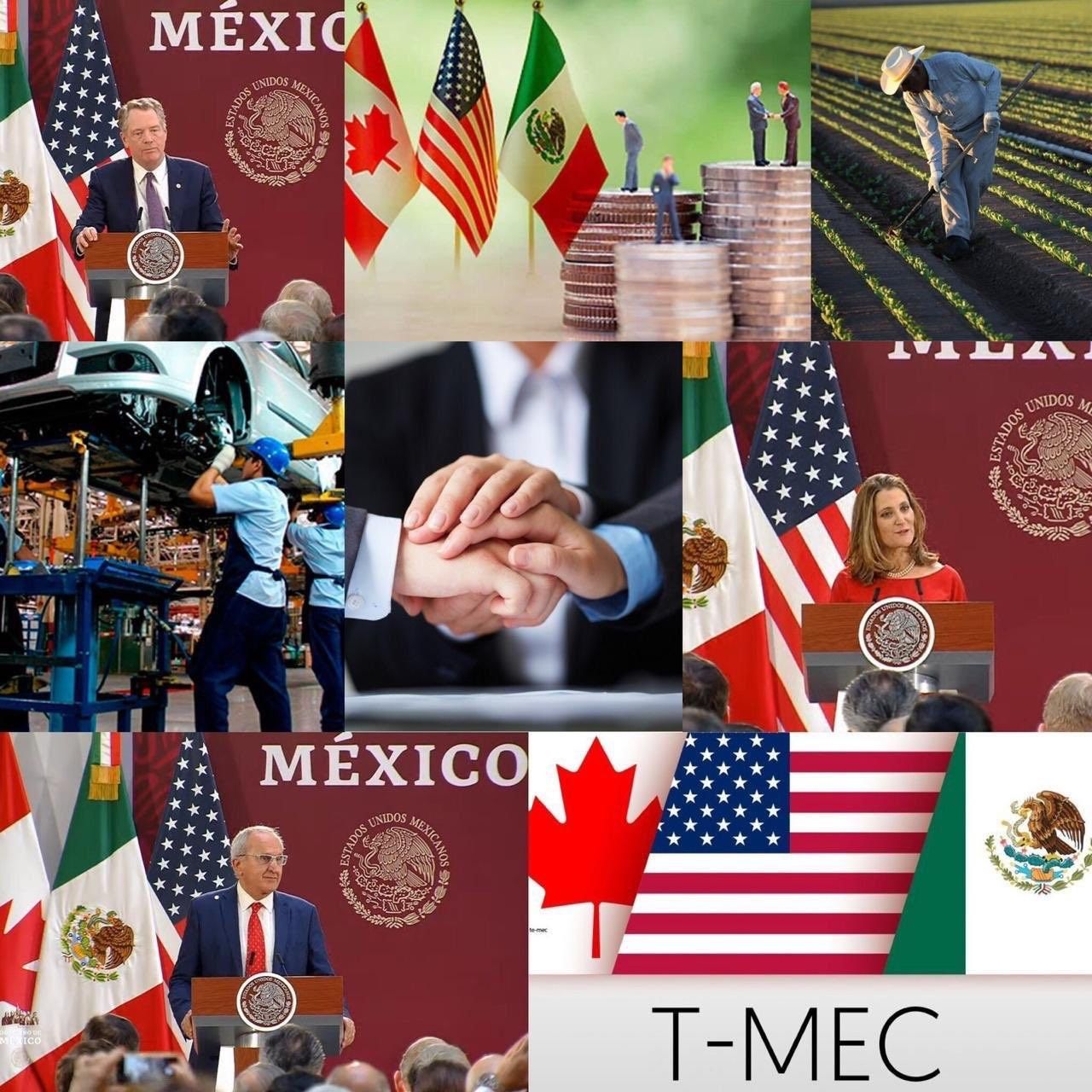
One of the largest Latin American founder groups establishing US companies comes from Mexican entrepreneurs, who bring the substantial advantage of sharing a land border, the USMCA replacing NAFTA, a working US-Mexico tax treaty and intensive cross-border supply chain links.
Mexican citizens can establish a full US LLC or C-Corporation with advantages others from Latin America do not have: direct ties to US banking systems, B1/B2 visa or ESTA-free business travel, TN visas for eligible professions under USMCA, and E-2 treaty visas for substantial investors.
Mexican nationals establishing a US presence in 2026 find detailed guidance here for choosing Delaware, Wyoming, or Texas (with Texas growing in popularity among Mexican founders because of its proximity and strong Latino business networks).
The SAT framework for worldwide income, how US-Mexico tax treaties affect filing, banking options across traditional institutions and fintech platforms, and cost breakdowns in USD through the first two years all appear in this resource.
Why US Entities Work for Mexican Founders
Several factors make the US particularly attractive for Mexican entrepreneurs. First, geographic proximity: Mexican founders can fly to Houston, Dallas, or San Diego in 2 hours and manage US banking relationships in person in ways that founders from further afield cannot.
Second, the USMCA trade agreement eliminates most tariffs on cross-border goods and creates specific service sector commitments that ease US market access. Third, the US-Mexico tax treaty reduces withholding on cross-border dividends, interest and royalties.
Fourth, existing family and business networks across the border create operational infrastructure that makes US banking, tax filing and operations smoother.
Volatility in the Mexican peso against the dollar has created comparable dollar-accumulation incentives for founders based in Mexico, just as for Brazilian, Argentine or Colombian founders. A US LLC allows Mexican founders to invoice in dollars, maintain dollar balances and hedge against peso devaluation without transferring funds back to Mexico monthly.
The US LLC for Mexican founders should be viewed as a commerce and banking vehicle. Mexican residents are taxed on worldwide income including LLC distributions and attributed profits. The tax treaty prevents double taxation but does not eliminate Mexican tax exposure. Review the Delaware Division of Corporations portal and the SAT international taxation guidance before filing.
For the US-state selection analysis, the Delaware vs Wyoming vs Nevada LLC comparison covers the main trade-offs.
State Selection: Delaware, Wyoming, or Texas
Delaware is the default choice for foreign founders building Stripe and fintech businesses. Mexican founders have extra options that are worthwhile considering as well.
Delaware. Standard for Stripe, payment processors, investor preferences. 300 USD annual franchise tax. No state income tax for out-of-state operations. Strong case law. Best for founders whose activity is primarily international and financial infrastructure.
Wyoming. Lower ongoing cost (60 USD annual report), strong privacy, no state corporate tax. Mercury acceptance variable by period. Best for bootstrap founders optimizing ongoing costs.
Texas. Border proximity to Mexico, substantial Latino business presence, developed Mexican-American commerce infrastructure. There is no state income tax in Texas. Companies with significant Texas activity or nexus pay a Texas franchise tax at 0.75 percent of taxable margin.
Mexican founders operating physical business in Texas - whether through trade, logistics or cross-border services - find that incorporating in Texas streamlines state compliance processes.
Florida. Latin American founders find it appealing, Miami has an active Latino business community and there is no state income tax. Florida fees are higher than in Wyoming but lower than in Delaware.
Most Mexican founders choose Delaware for standard reasons, Texas is the specific-use-case alternative for founders with physical Texas operations.
LLC vs C-Corp
When a sole-member LLC is owned by a Mexican citizen with no US ECI, federal income tax in the US ordinarily does not apply. Form 5472 and a pro-forma 1120 are submitted yearly. A C-Corporation pays federal taxes as a separate entity at 21 percent rate. Dividends to Mexican shareholders are subject to 30 percent statutory withholding, but the US-Mexico tax treaty reduces rates to 5 or 10 percent.
The treaty reduction makes the C-Corp path more workable for Mexican founders than for Brazilian, Argentine, or Nigerian counterparts who have no treaty. But for most Mexican bootstrap founders, the pass-through LLC remains the simpler and cheaper structure.
| Factor | Delaware LLC | Delaware C-Corp |
|---|---|---|
| US federal tax | 0 percent if no ECI | 21 percent |
| Withholding to Mexico | 0 percent | 5 to 10 percent treaty |
| Mexican tax on distributions | Personal rate up to 35 percent | Personal rate up to 35 percent with credit |
| Venture capital suitability | Low | High |
| Setup cost year 1 | 300 to 800 USD | 500 to 1,500 USD |
US-Mexico Tax Treaty
An income tax treaty between the US and Mexico remains in force (originally 1992, subsequent protocols have amended it). The key rates are:
- Dividends: 5 percent (if 10%+ ownership), 10 percent (other corporate), 15 percent (general)
- Interest rates range from 4.9 to 15 percent depending on who pays and who receives.
- Royalties: 10 percent standard
A Mexican tax resident must file W-8BEN or W-8BEN-E to claim treaty rates on US-source payments. Mexico’s SAT credits US tax paid against Mexican tax on the same income to prevent double taxation.
Comprehensive CFC-like rules operate within Mexico’s regimen fiscal preferente system. Residents controlling foreign entities in low-tax jurisdictions face retained-profit attribution under these rules. Standard US LLCs and C-Corps paying normal US corporate tax (21 percent) typically remain above the low-tax threshold and avoid attribution.
Single-member LLCs that are disregarded at the US tax level can fall into attribution scope in specific cases, however. Substantial LLC operations within Mexico require professional advice for residents.
Formation Step by Step
When a Mexican citizen establishes a Delaware LLC:
- Choose state and name.
- Appoint registered agent.
- File Certificate of Formation in Delaware costs 110 USD.
- Get EIN by submitting Form SS-4 to IRS. Historically, US Embassy Mexico City provided limited EIN services for Mexican founders in person, although most founders prefer fax submission or expediting services.
- Verify FinCEN BOI status (under FinCEN’s March 2025 Interim Final Rule, US-formed LLCs are exempt from federal BOI reporting).
- Open US bank account. Several Mexican founders establish accounts by traveling to Texas, California, or Arizona bank branches along the border for in-person openings.
- Set up Stripe and other payment processors now.
End-to-end: 4 to 10 weeks, often faster for Mexican founders than for other non-US founders due to ability to visit US branches in person.
Of all foreign nationalities, Mexican founders enjoy some of the broadest US visa access, driven by USMCA and specialized treaty provisions. TN visas enable same-day port-of-entry processing for qualifying Canadian citizens, whereas the process for Mexican citizens requires an approved petition at a US consulate - a distinction that matters but still makes TN faster than most visa options.
When Mexican founders are building a US presence, they should consider TN, E-2 and L-1 pathways in conjunction with LLC establishment.
The SAT has developed sophisticated cross-border enforcement capability through its Large Taxpayers Unit and increased international cooperation. Mexican residents with US LLCs should assume their ownership and income will be visible to SAT through FATCA reporting and the US-Mexico information exchange framework.
Proactive declaration on the annual Mexican declaration is substantially lower-risk than discovered non-disclosure.
Banking Reality for Mexican Founders
Mexican founders have better US banking access than most other foreign founders. Options include:
- Traditional US banks with in-person opening. Chase, Bank of America, Wells Fargo branches in Texas, California, Arizona and border states often accept Mexican founders with passports and LLC documentation during brief border trips. Many Mexican founders specifically visit branches in McAllen, Laredo, El Paso, San Diego, or Houston.
- Mercury. Accepts Mexican-owned LLCs remotely with clean documentation.
- Relay Financial. Accepts.
- Wise Business. Accepts and offers multi-currency.
- Stripe Atlas bundled. Accepted.
The ability to open a traditional Chase or Bank of America account in person gives Mexican founders access to mainstream US commerce infrastructure that remote-only founders often cannot reach. Credit cards, Zelle transfers and broader US banking integration work more smoothly from a traditional bank account.
US Visas for Mexican Founders
Mexican citizens have multiple US visa pathways:
- B1/B2 for short business visits (typically 6-month stays)
- TN visa under USMCA for qualifying professions (engineers, scientists, management consultants, computer systems analysts and 60+ categories). TN is renewable indefinitely and relatively fast to obtain.
- E-2 Treaty Investor visa for substantial US investment (Mexico has qualifying treaty)
- L-1 intracompany transferee
- EB-5 investor green card
- O-1 extraordinary ability
- H-1B for employed professionals
The TN visa is particularly valuable for Mexican founder-professionals who qualify, because it offers renewable work status tied to specific US employment (which can be with their own US entity) without requiring the substantial investment of E-2 or EB-5.
Costs in USD
| Item | Year 1 | Year 2 |
|---|---|---|
| Delaware filing | 110 | 0 |
| Registered agent | 50 to 200 | 50 to 200 |
| Formation service | 100 to 500 | 0 |
| EIN expediting | 0 to 500 | 0 |
| Delaware franchise tax | 300 | 300 |
| US tax return | 400 to 1,500 | 400 to 1,500 |
| Mexico return adjustment | 100 to 500 | 100 to 500 |
Year 1: 1,060 to 3,610 USD. Year 2: 850 to 2,500 USD.
Mexican Tax Reality
Mexican tax residents (physically in Mexico for 183+ days or center of vital interests) pay ISR (Impuesto Sobre la Renta) on worldwide income at progressive rates up to 35 percent. The SAT requires declaration of foreign entity ownership on the annual declaration. The US-Mexico tax treaty provides foreign tax credit for US tax paid.
A Mexican LLC owner who has relocated to the US and broken Mexican tax residency (formal departure declaration plus actual relocation) is no longer subject to Mexican worldwide taxation. The transition requires care to document properly.
Operational Reality
Many Mexican founders operate a hybrid structure with:
- US LLC for international and US customer billing, dollar banking, Stripe
- Mexican SAS (Sociedad por Acciones Simplificada), SA de CV, or RIF sole proprietorship for local Mexican market operations
- Documented intercompany service agreements connecting the entities
The SAT has robust transfer pricing requirements for related-party transactions, and Mexican founders with both a US LLC and Mexican entity serving overlapping customers need proper transfer pricing documentation.
Common Mistakes
Five patterns recur. First, forming in a high-cost state (Delaware) when Texas or Wyoming better fits the actual operations pattern. Second, skipping the SAT declaration of the US LLC on the annual return. Third, underestimating Mexican CFC rules for passive-heavy LLC structures. Fourth, failing to document transfer pricing between US LLC and Mexican entities.
Fifth, inconsistent legal name across LLC documents, EIN, Mercury and Stripe applications.
When to Add Complementary Structures
Most Mexican founders run the US LLC as the international entity and a Mexican operating company as the Mexican-market entity. Additional jurisdictions rarely add value unless the business expands into specific markets (UAE for Gulf, Singapore for APAC).
Timeline
- Week 1: Path selection, documents
- Week 1 to 2: Certificate of Formation
- Week 2 to 8: EIN issuance
- Week 3 to 6: Bank account (faster for Mexican founders who visit US branches in person)
- Week 4 to 8: Stripe activation
- Week 4 to 10: Fully operational
USMCA and Cross-Border Supply Chains
The USMCA (US-Mexico-Canada Agreement), which replaced NAFTA in July 2020, preserves most of NAFTA’s tariff-free trade framework while adding rules-of-origin requirements (particularly for automotive content), labor provisions, environmental standards, digital trade chapters and dispute settlement mechanisms.
For Mexican founders operating companies that move physical goods across the border, USMCA rules-of-origin documentation, certificates of origin and qualified-content calculations are practical compliance items.
Services-based Mexican founders (consulting, SaaS, digital products, content) benefit from USMCA’s digital trade chapter, which includes commitments on cross-border data flows, non-discriminatory treatment of digital products, and prohibition of forced data localization. A US LLC serving US and Canadian customers operates within this favorable digital-trade framework.
Remittances, Banxico, and Fund Flows
Compared to many emerging markets, Mexico allows more liberal outbound capital rules. Residents can move funds to foreign accounts and invest in foreign entities through commercial banks using standard KYC procedures. Cross-border flows are monitored by Banxico, the Mexican central bank, but Mexican residents do not face hard caps on general outbound investment.
Mexican founders operating US LLCs move funds through standard mechanics: Mexican banks including Banorte, BBVA Mexico, Santander Mexico, Citibanamex and HSBC Mexico send capital via bank wire to the LLC’s US account. Documentation follows with wire confirmations that meet both Mexican declaration requirements and US KYC standards.
Inter-Company Structure and SAT Transfer Pricing
Mexican founders operating a US LLC alongside a Mexican operating company must follow SAT transfer pricing rules consonant with OECD principles, demanding arm’s-length pricing in all intercompany transactions. Standard intercompany arrangements include:
- The US LLC licenses software or IP to the Mexican operating company for a royalty
- Development or delivery services flow from the Mexican company to the US LLC for a fee.
- Revenue division takes into account the activity and value each entity contributes.
Cross-border structures featuring related-party flows now draw heavier scrutiny from the SAT’s Large Taxpayers Unit. Smaller Mexican businesses must retain documentation, transfer pricing studies and Form 76 to meet regulatory requirements. Designing the structure properly from the beginning prevents the need for retroactive reconstruction.
RESICO and Mexican Tax Regime Interactions
Eligible individuals and small businesses in Mexico access the Regimen Simplificado de Confianza (RESICO) for a streamlined tax regime with lower effective rates versus the standard ISR. Sole proprietors in RESICO pay 1 to 2.5 percent on designated revenue bands for personal income.
When Mexican founders receive LLC distributions or salary flows that return to their Mexican operations, integrating RESICO and standard ISR requirements benefit from proactive professional planning to optimize the Mexican tax strategy.
Cross-Border Real Estate and the LLC
Mexican founders commonly use US LLCs to hold US real estate, particularly in Texas, Florida, California, Arizona and New Mexico border or vacation markets. The LLC provides liability protection, estate planning benefits (particularly around avoiding probate in multiple states), and anonymity where desired.
FIRPTA (Foreign Investment in Real Property Tax Act) withholding on sale proceeds requires specific 1099-S and 8288 filings that an LLC owned by a Mexican citizen manages through routine compliance.
Mexican border founders also use LLCs for cross-border trucking, logistics and supply chain businesses that span the border. The LLC registers for Mexican IMMEX or similar programs where applicable, connects with SAT for Mexican-side operations, and with IRS/state authorities for US-side operations.
Fintech and Payment Infrastructure
Beyond Stripe, Mercury and traditional banks, Mexican founders access US payment infrastructure through:
- Wise Business offers USD, MXN and multi-currency accounts with competitive conversion rates concentrated in the MXN-USD corridor, which is one of Wise’s most developed currency lanes.
- Brex works for qualifying operating companies, providing credit cards and banking.
- Airwallex: multi-currency for international-facing businesses
- PayPal US: for creators, freelancers and small businesses needing US PayPal access
The ability to open a Chase account in person in Texas or California (discussed earlier) gives Mexican founders specific access to Zelle (US instant payments), US credit cards and US consumer credit that other foreign founders cannot easily access.
How to get an EIN number for business in California for Mexican citizens?
Mexican citizens form a California LLC and obtain an EIN from the IRS for free. California LLC formation costs $70 online via the California Secretary of State plus the mandatory $800 annual franchise tax (due within 3 months of formation and each subsequent year, regardless of revenue or activity).
For the EIN: Mexican founders without an SSN file Form SS-4 by fax to 855-641-6935 (4 to 8 weeks) or call the IRS international EIN line at 267-941-1099 (1 to 2 weeks). The EIN is free. California also requires a Statement of Information within 90 days of formation ($20) and a $20 biennial Statement thereafter.
For Mexican founders comparing states, California’s $800 annual franchise tax makes it the most expensive state for non-resident LLCs - Delaware ($110 + $300 annual) or Wyoming ($100 + $60 annual) are 5 to 15 times cheaper.
Choose California only if you have California customers, employees, or physical presence that triggers nexus, otherwise, Delaware or Wyoming is the economically rational default for Mexican founders.
How to get an EIN number for business in Texas for Mexican citizens?
Mexican citizens form a Texas LLC by filing a Certificate of Formation with the Texas Secretary of State for $300 online (the highest LLC formation fee in the US alongside Massachusetts and Connecticut). The EIN is obtained free from the IRS by faxing Form SS-4 to 855-641-6935 (4 to 8 weeks) or calling the IRS international EIN line at 267-941-1099 (1 to 2 weeks) - no SSN required.
Texas requires a registered agent with a Texas street address ($50 to $150/year commercial) and an annual Public Information Report + Franchise Tax Report by May 15 (no fee for businesses under $1.23M threshold). For Mexican founders near the border, Texas offers geographic proximity and no state income tax, but the $300 formation is 3x Delaware ($110) and Wyoming ($100).
Delaware still dominates for non-resident formation due to court reputation, annual cost simplicity ($300 franchise tax flat), and higher bank acceptance rates. Texas makes sense for Mexican founders with Texas customers, employees, or physical locations.
How to get an EIN number for LLC in Texas for Mexican citizens?
Mexican citizens forming a Texas LLC obtain an EIN from the IRS free by filing Form SS-4. Texas LLC formation itself costs $300 through the Texas Secretary of State online portal. For the EIN: without SSN, fax Form SS-4 to 855-641-6935 (4 to 8 weeks) or call the IRS international EIN line at 267-941-1099 (1 to 2 weeks). The IRS charges $0.
Texas requires a registered agent with a Texas street address ($50 to $150/year commercial) and annual Public Information + Franchise Tax filings by May 15 (no tax owed below $1.23M threshold).
Texas advantages for Mexican founders: geographic proximity to Mexico, no state income tax, strong bank presence (Chase Business, Wells Fargo Business, Bank of America Business accept Mexican founders with valid passports and Texas LLC documentation), and a large Spanish-speaking professional services market.
Delaware remains cheaper ($110 formation vs $300 Texas) and more legally preferred for non-operational entities, but Texas wins for Mexican founders with actual Texas customers or operations.