

Why is Estonia a global leader in fintech?
Estonia leads in fintech due to several converging factors:
- its world-class digital identity infrastructure (ID cards, e-Residency)
- X-Road data exchange platform, a government that actively promotes digital innovation, early adoption of electronic banking (over 99% of banking transactions are digital)
- a regulatory environment that was initially very open to fintech licensing, and the success of homegrown companies like Wise and Veriff
Estonia has built one of the world’s most influential fintech ecosystems from a population of only 1.3 million, fostering globally significant companies through deliberate strategy.
Fintech success in Estonia is no accident but results from investments in foundational infrastructure, progressive regulatory environment, digitally savvy citizens and a culture that views technology as the default approach to financial services problems.
Wise’s overhaul of international money transfers and Veriff’s reimagination of identity verification showcase that location and population do not block pathways to global fintech leadership in Estonian fintech.
Estonia’s fintech ecosystem through 2026 gets comprehensive treatment in this guide. Regulatory environment, licensing requirements, major players in the space, development of crypto rules, sandbox initiatives and what the ecosystem offers entrepreneurs building financial technology businesses from Estonia are all covered in depth.
Why Estonia Leads in Fintech
Digital Infrastructure Foundation
Estonia’s strength in fintech traces back to its digital infrastructure. Well before “fintech” went viral globally, X-Road - the country’s data exchange layer - combined with a digital identity system and e-governance framework to build the ecosystem that enabled digital financial services.
Over 99% of banking transactions in Estonia are conducted digitally. Estonian citizens have been filing taxes online since 2000, using digital signatures since 2002 and managing their financial lives through digital channels for over two decades. This early digitization created a population and business environment that naturally demands and adopts financial technology solutions.
The E-Residency Multiplier
The e-Residency program, launched in 2014, amplified Estonia’s fintech sector by creating international demand for digital financial services. Over 140,000 e-Residents from 170+ countries need banking, payment processing and financial management tools for their Estonian companies, creating a built-in market for fintech solutions tailored to international digital businesses.
Estonia produces more fintech unicorns per capita than any other country in the world. With Wise (valued at over EUR 9 billion) and several other companies approaching or achieving unicorn status, Estonia’s per-capita fintech success rate is unmatched.
This concentration of talent, capital, and experience creates a self-reinforcing ecosystem where each success generates expertise, investment, and inspiration for the next generation of fintech entrepreneurs.
Regulatory Environment
Estonia moved quickly to establish fintech regulations in a forward-looking manner. It became one of the first EU countries to create clear licensing frameworks for payment institutions, e-money institutions and virtual currency service providers. Businesses seeking certainty about their legal standing and operational requirements were drawn to this environment of regulatory clarity.
Regulatory Framework
Financial Supervision Authority (Finantsinspektsioon)
The Estonian Financial Supervision Authority (FSA) is the primary regulator for financial services in Estonia. It supervises banks, insurance companies, investment firms, payment institutions and e-money institutions. The FSA operates under the European Central Bank’s supervision framework for banks and follows EU regulatory standards.
The FSA is responsible for:
- Licensing and supervision of credit institutions, payment institutions and e-money institutions
- Prudential supervision (capital adequacy, risk management)
- Consumer protection in financial services
- Market conduct supervision
- Anti-money laundering supervision for regulated financial institutions
Financial Intelligence Unit (Rahapesu Andmeburoo)
The Financial Intelligence Unit (FIU) handles licensing and supervision for virtual currency service providers and monitors suspicious transaction reports across all financial sectors. The FIU’s role in crypto licensing has expanded significantly as Estonia tightened its approach to virtual currency businesses.
License Types
| License Type | Issuing Authority | Minimum Capital | Key Activities Permitted |
|---|---|---|---|
| Credit institution | FSA (ECB approval) | EUR 5 million | Full banking: deposits, lending, payments |
| Payment institution | FSA | EUR 20,000 - 125,000 | Payment services, money remittance |
| E-money institution | FSA | EUR 350,000 | Issuing electronic money, payment services |
| Investment firm | FSA | EUR 75,000 - 750,000 | Investment services, securities dealing |
| Virtual currency service provider | FIU | EUR 100,000 - 350,000 | Crypto exchange, wallet services |
| Insurance company | FSA | EUR 2.5 - 3.7 million | Insurance underwriting and distribution |
Key Estonian Fintech Companies
Wise (Formerly TransferWise)
Founded in 2011 by Kristo Kaarmann and Taavet Hinrikus (a former Skype employee), Wise has become one of the most successful fintech companies globally. The company’s core innovation was using local bank transfers rather than international SWIFT transfers to move money between countries, dramatically reducing costs and increasing speed.
Key metrics (2026):
- Over 19 million active customers globally
- Processes over EUR 220 billion in cross-border transfers annually
- Publicly listed (dual-listed on the London Stock Exchange and Nasdaq)
- Market capitalization of approximately USD 12 billion
- Over 6,500 employees across global offices
Wise’s success has been foundational for the Estonian fintech ecosystem, producing a generation of experienced fintech professionals who have gone on to found or join other Estonian startups.
Veriff
Founded in 2015, Veriff provides AI-powered identity verification services to financial institutions, technology companies and government agencies. The company’s technology verifies identities by analyzing government-issued ID documents and biometric data in real time.
Key metrics:
- Serves major financial institutions, crypto exchanges and sharing economy platforms
- Processes millions of verification sessions monthly
- The company has brought in over EUR 100 million in venture funding.
- The company operates in Tallinn, New York, London and other locations.
Other Notable Companies
| Company | Sector | Description |
|---|---|---|
| Monese | Digital banking | Mobile-first banking for migrants and underserved populations |
| Modularbank | Banking infrastructure | Core banking platform for launching financial products |
| Salv | AML/compliance | Anti-money laundering technology for financial institutions |
| Montonio | Payments | Payment solutions for Baltic e-commerce |
| Finora Bank | Digital lending | Digital lending platform focused on the Baltic market |
| CoinMetro | Crypto exchange | Regulated cryptocurrency exchange |
| Grunfin | Sustainable investing | Sustainable investment platform |
| ESTO | BNPL | Buy-now-pay-later services for Baltic e-commerce |
The depth of Estonia’s fintech ecosystem extends well beyond the headline companies. A comprehensive network of infrastructure providers (Modularbank for core banking, Salv for AML), service companies (Veriff for identity verification), and application-layer companies (payment processors, lending platforms, investment tools) creates a complete value chain.
This means fintech entrepreneurs in Estonia can build on existing local infrastructure rather than constructing everything from scratch.
The Evolution of Crypto Regulation
Early Openness (2017-2021)
Estonia was one of the first countries in the world to establish a formal licensing framework for virtual currency service providers, beginning in 2017. The framework was administered by the FIU and initially featured relatively low barriers to entry, attracting hundreds of applications from around the world.
Estonia reached a peak of over 1,000 crypto licenses issued, making it the top jurisdiction for regulated crypto companies. In reality, though, most licensed entities operated minimally in Estonia, using their license mainly for regulatory arbitrage.
Regulatory Tightening (2022-Present)
Recognizing that many licensed operators lacked substance and posed AML risks, Estonia undertook a dramatic overhaul of its crypto licensing framework:
Increased capital requirements: Minimum share capital raised to EUR 100,000-350,000, up from minimal requirements previously.
Local presence requirements. Firms need management board members based physically in Estonia and must sustain real operational substance there.
Enhanced AML obligations. Comprehensive customer due diligence, ongoing transaction monitoring, suspicious activity reporting and regular AML audits.
License review. Existing licenses were reviewed, and companies that could not meet the new requirements had their licenses revoked or voluntarily surrendered them.
Reduced license numbers. The number of active crypto licenses dropped from over 1,000 to fewer than 100, reflecting the intended filtering effect of the new requirements.
| Metric | Peak (2021) | Current (2026) |
|---|---|---|
| Active crypto licenses | 1,000+ | <100 |
| Minimum capital required | Minimal | EUR 100,000-350,000 |
| Local presence required | No | Yes |
| AML audit required | Basic | Comprehensive and regular |
| License application processing | Weeks | Months |
Current Crypto Landscape
The tightened regulatory environment has filtered out non-serious operators while creating a more credible and sustainable crypto business sector. Companies that have obtained or maintained licenses under the new regime are generally well-capitalized, properly staffed and committed to compliance.
This positions Estonia’s remaining crypto businesses more favorably for the EU’s Markets in Crypto-Assets (MiCA) regulation, which introduces EU-wide crypto licensing standards.
Estonia’s crypto regulation narrative combines cautionary and success elements in one country’s experience. Broad initial welcome drew volume but not quality, leaving the sector exposed to reputational risk and AML issues. Rules tightening hurt the industry hard, yet it produced a smaller crypto sector that is more credible and better structured for long-term sustainability.
Firms pursuing crypto licensing in Estonia need to accept rigorous requirements and genuine operational commitment as prerequisites.
Sandbox and Innovation Programs
FSA Innovation Hub
Estonia’s Financial Supervision Authority manages an Innovation Hub designed to assist fintech companies working through the regulatory framework. Services the Innovation Hub provides include:
- Informal guidance on regulatory requirements before formal license applications
- Support in determining the licenses required for particular business models
- Dialogue between regulators and innovators on emerging financial technologies
- Connection to EU-level regulatory innovation initiatives
EU Regulatory Sandbox
Estonia participates in EU-level regulatory sandbox initiatives that allow fintech companies to test innovative products and services under relaxed regulatory conditions. These sandboxes provide:
- Temporary authorization to test products without full licensing
- Close regulatory supervision and guidance during the testing period
- Full licensing can be earned through performance in a sandbox environment.
- Coordination of cross-border sandboxes with other EU regulators.
Opportunities in Estonian Fintech
Areas of Growth
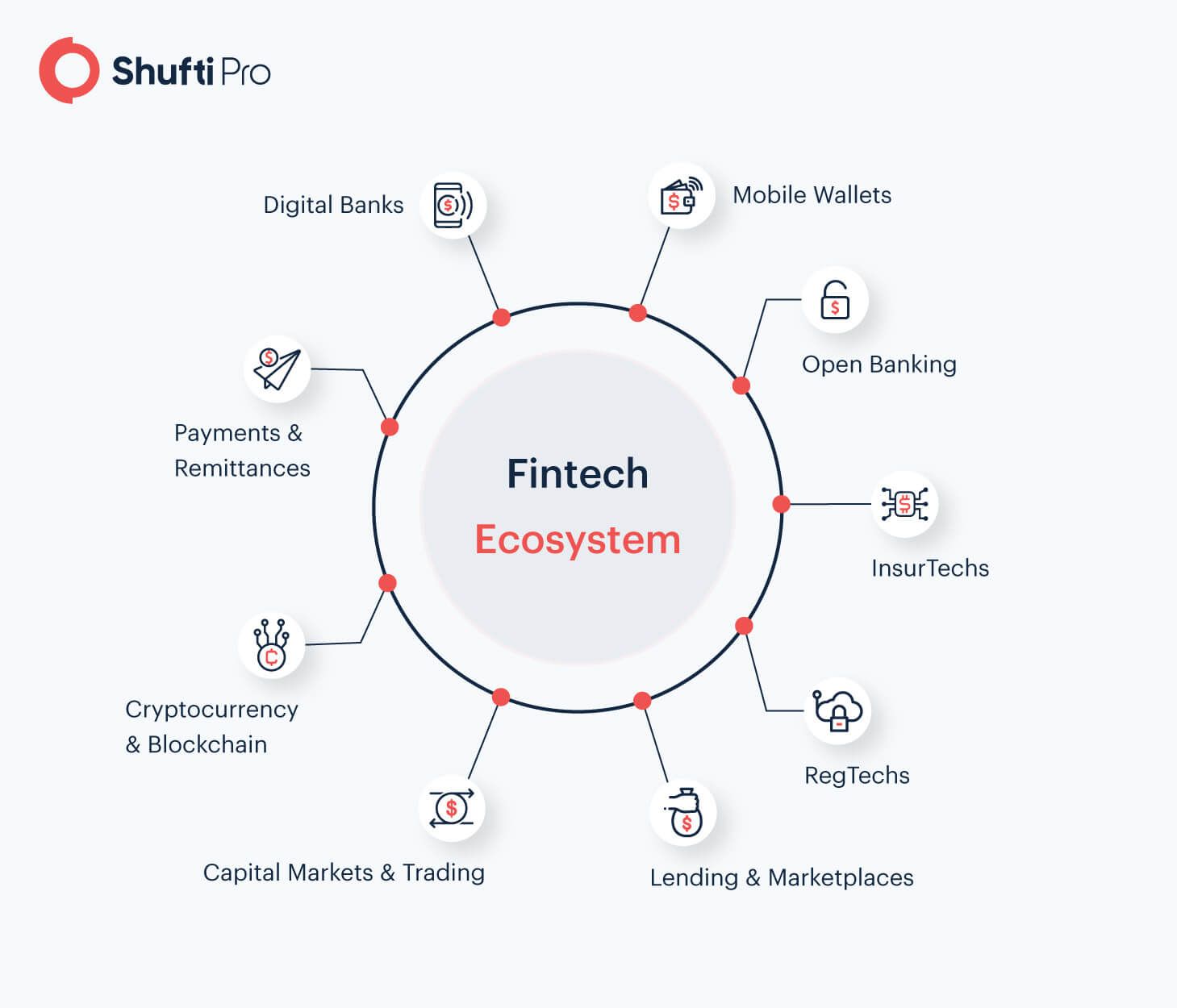
Several fintech subsectors are particularly active and growing in Estonia:
Embedded finance. Integration of financial services into non-financial platforms and applications. Estonian infrastructure companies like Modularbank enable this trend.
RegTech and compliance. encompasses AML technology, KYC solutions and regulatory reporting tools. Estonian firms Salv and Veriff exemplify success in this domain.
Sustainable finance. This domain encompasses green investing, ESG reporting and sustainable financial products. Grunfin represents Estonian innovation in sustainable finance.
Cross-border payments. Building on Wise’s foundation, new companies continue to innovate in cross-border payment efficiency and accessibility.
Open banking. PSD2-enabled platforms that use bank data to deliver innovative financial products and services.
Starting a Fintech in Estonia
When fintech entrepreneurs evaluate Estonia as a base for their venture, the main considerations are:
Regulatory pathway. Identify the necessary license(s) early on and work with the FSA Innovation Hub before beginning your formal application process.
Capital requirements. Your capital must meet or exceed minimum requirements for the license type you have chosen. Payment institution and e-money licenses require substantial upfront investment.
Local talent: Estonia has a strong pool of fintech-experienced professionals, but competition for talent is intense. Build relationships with local universities and the fintech community early.
Compliance infrastructure. Invest in AML, KYC and regulatory compliance from the start. Attempting to build compliance capabilities after licensing is both more expensive and more risky.
EU passporting. enables Estonian financial services firms to operate across the entire EU from their Estonian base by licensing them to serve customers in all member states. This strategic advantage simplifies expansion substantially.
| License | Processing Time | Key Requirement | EU Passporting |
|---|---|---|---|
| Payment institution | 3-6 months | Business plan, AML framework, capital | Yes |
| E-money institution | 3-6 months | Higher capital, operational infrastructure | Yes |
| Investment firm | 6-12 months | Capital, qualified management, risk management | Yes |
| Credit institution | 12-18 months | EUR 5M capital, ECB approval | Yes |
| Crypto service provider | 3-6 months | Local presence, AML framework | MiCA transition |
The Fintech Talent Pool
Estonia’s fintech talent environment draws from:
University programs. Students pursuing computer science, financial engineering and business at Tallinn University of Technology and University of Tartu graduate with the fintech skills needed for tech finance roles.
Wise alumni: The growing pool of professionals who have worked at Wise and other successful fintech companies brings deep domain expertise to the ecosystem.
International talent: Estonia’s startup visa and digital nomad visa programs attract international fintech professionals, supplementing the local talent pool.
Cross-pollination. Because the Estonian ecosystem is small and concentrated, fintech professionals often move between companies, exchanging knowledge and best practices freely.
Licensing Cost Breakdown and Setup Timeline
Realistic first-year cost modeling is critical for fintech founders evaluating Estonian licensing. Advisory engagement fees reported across the industry and published by Finantsinspektsioon inform the numbers below.
| Cost Item | Payment Institution | E-Money Institution | Investment Firm | Crypto Service Provider |
|---|---|---|---|---|
| Minimum regulatory capital (EUR) | 20,000-125,000 | 350,000 | 75,000-750,000 | 100,000-350,000 |
| FSA / FIU application fee (EUR) | ~1,000 | ~1,000 | ~1,000 | ~4,000 |
| Legal drafting of policies (EUR) | 10,000-25,000 | 20,000-40,000 | 25,000-50,000 | 15,000-30,000 |
| Local management board salary (EUR/year) | 60,000-120,000 | 80,000-150,000 | 100,000-200,000 | 80,000-150,000 |
| Office / substance costs (EUR/year) | 15,000-30,000 | 25,000-50,000 | 25,000-60,000 | 25,000-50,000 |
| AML officer and compliance staff (EUR/year) | 70,000-110,000 | 90,000-150,000 | 110,000-180,000 | 90,000-140,000 |
| External AML audit (EUR) | 8,000-15,000 | 12,000-20,000 | 15,000-25,000 | 12,000-20,000 |
| First-year total excluding capital (EUR) | 164,000-301,000 | 228,000-411,000 | 276,000-516,000 | 226,000-394,000 |
Payment institutions seeking authorization must meet stringent governance standards set forth in the European Banking Authority’s Guidelines on information requirements for payment institution licensing (EBA/GL/2017/09).
Applicants must demonstrate sound governance, effective internal controls and must have at least two qualified individuals directing operations - a requirement known as the “four-eyes principle” [5].
MiCA Transition for Crypto Businesses
MiCA, the EU’s Markets in Crypto-Assets Regulation, became fully operative for crypto-asset service providers on 30 December 2024. Estonia’s Virtual Currency Service Providers have a transition window during which they must shift to the MiCA Crypto-Asset Service Provider regime. Founders moving through this shift need to grasp these key differences:
- Own funds requirements scale by service class: Class 1 (reception/transmission, advice, portfolio management) requires EUR 50,000; Class 2 (custody, exchange, execution) EUR 125,000; Class 3 (trading platform operation) EUR 150,000.
- Authorisation applies EU-wide. MiCA authorisations function like a passport, allowing access to all 27 member states without the necessity for separate registrations in each country.
- Consumer protection rules include mandatory white papers for token issuers, complaint handling procedures and strict custody segregation akin to MiFID II.
- Market abuse provisions apply to all trading venues, requiring transaction monitoring and suspicious activity reporting analogous to equities markets.
MiCA’s harmonised framework replaces a patchwork of national regimes. According to the European Securities and Markets Authority (ESMA), CASPs authorised under MiCA must also comply with the Transfer of Funds Regulation (TFR), which requires the full travel-rule information for crypto transfers to be collected and transmitted alongside the transaction [6].
Common Pitfalls for Fintech Founders
- Undersized capital reserves. While many applicants hit the minimum requirement, they fall short of a buffer needed for the 12 to 18 month authorisation period, resulting in mid-application restructuring.
- Shallow AML policy drafts. The FSA’s “fit and proper” test rejects templated policies that do not engage meaningfully with local conditions. Risk assessments tailored to EBA Guidelines EBA/GL/2023/03 must be customized and non-negot
- Weak management board substance. Estonia requires that boards have at least two resident directors with banking or payments experience. Non-executive nominee positions are not accepted.
- Overlooking outsourcing rules. FSA Advisory Guidelines require outsourcing notifications and exit plan requirements for cloud hosting, core banking SaaS and compliance-as-a-service arrangements that get overlooked otherwise.
Conclusion
Estonia’s fintech ecosystem is a remarkable achievement for a country of its size, demonstrating that digital infrastructure, progressive regulation and entrepreneurial culture can overcome the limitations of a small domestic market.
The ecosystem’s maturation from an early-mover advantage into a sustainable hub of financial technology innovation is evident in the quality of companies being produced, the sophistication of the regulatory framework, and the depth of supporting infrastructure.
For fintech entrepreneurs, Estonia offers a unique combination of EU market access, regulatory clarity, digital infrastructure, experienced talent and a proven track record of producing globally significant companies.
The regulatory environment has become more demanding, particularly for crypto-related businesses, but this higher bar creates a more credible operating environment for serious operators.
For related guidance, see our articles on opening a business bank account in Estonia, Estonia payment solutions, and Estonia startup ecosystem.
Related Corpy Resources
- Estonia business guide for a full overview of doing business in Estonia
- Banking in Estonia for related articles on this topic
- Company formation in Estonia to explore adjacent considerations
- Corporate tax in Estonia to explore adjacent considerations
- Business laws in Estonia to explore adjacent considerations