

What is the CNPD and what does it do?
The CNPD (Comissao Nacional de Protecao de Dados) is Portugal’s independent supervisory authority for data protection, equivalent to the Information Commissioner’s Office in the UK or the CNIL in France. The CNPD enforces the GDPR (known as RGPD in Portuguese) and the Portuguese data protection law (Law 58⁄2019).
Data protection in Portugal follows the EU General Data Protection Regulation (GDPR), which locally goes by RGPD (Regulamento Geral sobre a Protecao de Dados), and is reinforced by Portugal’s Data Protection Law (Lei 58⁄2019), enforced through the CNPD (Comissao Nacional de Protecao de Dados).
Although the GDPR sets the unified framework applicable across all EU countries, Portugal’s implementing rules and the CNPD’s interpretive roles add specific national requirements that businesses must grasp, especially around employee monitoring, video surveillance and how data protection intersects with Portugal’s labor law landscape.
Practical compliance requirements for Portuguese businesses operating through 2026 appear in this guide.
For broader business compliance, see Portugal Business Laws and Compliance. For employment-related data handling, see Portugal Labor Law.
The Regulatory Framework
GDPR (RGPD)
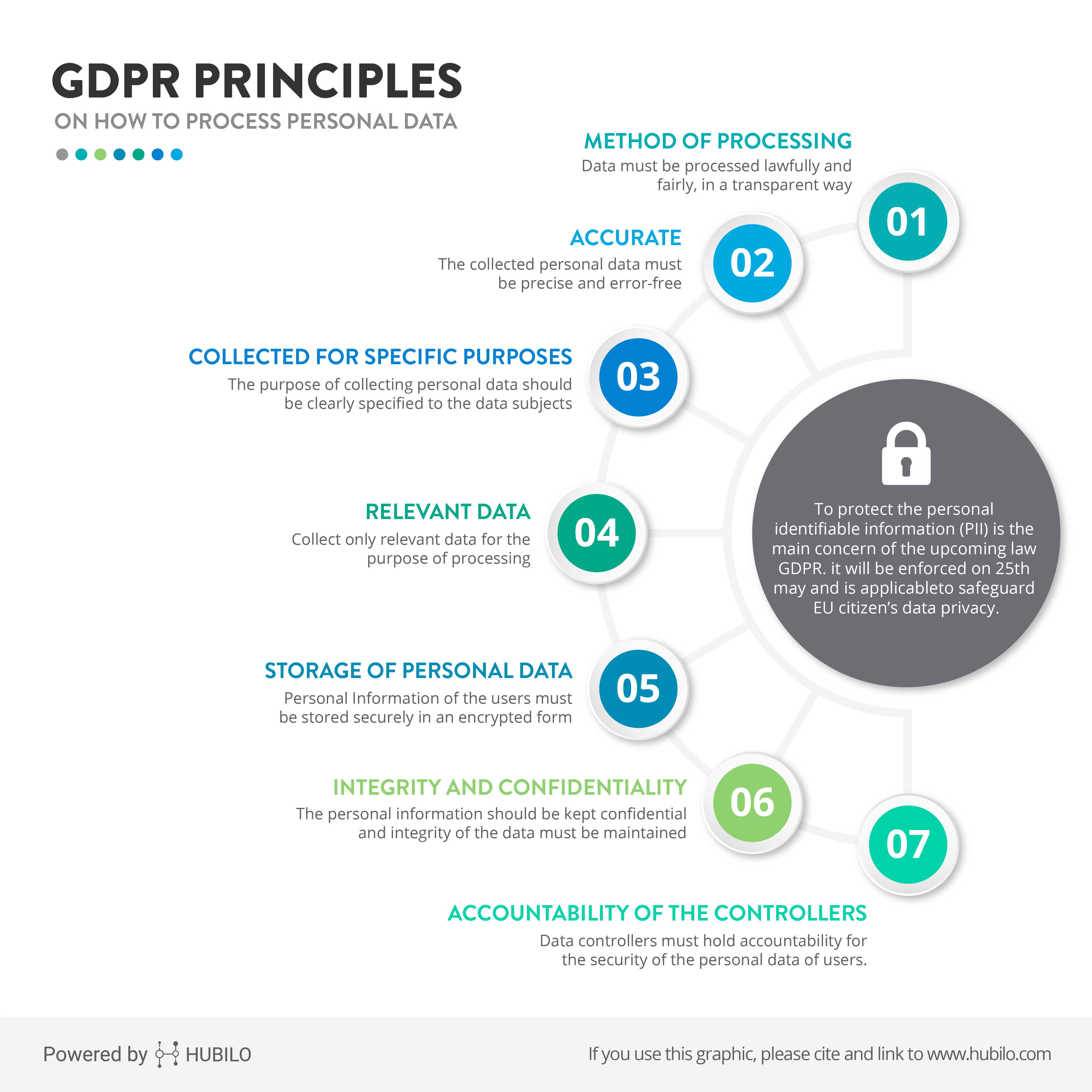
The GDPR applies directly in Portugal as in all EU member states. It establishes the fundamental principles for processing personal data:
- Lawfulness, fairness and transparency. Data must be processed on a valid legal basis and individuals must be informed
- Purpose limitation. Data collected for specified purposes cannot be used for incompatible purposes
- Data minimization. Only data necessary for the stated purpose should be collected
- Accuracy. Personal data must be kept accurate and up to date
- Storage limitation. Data must not be retained longer than necessary
- Integrity and confidentiality. Appropriate security measures must protect personal data
- Accountability. The data controller must demonstrate compliance
Portuguese Data Protection Law (Lei 58⁄2019)
Portugal’s implementing legislation supplements the GDPR in several areas:
| Area | Portuguese Provision |
|---|---|
| Age of consent for information society services | 13 years (GDPR allows 13-16, Portugal chose 13) |
| Processing of deceased persons’ data | Specific rights for heirs and family members |
| Employee data processing | Additional restrictions beyond GDPR |
| Video surveillance | Specific rules and prior authorization requirements |
| Criminal offences data | Processing limited to public authorities and regulated entities |
| National security exemptions | Defined scope for law enforcement and national security processing |
The CNPD
The CNPD is Portugal’s independent supervisory authority, established under Law 43⁄2004 and operating under the GDPR framework. It has investigative, corrective and advisory powers including:
- Investigating complaints from data subjects
- Carrying out audits and inspections, both announced and unannounced,
- Issuing warnings and reprimands
- Ordering compliance measures
- Imposing administrative fines
- Specific processing activities receive authorization (video surveillance, cross-border transfers in certain cases).
Among European data protection authorities, the CNPD has maintained one of the more proactive postures, especially regarding employee monitoring and video surveillance. Detailed deliberations and guidelines the CNPD issues carry substantial weight despite not being formally binding legislation.
Firms operating in Portugal should consult the CNPD’s published materials, accessible on its website in Portuguese, as they clarify how GDPR principles operate within the Portuguese context. The CNPD tends to favor protections of individual rights, reflecting recognition of the power dynamic between employers and employees in the employment relationship.
Legal Bases for Processing
The GDPR provides six legal bases for processing personal data. In the Portuguese context, each has specific considerations:
Consent
Consent must be freely given, specific, informed and unambiguous. In Portugal, the CNPD has emphasized that consent in the employment context is generally not considered freely given due to the inherent power imbalance. Employers should rely on other legal bases for employee data processing.
Contract Performance
Processing necessary for the performance of a contract with the data subject. This is the primary basis for processing customer data in commercial transactions and employee data for payroll and contract administration.
Legal Obligation
Processing necessary for compliance with a legal obligation. Portuguese law creates numerous data processing obligations, including tax reporting (SAF-T, IES), social security declarations, AML compliance and employment record-keeping.
Legitimate Interests
Processing necessary for legitimate interests pursued by the controller, balanced against the rights of the data subject. The CNPD requires a documented legitimate interest assessment (LIA) for each processing activity relying on this basis.
Data Protection Officer (DPO)
When a DPO is Required
A DPO (Encarregado de Protecao de Dados) is mandatory for:
| Category | Examples in Portugal |
|---|---|
| Public authorities and bodies | Government agencies, municipalities, public hospitals, state-owned enterprises |
| Core activities requiring large-scale systematic monitoring | Telecommunications, insurance, credit scoring, loyalty programs |
| Core activities involving large-scale processing of special category data | Hospitals, clinical laboratories, genetic testing services |
DPO Requirements
The DPO must:
- Be appointed based on professional qualities, in particular expert knowledge of data protection law and practices
- Be independent and report directly to the highest management level
- Not be dismissed or penalized for performing DPO tasks
- Be provided with adequate resources
- Be accessible to data subjects and the CNPD
The DPO can be an internal employee (who may have other duties, provided there is no conflict of interest) or an external service provider.
Voluntary Appointment
Companies not legally required to appoint a DPO may do so voluntarily. Once appointed (whether mandatory or voluntary), all DPO requirements under the GDPR apply equally.
Employee Data Protection
Employee data protection in Portugal is particularly robust, reflecting the country’s robust labor law heritage.
Restrictions on Employee Monitoring
Intersections between the Portuguese Labor Code (Codigo do Trabalho) and the GDPR appear in specific provisions addressing employee monitoring:
Article 20 - Personal Privacy. Employers may not demand that employees disclose information about their private lives, save when necessity and relevance for the employment relationship make such requirement strictly necessary.
Article 21 - Testing and Examinations. Drug and alcohol testing may occur only when the activity’s specific nature demands it and employees are apprised in advance.
Article 22 - Confidentiality of Messages. The employer cannot access the content of personal messages and communications of employees, including through company equipment and systems. This applies to email, instant messaging, social media and any other form of personal communication.
Article 20 (continued) - Remote Monitoring. Employers may not deploy remote surveillance equipment to monitor employee performance. Workplace CCTV systems are limited to security and property protection uses only and must not be used for monitoring work activities.
The prohibition on accessing employee personal communications under Article 22 of the Labor Code is absolute and has been upheld by Portuguese courts even when the employee used company email for personal purposes in violation of company policy.
An employer who accesses an employee’s personal email or messages, even on a company device, commits a criminal offense under Portuguese law and any evidence obtained is inadmissible in disciplinary or court proceedings. This creates a practical challenge for companies conducting internal investigations or e-discovery.
The recommended approach is to implement clear policies distinguishing between company communication accounts (which the company can access with appropriate notice) and personal communications (which are protected), and to use technical measures such as separate email accounts for personal and professional use.
Employee Consent
The CNPD follows the European Data Protection Board’s position that employee consent is generally not freely given due to the power imbalance in the employment relationship. Therefore:
- Consent should not be the primary legal basis for processing employee data
- Employers should rely on contract performance, legal obligation, or legitimate interests
- Where consent is used (for example, for optional benefits or communications), the employee must have a genuine choice without adverse consequences for refusing
Pre-Employment Data Processing
Background checks, reference checks and criminal record verification are subject to strict limitations:
| Type of Check | Permitted? | Conditions |
|---|---|---|
| Professional references | Yes | With candidate’s consent |
| Academic qualifications | Yes | Relevant to the position |
| Criminal record | Limited | Only when legally required for the position (childcare, security, finance) |
| Credit checks | Very limited | Only for financial sector positions |
| Social media screening | Restricted | Only publicly available professional profiles (LinkedIn); no personal social media |
| Medical examinations | Limited | Pre-employment medical check required by law, but cannot be used to discriminate |
Video Surveillance (CCTV)
Video surveillance in Portuguese workplaces is subject to specific rules that go beyond the general GDPR requirements.
Authorization Requirements
Following the GDPR’s implementation, prior CNPD authorization is no longer required for most CCTV installations. However, the following rules apply:
- Legitimate purpose only. CCTV may be used for security of persons and property, not for monitoring employee performance
- Signage. Clear and visible signs must inform people of the surveillance, including the identity of the controller and the purpose
- Camera placement. Cameras must not be directed at private areas (bathrooms, changing rooms, break rooms) or at specific workstations to monitor individual employees
- Recording retention. Recordings must be retained for a maximum of 30 days, unless required for specific legal proceedings
- Data protection impact assessment. Required before installing CCTV that monitors public areas or workplaces
- Audio recording. Generally not permitted in workplace settings
DPIA for Video Surveillance
A Data Protection Impact Assessment (DPIA) is required for video surveillance systems that are likely to result in a high risk to the rights of individuals. This includes:
- Surveillance of publicly accessible areas
- Surveillance of workplaces
- Large-scale surveillance systems
- Surveillance combined with biometric technology
Data Breach Notification
Obligations
| Notification | Deadline | Threshold |
|---|---|---|
| To the CNPD | Within 72 hours of becoming aware | All breaches unless unlikely to result in risk to individuals |
| To affected individuals | Without undue delay | When the breach is likely to result in high risk to their rights |
| To other EU supervisory authorities | When cross-border processing is involved | Same as CNPD notification |
Breach Notification Content
The CNPD requires notification that should contain:
- Nature of the breach includes the categories affected and the approximate number of individuals and records compromised.
- Contact details of the DPO or other point of contact
- Likely consequences of the breach
- Measures taken or proposed to address the breach and mitigate its effects
The CNPD provides an electronic form on its website for breach notifications.
Cross-Border Data Transfers
Transfers Within the EU/EEA
Data transfers within the EU/EEA are unrestricted under the GDPR’s free movement of data principle.
Transfers to Adequate Countries
Several non-EU nations have received adequacy decisions from the European Commission, enabling data transfers within those countries without extra safeguards. Through 2026, adequacy decisions cover the United Kingdom, Japan, South Korea, Argentina, New Zealand, Israel, Switzerland, Canada for commercial organizations and the United States under the EU-US Data Privacy Framework.
Transfers to Other Countries
Transfers to countries without an adequacy decision require appropriate safeguards:
| Mechanism | When Used |
|---|---|
| Standard Contractual Clauses (SCCs) | Most common mechanism for commercial transfers |
| Binding Corporate Rules (BCRs) | For intra-group transfers within multinational companies |
| Derogations (Article 49 GDPR) | Explicit consent, contract necessity, public interest, legal claims |
Portuguese firms relying on cloud services, CRM systems or marketing platforms from US companies face real operational implications from transfer rule requirements across borders.
Though the EU-US Data Privacy Framework grants a mechanism for transfers to certified US firms, many Portuguese businesses collaborate with service providers based in countries without adequacy decisions, including India or Brazil.
For these scenarios, Standard Contractual Clauses are mandatory, and a Transfer Impact Assessment must demonstrate that the receiving country offers essentially equivalent protection standards. The CNPD has strengthened its enforcement of cross-border transfer requirements following the Schrems II decision.
Fines and Enforcement
GDPR Fines
The GDPR provides for two tiers of administrative fines:
| Tier | Maximum Fine | Violations |
|---|---|---|
| Lower tier | EUR 10 million or 2% of global turnover | Technical and organizational obligations (security measures, records of processing, DPO appointment, breach notification) |
| Upper tier | EUR 20 million or 4% of global turnover | Core principles, lawfulness of processing, data subject rights, cross-border transfers |
Portuguese Criminal Provisions
Lei 58⁄2019 also establishes criminal offenses for certain data protection violations:
- Unauthorized access to personal data: Up to 2 years imprisonment
- Unauthorized data destruction carries a penalty of up to 2 years imprisonment.
- Data insertion of false data: Up to 2 years imprisonment
- Unauthorized interception of personal data carries a penalty of up to 2 years imprisonment.
- Non-compliance with CNPD orders: Criminal penalties
CNPD Enforcement Activity
The CNPD has increased its enforcement activity since the GDPR came into effect, with notable actions in the areas of:
- Public sector data processing (hospitals, municipalities)
- Employee monitoring and video surveillance
- Cookie and consent management on websites
- Direct marketing practices
- Data security at financial institutions
Compliance Checklist for Portuguese Companies
| Requirement | Action | Priority |
|---|---|---|
| Records of processing activities | Document all personal data processing activities (Article 30 register) | High |
| Privacy notices | Provide clear information to data subjects (employees, customers, suppliers) | High |
| Legal basis identification | Identify and document the legal basis for each processing activity | High |
| Data subject rights procedures | Implement processes to handle access, rectification, erasure, and portability requests | High |
| Data breach response plan | Establish procedures for detecting, reporting, and managing breaches | High |
| DPO appointment assessment | Evaluate whether a DPO is required and appoint if necessary | Medium |
| DPIA for high-risk processing | Conduct DPIAs for CCTV, profiling, large-scale processing, and new technologies | Medium |
| Vendor management | Review contracts with data processors and ensure GDPR-compliant agreements | Medium |
| Cross-border transfer assessment | Identify international transfers and implement appropriate safeguards | Medium |
| Employee training | Train staff on data protection principles and company procedures | Medium |
| Cookie compliance | Implement consent management for website cookies and tracking | Medium |
| Data retention policy | Define and implement retention periods for all data categories | Medium |
For company formation and initial compliance setup, see How to Register a Company in Portugal. For financial reporting obligations that interact with data protection, see Portugal Corporate Tax (IRC).
Notable CNPD Enforcement Decisions
The Comissao Nacional de Protecao de Dados has built a track record of substantial fines since GDPR took effect. These enforcement actions are worth understanding given the real stakes of non-compliance.
| Case | Year | Controller | Fine (EUR) | Violation |
|---|---|---|---|---|
| Centro Hospitalar Barreiro Montijo | 2018 | Public hospital | 400,000 | Excessive access to patient records |
| Municipality of Lisbon | 2021 | Local authority | 1,250,000 | Transfer of activist data to foreign embassies without legal basis |
| National Statistics Institute (INE) | 2022 | Statistical authority | 4,300,000 | 2021 Census cross-border transfer and subcontractor oversight failures |
| Universidade do Porto | 2023 | University | 100,000 | CCTV in classrooms without legal basis or DPIA |
| Private-sector e-commerce operator | 2024 | Commercial company | 1,100,000 | Cookie consent and data retention failures |
According to the Comissao Nacional de Protecao de Dados (CNPD), Portugal has imposed over EUR 10 million in cumulative GDPR fines between 2018 and 2024, with the largest single administrative fine of EUR 4.3 million against the National Statistics Institute (INE) in 2022 relating to subcontractor oversight failures during the 2021 Census [5].
Cookie Consent and ePrivacy Compliance
CNPD guidance on cookies is specific and frequently contravened by Portuguese-language websites. Compliant implementations should follow this baseline:
- Consent before cookies fire. Non-strictly-necessary cookies (analytics, advertising, social plugins) must not be placed until explicit consent is recorded.
- Equal-prominence reject option: “Reject all” must be as prominent and accessible as “Accept all”, pre-ticked checkboxes are invalid.
- Granular choice. Users need to be able to accept or reject by category including functional, analytics and advertising.
- Easy withdrawal. Every page needs a persistent consent-management link that users can access.
- Cookie wall prohibition. Conditioning access to content on cookie acceptance is generally unlawful unless a genuine alternative exists.
Schrems II and International Transfers
Portuguese controllers using Standard Contractual Clauses to export personal data to the United States and other non-adequate third countries must perform a transfer impact assessment in light of the Court of Justice of the European Union’s Schrems II decision (Case C-311⁄18).
| Mechanism | Use Case | Recommended Approach |
|---|---|---|
| Adequacy decision | UK, Switzerland, Japan, Korea, EU-US DPF | No TIA required; monitor adequacy status |
| Standard Contractual Clauses | Transfers to non-adequate countries | Mandatory TIA + supplementary measures |
| Binding Corporate Rules (BCRs) | Intra-group transfers | Requires CNPD approval, 18-24 months |
| Derogations (Article 49) | Occasional transfers, explicit consent | Narrow scope, documented case-by-case |
Supplementary Measures Checklist
- End-to-end encryption with keys controlled exclusively in the EEA
- Pseudonymisation before transfer where technically possible
- Contractual commitments requiring challenge of any surveillance order
- Transparency reporting obligations imposed on the data importer
- Regular audits and right to terminate upon disclosure of access requests
Mandatory DPO Roles in Portugal
Portuguese Law 58⁄2019 clarifies which entities must appoint a Data Protection Officer beyond the three GDPR categories. The following test applies:
- Public authorities and public law entities (always)
- Entities whose core activities require large-scale systematic monitoring (e.g., e-commerce tracking, advertising networks, behavioural analytics)
- Entities processing special categories or criminal conviction data on a large scale
- Electronic communications service providers (sector-specific rule)
- Financial institutions supervised by Banco de Portugal or CMVM (sector-specific rule)
- Health sector controllers processing patient data at volume
Related Corpy Resources
- Portugal business guide for a full overview of doing business in Portugal
- Business laws in Portugal for related articles on this topic
- Company formation in Portugal to explore adjacent considerations
- Corporate tax in Portugal to explore adjacent considerations
- Free zones in Portugal to explore adjacent considerations