

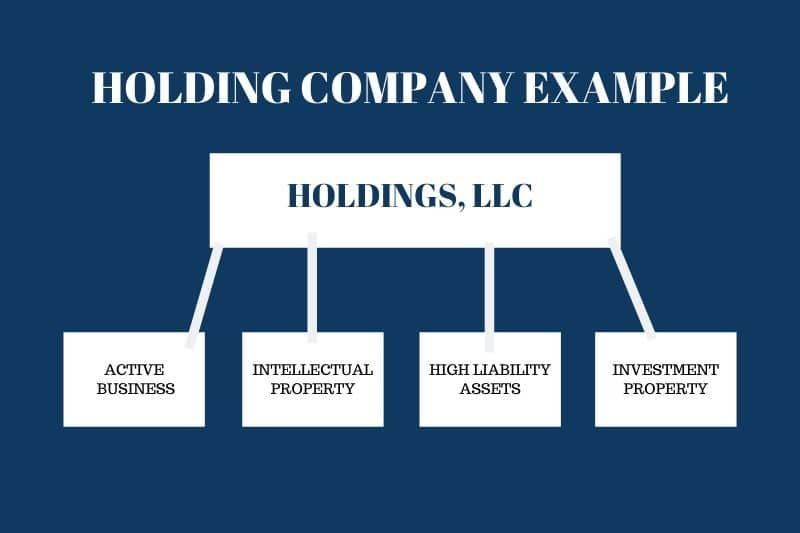
What is the simplest definition of a holding company?
A holding company is a legal entity whose primary purpose is owning shares or other equity interests in other companies (called subsidiaries or operating companies) rather than conducting operational business itself. The holding company typically does not sell products, employ operating staff, or serve customers directly.
A holding company is a corporate entity that owns shares in other companies rather than conducting operational business directly.
The concept sounds simple, but the implementations range from trivial (a single-member Wyoming LLC holding shares of a single operating company) to extraordinarily complex (a multi-tier international group with holding companies in Luxembourg, the Netherlands, Ireland, and Delaware).
Understanding when a holding structure makes sense, how to design it, and what ongoing burden it creates is essential for any founder considering anything more ambitious than a single-entity, single-country business.
This guide explains holding company structures from the ground up, covering the legal and tax mechanics, five concrete example structures ranging from simple to sophisticated, jurisdictional choices for the holding company, substance requirements and the most common mistakes founders make when implementing holding structures.
The analysis reflects current OECD guidance on substance and BEPS, the EU Anti-Tax Avoidance Directive, US tax rules under Subpart F and GILTI and practical implementation considerations in 2026.
What a Holding Company Actually Does
Four standard functions characterize the holding company:
- Shareholding. It owns shares of operating subsidiaries. This is the defining function.
- Financing. It may provide debt or equity financing to subsidiaries.
- IP holding. This entity may own intellectual property that gets licensed to operating subsidiaries.
- Management services. The entity may offer headquarters-level management services to subsidiaries.
Not every holding company performs all four functions. Asset protection alone requires only function 1. IP focus calls for 1 and 3. A fully functioning group parent executes all four.
Income for the holding company typically comes from:
- Dividends from subsidiaries (taxed preferentially via participation exemption in many jurisdictions)
- Interest on intercompany loans is taxable at the parent level but deductible at the subsidiary.
- Royalties earned from licensed IP are taxable, though IP regimes may offer preferential rates.
- Management fees are taxable and must be priced at arm’s length under transfer pricing rules.
Beyond minimal substance requirements, holding companies usually do not employ operating staff, do not sell products or services to external customers directly and do not hold substantial operating assets other than shares of subsidiaries.
Holding sounds passive, implying an entity that simply owns things and waits. Well-designed holding companies operate far from passively, negotiating intercompany contracts, exercising shareholder rights over subsidiaries, managing cash pooling and intercompany lending, licensing IP and sometimes providing substantial headquarters functions.
Legal posture and operational reality diverge sharply in how holding companies function.
Why the Structure Matters
Five advantages distinguish a holding company from a flat single-entity structure:
- Asset isolation across subsidiaries: A creditor of one subsidiary cannot reach assets of another subsidiary or the holding company (subject to veil-piercing limitations).
- Tax efficiency on dividends. Participation exemption regimes permit dividends received from subsidiaries to enter the holding structure tax-free and can then be redeployed as required.
- Facilitated M&A. Acquirers can buy specific subsidiaries or the entire group with cleaner tax and legal structure.
- Fundraising optionality. allows investors to contribute at different levels since investments can be made into the operating company, holding company or sister subsidiary.
- IP protection. Storing IP in a dedicated entity insulates it from the liabilities of the operating company.
None of these benefits happen by accident. Proper structuring, substantive content, transfer pricing and continuous compliance are required for each.
When a Small Business Actually Needs a Holding Company
Holding companies are not necessary for the vast majority of small businesses. One US LLC managing a single business line in a single state works fine without holding structure. An Estonian OU that provides consultancy services requires no parent company. A UK Ltd selling widgets to UK customers adds no value through complexity.
Holding companies become useful at specific thresholds:
| Threshold | Typical Trigger |
|---|---|
| Multiple distinct business lines under common ownership | Founder runs two or more unrelated businesses and wants to isolate each |
| Real estate portfolio | Multiple properties needing separate liability shields |
| International expansion | Operations in two or more countries requiring tax-efficient profit flow |
| Preparing for M&A | Cleaner structure for potential acquisition or divestiture |
| IP centralization | Self-developed IP licensed across multiple subsidiaries |
| Family wealth planning | Succession planning and generational transfer |
| Passive investment | Holding investments in other entities (common in PE and VC structures) |
Below these thresholds, the cost and complexity of a holding structure usually exceeds the benefit.
Five Example Structures
Example 1: Simple US Asset Protection Holding
In Texas, a business owner manages two unconnected companies: a consulting LLC and a rental property portfolio LLC. Both are Texas LLCs. For liability isolation between them and enhanced asset protection, the owner establishes a Wyoming LLC that holds 100 percent of both Texas LLCs.
Individual Owner
       |
   Wyoming Holding LLC
     /            \
Texas Consulting  Texas Rental Properties
LLC               LLC
Annual cost. Approximately 500 to 1,500 USD additional for the Wyoming holding.
Primary benefit. Charging order protection at the holding level. A personal creditor of the owner cannot foreclose on Wyoming LLC interests, and the LLC does not need to distribute.
Caveat. Texas is where the owner lives and where both operating LLCs do business. Texas franchise tax obligations apply to the operating companies regardless of the holding. The Wyoming holding does not reduce Texas tax. For detailed comparison of state options for US LLCs, see the Corpy guide on Delaware vs Wyoming vs Nevada LLC comparison.
Example 2: Delaware C Corp Over Operating LLC
A founder intends to raise institutional venture capital for a SaaS business. To ensure the structure is VC-ready, the founder incorporates a Delaware C Corporation as holding company with a wholly-owned operating subsidiary. Revenue flows to the operating subsidiary, which pays the Delaware C Corp for management services and occasionally distributes profits.
Individual Founder
       |
   Delaware C Corporation (HoldCo)
       |
   Delaware LLC (OpCo elected to check-the-box treatment to be disregarded)
Annual cost. Corporates budgets an extra 4,000 to 10,000 USD annually for maintenance, tax preparation and compliance.
Primary benefit: The Delaware C Corp structure is immediately investor-ready. Preferred stock, stock options, and standard VC documentation apply cleanly.
Caveat: For a disregarded operating subsidiary, the structure is effectively a single entity for US tax purposes. The complexity of the two-entity structure is mostly legal and operational, not tax-driven.
Example 3: IP Holding With EU Operating Subsidiary
A SaaS business headquartered in Delaware builds software all within the US. To serve EU customers, the company establishes an Irish operating subsidiary for expansion into Europe. Software IP remains licensed from the Delaware parent to the Irish subsidiary at arm’s length royalty terms.
US Parent (Delaware C Corp)
   |         |
   |         +-- Owns software IP
   |
Irish Subsidiary (Operating)
   +-- Licenses software from its US parent.
   +-- Sells to EU customers
Annual cost: Approximately 25,000 to 60,000 USD total including Irish corporate secretary, tax preparation, transfer pricing documentation, and intercompany agreement maintenance.
Primary benefit. EU customer base served by an EU entity, facilitating VAT registration, GDPR compliance and customer trust. Tax efficiency through Ireland’s 12.5 percent rate on trading profits, with US parent receiving royalties (taxable but offset by US R&D credits).
Caveat. Transfer pricing is fundamental. Arm’s length analysis must support the royalty rate used. The Irish subsidiary needs real operational substance (employees, office, business functions) to justify the Irish tax rate. Royalties received by the US parent are taxable as US-source income, and Subpart F risks require disclosure on Form 5471.
Comprehensive tax strategy covering transfer pricing rules for small international companies can be found in the Corpy guide on transfer pricing rules for small international businesses.
Example 4: Multi-Country Operating Group with UAE Holding
In Dubai, a family office manages significant commercial activities spread across three countries. A Turkish manufacturing operation, a UK distribution business and a US e-commerce platform form the portfolio. The family organizes the group through a UAE holding company (based in ADGM or DIFC) that owns three operating subsidiaries.
UAE Holding Company (ADGM Holdco)
     /           |           \
Turkish AS    UK Ltd        US Delaware LLC
(Manufacturing) (Distribution)  (E-commerce)
Annual cost. Approximately 50,000 to 150,000 USD including UAE substance requirements, Turkish Audit, UK statutory accounts, US tax preparation, transfer pricing documentation across all relationships.
Primary benefit. UAE holding company potentially earns 0 percent UAE corporate tax on qualifying income (dividends from subsidiaries if structured as qualifying income under Cabinet Decision 55). Zero personal income tax in the UAE for the principals if they are UAE residents. Consolidated wealth management at the holding level.
Caveat. Substance requirements under Cabinet Decision 100 require real operations, employees and office space in the UAE. Treaty access depends on the specific countries involved. Turkish, UK and US withholding on dividends may apply absent treaty relief. CFC rules in the residence countries of the principals (if not UAE resident) may trigger deemed income.
The structure requires careful cross-border tax planning.
Example 5: Multi-Jurisdiction Venture-Backed Startup
This technology startup, with founders based in the US, India and Singapore, has just closed Series B funding. The Delaware flip is complete, with the Delaware C Corporation as the ultimate parent structure. Engineering continues in India and APAC sales from the Singapore office. The business also maintains a UK subsidiary to serve European customers.
Delaware C Corporation (Parent, post-flip)
     /              |              \
Indian Subsidiary   Singapore       UK Subsidiary
(Engineering,       Subsidiary      (European sales)
contract R&D)       (APAC sales)
Annual cost: 150,000 to 400,000 USD including corporate secretary services in four jurisdictions, transfer pricing documentation, tax preparation in each country and Form 5471 reporting for each CFC.
Primary benefit: Delaware parent is VC-ready. Indian subsidiary can claim R&D tax incentives and SEZ benefits for eligible activities. Singapore provides APAC sales hub. UK provides European trading presence.
Caveat. Tax complexity is extreme. GILTI under US rules applies to CFCs. Indian withholding on royalties and service fees could apply. Substance requirements in Singapore must be satisfied. Transfer pricing SME exemption exists in the UK, but large groups do not qualify. Most groups at this complexity level need internal tax counsel or a dedicated tax director.
Jurisdictional Choices for Holding Companies
The choice of holding company jurisdiction depends on the group’s profile. The most common holding jurisdictions in 2026 are:
| Jurisdiction | Best For | Key Features |
|---|---|---|
| Delaware (US) | US-focused groups, VC-backed companies | VC-friendly law, federal tax efficiency via elections, extensive treaty network |
| Wyoming (US) | Asset protection, small US groups | Lowest US fees, strongest charging order protection |
| Ireland | EU-focused groups, IP holding | 12.5 percent trading rate, KDB, extensive treaties, EU passport |
| Luxembourg | Large international groups, fund holdings | Participation exemption, treaty network, sophisticated professional infrastructure |
| Netherlands | Multi-country groups with IP | Participation exemption, Innovation Box, treaty access |
| Singapore | APAC-focused groups | Exemption schemes, 90+ treaties, strong rule of law |
| UAE (ADGM/DIFC) | Gulf region, international groups with UAE operations | 0 percent on qualifying income, growing treaty network, no personal tax |
| Switzerland | Wealth management, private groups | Cantonal tax competition, participation exemption, privacy |
| Hong Kong | Greater China access | Territorial taxation, efficient formation, 80+ treaties |
For deeper comparison of ADGM and DIFC specifically, see the Corpy guide on ADGM vs DIFC. For comparison of UAE, Singapore and Estonia, see the UAE vs Singapore vs Estonia guide.
Substance Requirements: The Non-Negotiable
No matter which jurisdiction is chosen, holding companies increasingly face substance requirements. The OECD BEPS framework, the EU Anti-Tax Avoidance Directive (ATAD), and specific country rules all require that a holding company have real substance to claim the tax benefits attached to the jurisdiction.
Typical substance requirements include:
- Physical office in the jurisdiction
- Qualified employees (or at minimum, qualified directors) who are tax-resident
- Decision-making meetings held in the jurisdiction
- Adequate operating expenditure in the jurisdiction
- Local bank account and genuine financial activity
A holding company that exists only on paper, with no employees, no office and no local activity, will not survive challenge from tax authorities in most major jurisdictions. Post-BEPS, the paper-holding-company model is effectively dead.
Tax Residency vs Legal Seat
A holding company incorporated in one jurisdiction may be tax-resident in another if management and control are exercised elsewhere. This is the core trap of using a Delaware holding company managed entirely from the UK: the UK may treat the Delaware entity as UK tax resident, subjecting it to UK corporate tax regardless of its Delaware incorporation.
Founders must ensure that board meetings, strategic decisions and key management are actually exercised in the jurisdiction of intended tax residency. This typically means in-person or properly documented meetings in the jurisdiction, local directors with real authority and substantive activity in the jurisdiction.
Participation Exemption: The Core Tax Mechanism
The participation exemption is the tax rule that makes holding companies economically viable. It exempts dividends received by a holding company from a qualifying subsidiary from corporate income tax. Key European implementations:
EU Parent-Subsidiary Directive
Within the EU, the Parent-Subsidiary Directive eliminates withholding tax on dividends paid by an EU subsidiary to an EU parent holding at least 10 percent of capital for at least 24 months (or a shorter period if permitted by the member state). This is the core rule enabling intra-EU holding structures.
Specific Country Regimes
- Ireland. Dividends from Irish or treaty-country subsidiaries receive exemption under specific conditions covering the trading subsidiary, minimum holding requirement and treaty jurisdiction.
- Netherlands. Dutch participation exemption requires a 5 percent minimum holding with no minimum holding period required, and the exemption broadly covers most qualifying subsidiary income.
- Luxembourg. Dividends: participation exemption at 10 percent with a 1.2 million EUR minimum holding requirement (6 million EUR for capital gains), and a 12 month holding period is needed.
- Germany. Dividends from qualifying subsidiaries receive a 95 percent exemption, meaning only 5 percent is taxable.
- Spain. Companies meeting a 5 percent minimum holding with substance conditions receive exemption.
- Singapore. Specific conditions allow foreign-sourced dividend exemption.
- UAE. Dividends from qualifying subsidiaries may be qualifying income under Cabinet Decision 55
US Dividends Received Deduction
Dividends received by one corporation from another receive a Dividends Received Deduction (DRD) treatment in the US. DRD rates are as follows:
- Dividends from US corporations with less than 20 percent ownership receive a 50 percent rate.
- Dividends from US corporations with 20 percent or more ownership receive a 65 percent rate.
- 100 percent for qualifying dividends from members of the same affiliated group (generally 80 percent or more ownership)
- 100 percent for dividends from foreign corporations under Section 245A (subject to conditions)
Section 245A was introduced by the Tax Cuts and Jobs Act in 2017 and effectively creates a US participation exemption for foreign-source dividends received by a US corporate shareholder, subject to specific conditions.
Common Structural Mistakes
Creating a holding company without substance: The paper-only holding company used to work. Post-BEPS, it does not. Tax authorities increasingly look through empty shell holding companies to deny tax benefits.
Ignoring Controlled Foreign Corporation rules: A US founder who creates a holding company in the UAE while living in the US creates a US-controlled foreign corporation. Subpart F and GILTI apply to pass undistributed income back to the US shareholder annually, often eliminating the intended tax benefit.
Mismatched management and legal seat: A Delaware holding managed entirely from Germany is tax-resident in Germany, not the US. The Delaware incorporation offers no tax shield if actual management is elsewhere.
Undocumented intercompany transactions. Tax authorities can recharacterize or disallow intercompany flows without written agreements and transfer pricing documentation in place.
Over-structuring at early stage. Building a multi-jurisdiction holding structure precedes revenue justification and wastes funds on compliance and advisory fees. Most startups can delay until specific triggers such as international expansion, M&A readiness or major IP development make the cost justified.
Ignoring beneficial ownership reporting. Virtually every jurisdiction requires holding companies to report beneficial ownership. Consult the Corpy guide on global beneficial ownership reporting requirements for the full picture.
Founders often build holding company structures per advice from consultants paid to promote complex structures. The decisive question is never what can we do. The decisive question is what problem are we addressing and is a holding structure the cheapest solution. For tax on 2 million USD of revenue, a holding company is typically not the answer.
For separating risk across four distinct business lines each at 5 million USD, it probably is.
Ongoing Maintenance Reality
Maintenance is the acid test of a holding structure’s design. Annual maintenance requirements typically include:
Corporate Secretary Work
- Board meetings (typically quarterly minimum)
- Board resolutions in written form are required for major transactions.
- Annual shareholders meetings are required by jurisdiction.
- Minute book maintenance
- Statutory register updates
Intercompany Flow Management
- Dividend declarations and payments
- Intercompany invoicing for services and royalties works within these guidelines.
- Documentation of intercompany loans and interest accrual procedures must be thorough.
- Monitoring transfer pricing and implementing true-up adjustments.
Tax Compliance
- Tax return preparation across every jurisdiction requires tailored approach.
- Management of withholding tax on cross-border payments requires careful approach.
- Treaty benefit claims where applicable
- CFC reporting by shareholders
- Forms 5471, 5472, 8865 and 8858 are used for US reporting purposes.
Regulatory Compliance
- Annual reports and confirmation statements
- Beneficial ownership updates
- Substance reporting where applicable
- Registered agent renewals
For a consolidated view of multi-jurisdiction compliance calendars, see the Corpy guide on compliance calendar for international founders.
Implementation Roadmap
When founders contemplate a holding structure, the standard implementation sequence runs as follows:
Identify the business purpose. Asset protection, tax efficiency, M&A readiness, IP holding, international expansion. Document the specific problem the structure solves.
Evaluate cost-benefit. The structure must save or earn more than its annual maintenance cost, or provide non-financial benefits (investor readiness, risk isolation) worth the cost.
Select jurisdiction: Based on group profile, existing operations, founder residency, and specific benefits sought.
Design the entity chart. by determining parent-subsidiary relationships, ownership percentages and who oversees operations.
Draft intercompany agreements. include services agreement, license agreement and loan agreements where applicable.
Implement transfer pricing. Benchmark intercompany prices, document methodology.
File and fund. Establish the entities, fund them with initial capital and register any subsidiaries that are required.
Establish ongoing compliance. Hire a corporate secretary, tax preparer and transfer pricing provider in every jurisdiction.
Monitor and adjust. Review structure annually for continued appropriateness, jurisdictional changes and business evolution.
Cross-Cutting Considerations
Holding structures intersect with many other aspects of running an international business. Tax treaty planning is essential when dividends, interest, or royalties cross borders. Banking arrangements need to accommodate intercompany flows. Beneficial ownership disclosure must be kept current. Corporate housekeeping must be disciplined across all entities.
Related Corpy Resources
- Transfer pricing rules for small international businesses for intercompany pricing compliance
- Treaty-based coordination to legally avoid double taxation explains methods for legal avoidance.
- Best countries to incorporate for SaaS startups for jurisdiction-specific holding considerations
- Global UBO Reporting Requirements Guide covers UBO disclosure rules across jurisdictions for corporate compliance.
- Compliance calendar for international founders for deadline tracking across multiple entities
How does a holding company structure work?
A holding company structure works by placing a parent entity at the top that owns shares in one or more operating subsidiaries, with the parent holding assets (IP, real estate, brands) while operating subs handle customer-facing business.
The parent typically incorporates in a low-tax or flexible jurisdiction - Delaware ($110 + $300/year), Wyoming ($100 + $62/year), Luxembourg, Netherlands, or Singapore - and subsidiaries in operational markets. Dividends flow up from subs to the parent, often tax-free under participation exemptions (Netherlands, Luxembourg, Singapore) or US intercompany dividend deductions.
Benefits include liability isolation between business lines, simpler exits (sell the operating sub, keep the parent), and consolidated tax planning. Costs are higher - each entity carries its own formation, accounting and annual filing load.
How is a holding company structured?
A holding company operates as a parent entity owning equity in one or more operating subsidiaries while the parent itself does not conduct trade or provide services to customers.
Jurisdictions favoring holding activity - Delaware ($110 + $300/year), Wyoming ($100 + $60/year), Netherlands BV (minimum EUR 0.01 capital), Luxembourg, or Singapore Pte Ltd (SGD 1 capital) - house the parent, which holds IP, brand rights, real estate or investment portfolios on its books.
Subsidiaries operate beneath in relevant markets (US LLC for US sales, UK Ltd for UK operations, Estonian OU for EU markets). Dividends move upward often under participation exemption regimes. Business-line liability isolation, clean asset sales, IP licensing and succession planning all benefit from this structure.
What is a holding company structure in jurisdictions like Delaware, Wyoming, and Netherlands?
A holding company structure places a parent entity at the top that owns shares in operating subsidiaries, with the parent holding assets (IP, real estate, brands, investments) while operating subs handle customer-facing activities.
Common jurisdictions for the parent holding entity:
- Delaware LLC or C-Corp ($110 + $300/year for LLC, $109 + $450/year minimum franchise for C-Corp) for US-focused holdings with QSBS eligibility
- Wyoming LLC ($100 + $60/year) for privacy and cost optimization
- Netherlands BV (EUR 0.01 minimum capital + EUR 400 to 1,000 notary + participation exemption 100% on qualifying dividends) for EU holding structures
- Luxembourg SARL (EUR 12,000 minimum capital + participation exemption) for European holding with SPF (Societe de Gestion de Patrimoine Familial) option for family offices
- Singapore Pte Ltd (SGD 315 + 17% with partial exemption) for APAC operations
- Ireland Ltd (EUR 100 to 200 + 12.5%) for EU scale
- UAE ADGM or DIFC ($3,500 to $15,000/year + 0% to 9% corporate tax). Structure mechanics: parent holds 100% of operating subs’ shares
- dividends flow upward (often tax-free under participation exemption)
- IP licensing from parent to operating subs generates deductible royalty expense in opcos and taxable income in parent, enabling tax-efficient profit allocation (constrained by BEPS and 15% GloBE minimum tax rules effective 2024). Benefits: liability isolation between business lines
- simpler exits (sell the operating sub, keep the parent)
- consolidated tax planning, brand and IP protection. Costs: higher formation and annual compliance (each entity $110 to $5,000/year)
- transfer pricing documentation, potentially 2 to 4x the accounting workload of single-entity structures. For solo founders with under $1M profit, single-entity Wyoming LLC or Delaware C-Corp usually suffices, holding structures justified above $1M annual profit with multiple product lines or jurisdictions