

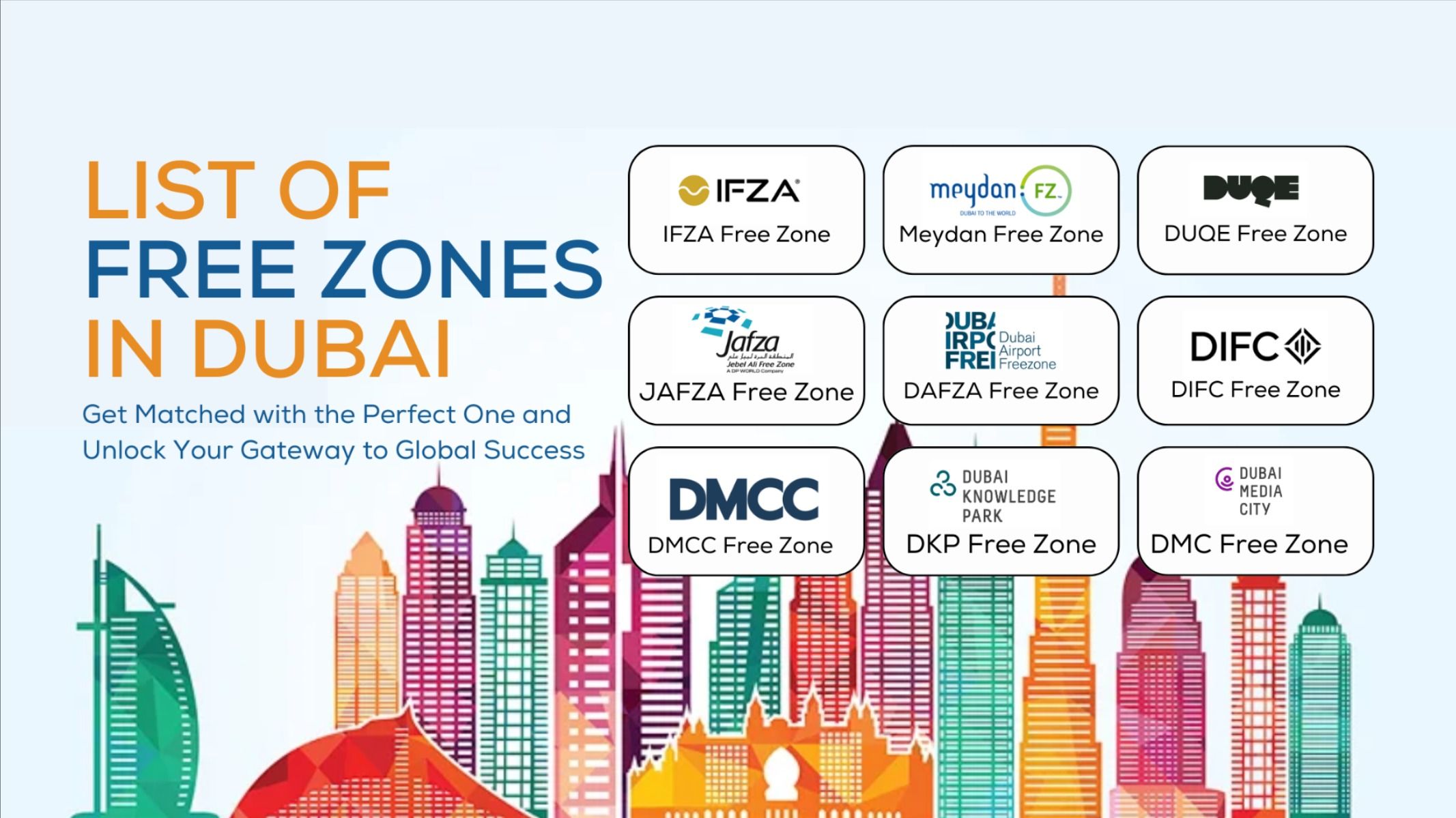
Which is the best free zone in Dubai for a small business?
For cost-conscious small businesses and startups, IFZA (International Free Zone Authority) and Meydan Free Zone consistently rank as the most affordable options with license packages starting from AED 10,500 to 13,000 per year. Both offer flexi-desk options, quick registration (3-5 business days), and visa allocations.
Dubai’s free zone model has been the cornerstone of its economic transformation. Since the establishment of Jebel Ali Free Zone in 1985, the emirate has built a network of over 30 specialized economic zones that collectively host more than 60,000 registered companies.
Each free zone operates as a semi-autonomous jurisdiction with its own registration authority, licensing framework, and regulatory environment, offering foreign entrepreneurs a streamlined pathway to business ownership with 100% ownership rights, tax advantages, and simplified compliance.
Choosing the right free zone is one of the most consequential decisions a business owner will make when setting up in Dubai. The wrong choice can result in unnecessary costs, restricted market access, or operational limitations that become apparent only after incorporation.
This guide provides a comprehensive comparison of every major Dubai free zone, organized by industry focus, cost, and practical suitability, so that entrepreneurs can make an informed decision backed by current 2026 data.
For a broader overview of company formation in Dubai including the mainland option, see our complete guide to starting a company in Dubai.
How Dubai Free Zones Work
Free zones are designated geographic areas within the UAE where businesses benefit from special regulations that differ from mainland commercial law. The core benefits that apply across all Dubai free zones include:
- 100% foreign ownership: No local sponsor or UAE national partner required
- 0% personal income tax: Applies to all UAE residents regardless of jurisdiction
- Corporate tax advantages: Qualifying Free Zone Persons (QFZP) pay 0% on qualifying income under the UAE corporate tax regime
- Full profit repatriation: No restrictions on transferring profits out of the UAE
- Customs duty exemptions: Goods imported into the free zone are not subject to 5% import duty (duty applies only when goods enter the UAE mainland)
- Simplified registration: Most free zones offer end-to-end digital registration in 3 to 7 business days
Free zone tax benefits are:
- not automatic. To qualify for the 0% corporate tax rate on qualifying income, a free zone company must meet the QFZP criteria including maintaining adequate economic substance in the UAE, earning qualifying income (primarily from transactions with other free zone entities or from foreign sources)
- and complying with transfer pricing documentation requirements. Companies that earn non-qualifying income (such as revenue from mainland UAE clients) are taxed at the standard 9% rate on that portion. For detailed tax guidance
- see our UAE corporate tax guide
Major Dubai Free Zones: Detailed Profiles
DMCC (Dubai Multi Commodities Centre)
DMCC is the largest and most popular free zone in Dubai, named the Global Free Zone of the Year by the Financial Times’ fDi Magazine for nine consecutive years. Located in the Jumeirah Lakes Towers (JLT) district, DMCC hosts over 26,000 member companies spanning commodities trading, financial services, technology, consulting, and professional services.
Best for: Trading companies, commodity businesses, consultancies, tech firms, and any business seeking prestige and networking opportunities.
License fees: Starting from AED 15,000 per year for a service license. Trading licenses from AED 25,000. Additional activities cost AED 2,500 to 5,000 each.
Office options: Flexi-desk (AED 14,000-20,000/year), shared office, dedicated office, warehouse, and industrial units. Visa allocation is tied to office type and size, approximately 1 visa per 9 square meters of leased space.
Key advantages: Massive business community, excellent networking events, strong brand recognition, JLT location with direct metro access, and robust dispute resolution through DMCC’s own arbitration centre.
Limitations: Higher cost than budget free zones, flexi-desk visa allocation limited to 3, and renewal fees can be substantial.
JAFZA (Jebel Ali Free Zone)
Established in 1985, JAFZA is the oldest and largest free zone by area in Dubai. Situated adjacent to Jebel Ali Port (the largest man-made port in the world), JAFZA is the premier destination for logistics, warehousing, manufacturing, and large-scale trading operations. Over 11,000 companies operate within JAFZA, including major multinationals.
Best for: Import/export businesses, manufacturing, logistics, warehousing, and companies that need port access.
License fees: Starting from approximately AED 15,000 for a trading license. Industrial licenses from AED 20,000.
Office options: Flexi-desk (AED 15,000-22,000/year), standard offices, light industrial units (LIU), warehouses, and customizable land plots for purpose-built facilities. Flexi-desks provide up to 7 visa allocations.
Key advantages: Direct port access, customs bonded warehouses, the ability to import and re-export without customs duty, large warehouse and industrial facilities, and JAFZA’s established reputation with international banks and partners.
Limitations: Location in the south of Dubai (30-40 minutes from central Dubai), higher setup costs for industrial operations, and less suitable for service-only businesses.
DIFC (Dubai International Financial Centre)
DIFC is Dubai’s premier financial hub and the leading financial centre in the Middle East, Africa, and South Asia (MEASA) region. It operates under its own independent legal and regulatory framework based on English common law, administered by the DIFC Courts and regulated by the Dubai Financial Services Authority (DFSA).
Best for: Financial services, fintech, wealth management, investment funds, insurance, legal services, and professional advisory firms.
License fees: Retail licenses from AED 30,000, non-regulated professional services from AED 15,000. Regulated activities require DFSA licensing with additional costs.
Office options: Innovation Hub for startups (AED 25,000-50,000/year), co-working spaces, dedicated offices in Gate Village and surrounding towers. Premium office rents range from AED 200 to AED 350 per square foot per year.
Key advantages: Common law jurisdiction, independent courts, access to the DFSA regulatory framework (essential for financial services), proximity to major financial institutions, and strong brand prestige.
Limitations: Highest cost free zone in Dubai, DFSA licensing is rigorous and time-consuming (3-6 months for regulated activities), and not cost-effective for non-financial businesses.
DIFC is not just another free zone. It operates as a separate common law jurisdiction within the UAE, with its own courts, arbitration centre, and employment law. For businesses in financial services, this is a significant advantage since contracts governed by DIFC law and disputes resolved in DIFC Courts provide a level of legal certainty comparable to London or Singapore.
For non-financial businesses, these advantages are rarely relevant and the premium pricing is not justified.
IFZA (International Free Zone Authority)
IFZA has rapidly grown to become one of the most popular free zones for cost-conscious entrepreneurs, startups, and small businesses. Located in Fujairah (with a Dubai presence through its IFZA Dubai branch), IFZA offers some of the lowest license fees in the UAE while maintaining a professional registration process and responsive customer service.
Best for: Startups, e-commerce businesses, consultants, freelancers, and any business prioritizing low setup costs.
License fees: Starting from approximately AED 10,500 for a basic service or trading license.
Office options: Flexi-desk (included in many packages), co-working space, and dedicated offices. Flexi-desk provides up to 3 visa allocations.
Key advantages: Lowest cost entry point among well-established free zones, fast registration (3-5 business days), simple documentation requirements, and responsive support.
Limitations: Less brand recognition than DMCC or JAFZA, Fujairah address (though this rarely matters for international businesses), and limited physical infrastructure compared to larger free zones.
Meydan Free Zone
Meydan Free Zone, located in the Meydan district near Downtown Dubai, offers competitive pricing and a growing reputation as a business-friendly free zone for small to medium enterprises. It has attracted thousands of companies since its establishment, primarily in the services and e-commerce sectors.
Best for: Small businesses, digital agencies, e-commerce, consulting, and professional services.
License fees: Starting from approximately AED 11,000 for a basic license package.
Office options: Virtual office, flexi-desk, and physical office options. Virtual office packages available from AED 5,000 per year.
Key advantages: Competitive pricing, central Dubai location, quick processing times, and the ability to add multiple activities at low additional cost.
Limitations: Smaller free zone community than DMCC or JAFZA, limited warehouse or industrial facilities, and relatively newer track record.
Dubai South (formerly Dubai World Central)
Dubai South is a massive 145-square-kilometer master-planned city centered around Al Maktoum International Airport, which is being developed as the world’s largest airport. The free zone was heavily promoted during and after Expo 2020, with a focus on aviation, logistics, e-commerce, and light manufacturing.
Best for: Aviation, logistics, e-commerce fulfillment, light manufacturing, and businesses that benefit from airport proximity.
License fees: Starting from approximately AED 12,000 for a commercial license.
Office options: Flexi-desk, dedicated offices, warehouses, and light industrial units. The Business Park offers affordable office solutions starting from AED 15,000 per year.
Key advantages: Proximity to Al Maktoum International Airport, large warehouse and industrial facilities, connection to the future airport expansion, and competitive pricing for logistics operations.
Limitations: Remote location (40-50 minutes from central Dubai), still developing infrastructure, and limited dining and retail amenities in the immediate area.
Dubai Internet City (DIC) and Dubai Media City (DMC)
Part of the TECOM Group, Dubai Internet City and Dubai Media City are co-located free zones in the Al Sufouh area near Dubai Marina. DIC focuses on technology companies while DMC serves media, publishing, advertising, and entertainment businesses. Together they host major names including Microsoft, Google, Meta, LinkedIn, CNN, and Reuters.
Best for: Technology companies, media and publishing, advertising and marketing agencies, and digital businesses seeking co-location with major tech firms.
License fees: Starting from approximately AED 15,000 to 20,000 per year depending on the activity and license type.
Office options: Co-working through in5 Tech (startup incubator), shared offices, and dedicated office spaces. Office rents range from AED 80 to AED 180 per square foot per year.
Key advantages: Proximity to major tech and media companies, active startup ecosystem (in5 incubator), prestigious address, and strong networking community.
Limitations: Higher cost than budget free zones, limited availability of flexi-desk options, and office space can be competitive during peak periods.
Complete Free Zone Comparison Table
The following table compares the key features and costs of the major Dubai free zones to help you identify the best fit for your business.
| Free Zone | Minimum License Cost (AED/year) | Flexi-Desk Cost (AED/year) | Max Visas (Flexi-Desk) | Best Industries | Setup Time |
|---|---|---|---|---|---|
| DMCC | 15,000 | 14,000 - 20,000 | 3 | Trading, consulting, tech, commodities | 5-7 days |
| JAFZA | 15,000 | 15,000 - 22,000 | 7 | Logistics, manufacturing, warehousing | 5-7 days |
| DIFC | 15,000 (non-regulated) | N/A (co-working from 25,000) | 1-2 | Finance, legal, wealth management | 7-14 days |
| IFZA | 10,500 | Included in packages | 3 | Startups, e-commerce, consulting | 3-5 days |
| Meydan | 11,000 | 6,000 - 10,000 | 3 | SMEs, digital agencies, e-commerce | 3-5 days |
| Dubai South | 12,000 | 10,000 - 15,000 | 3 | Aviation, logistics, e-commerce | 5-7 days |
| DIC/DMC | 15,000 - 20,000 | Limited options | 2-3 | Technology, media, marketing | 5-10 days |
| DAFZA | 15,000 | 12,000 - 18,000 | 3 | Aviation, logistics, trading | 5-7 days |
| DSO (Dubai Silicon Oasis) | 12,000 | 8,000 - 14,000 | 3 | Tech hardware, IT, electronics | 5-7 days |
| DHCC (Dubai Healthcare City) | 20,000 | N/A | N/A | Healthcare, pharma, wellness | 10-20 days |
| Dubai Knowledge Park | 15,000 | 10,000 - 15,000 | 2-3 | Education, training, HR | 5-7 days |
| Dubai Design District (d3) | 18,000 | N/A | N/A | Fashion, design, art, luxury | 7-10 days |
Choosing the Right Free Zone by Industry
Trading and E-Commerce
For businesses focused on buying and selling goods, whether physical or digital, the choice comes down to scale and market:
- Small-scale or online trading: IFZA or Meydan offer the lowest entry cost and sufficient functionality for businesses that do not need physical warehouse space.
- Medium-scale trading: DMCC provides the largest business community and networking opportunities, plus access to DMCC Tradeflow for digital trade documentation.
- Large-scale trading and distribution: JAFZA offers unmatched logistics infrastructure with direct port access, bonded warehouses, and industrial facilities.
Technology and IT Services
- Startups and small tech firms: IFZA or DSO (Dubai Silicon Oasis) for cost-effective setup. DSO also offers its own technology incubator.
- Established tech companies: Dubai Internet City for proximity to major tech firms and the in5 accelerator program.
- Fintech: DIFC for access to the Innovation Hub and DFSA regulatory sandbox. This is the only free zone where you can obtain a financial services license.
Professional Services and Consulting
- Budget-conscious consultants: IFZA or Meydan provide all the essentials (license, visa, registered address) at the lowest cost.
- Premium consulting firms: DMCC for brand recognition and networking, or DIFC for financial and legal advisory practices.
- Freelancers: Meydan, IFZA, or Dubai South offer individual freelancer permits starting from approximately AED 7,500 per year.
The “best” free zone is always context-dependent. A commodity trading firm would be poorly served by IFZA despite its low cost, just as a solo digital marketing consultant would waste money at DIFC. Match your free zone to your actual business needs: client type, industry, visa requirements, physical space needs, and growth plans for the next 3-5 years.
Manufacturing and Industrial
- Light manufacturing: JAFZA or Dubai South offer industrial units and warehouse facilities with appropriate zoning.
- Heavy manufacturing: JAFZA, with its industrial land plots, port access, and established manufacturing community, is the primary choice.
- Food production: Dubai Industrial City (technically in Dubai but at the border with Abu Dhabi) offers purpose-built facilities for food manufacturing.
Financial Services
DIFC is effectively the only viable choice for regulated financial services in Dubai. The DFSA licensing framework is required for investment management, fund administration, insurance brokerage, and banking activities. For non-regulated financial activities (such as financial consulting or accounting), DMCC or other free zones are acceptable alternatives at lower cost.
Healthcare
Dubai Healthcare City (DHCC) is the dedicated free zone for healthcare professionals and businesses. It has its own regulatory framework for clinical and non-clinical healthcare activities, and is home to hospitals, clinics, pharmacies, and medical education institutions.
Free Zone Registration Process: What to Expect
While specific procedures vary by free zone, the general process follows these steps:
- Initial consultation: Contact the free zone or your setup advisor to confirm your intended activities are supported and discuss package options.
- Name reservation: Submit your proposed company name for approval. Turnaround is typically 1-2 business days. Fees range from AED 500 to 1,000.
- Application submission: Complete the application form, upload required documents (passport copies, photographs, proof of address, business plan if required).
- Due diligence review: The free zone conducts background checks on shareholders and directors. This takes 1-3 business days for most free zones, longer for DIFC and regulated activities.
- Payment: Upon approval, receive and pay the invoice covering license fees, registration costs, and selected services.
- License issuance: Trade license and incorporation documents are issued. Your company is now legally registered.
- Post-licensing: Open a bank account, apply for visas, set up office space, and begin operations.
Costs Breakdown: Budget vs Premium Free Zones
Understanding the full cost picture requires looking beyond the headline license fee. The following table compares total first-year costs for a typical single-shareholder company with one visa.
| Cost Component | Budget Free Zone (IFZA/Meydan) | Mid-Range (DMCC) | Premium (DIFC) |
|---|---|---|---|
| License fee | AED 10,500 - 11,000 | AED 15,000 - 25,000 | AED 15,000 - 30,000 |
| Registration/incorporation | AED 2,000 - 3,000 | AED 5,000 - 8,000 | AED 8,000 - 12,000 |
| Flexi-desk/office | AED 5,000 - 8,000 | AED 14,000 - 20,000 | AED 25,000 - 50,000 |
| Visa (1 person) | AED 3,500 - 5,000 | AED 5,000 - 7,500 | AED 5,000 - 8,000 |
| Health insurance (1 person) | AED 2,000 - 4,000 | AED 2,000 - 6,000 | AED 3,000 - 8,000 |
| Emirates ID + medical | AED 1,500 - 2,000 | AED 1,500 - 2,500 | AED 1,500 - 2,500 |
| Bank account opening | Free - 2,000 | Free - 3,000 | Free - 5,000 |
| Total first year | AED 24,500 - 35,000 | AED 42,500 - 72,000 | AED 57,500 - 115,500 |
| USD equivalent | $6,700 - $9,500 | $11,600 - $19,600 | $15,700 - $31,400 |
For detailed cost analysis including ongoing annual expenses, see our complete Dubai business cost guide.
Free Zone Limitations You Must Understand
Despite their advantages, free zones come with restrictions that every business owner should understand before committing:
Market Access Restrictions
Free zone companies cannot sell goods or services directly to customers on the UAE mainland. This means you cannot invoice a Dubai mainland company for services rendered, supply goods to a mainland retailer, or take on a UAE government contract. To access the mainland market, you need either:
- A separate mainland trade license (Dual License scheme available from 2023)
- A registered mainland distributor or agent
- To restructure as a mainland company
Banking Challenges
Some UAE banks are hesitant to open accounts for companies in budget free zones or for businesses with activities that appear high-risk (such as general trading with no clear commodity focus). DMCC and JAFZA companies generally find banking easier due to these free zones’ established reputations.
Companies in smaller or newer free zones may need to approach multiple banks before securing an account.
For guidance on navigating the banking process, see our Dubai banking guide.
Visa Limitations
Visa allocations are tied to your office type and size. A flexi-desk in most free zones provides only 1 to 3 visa allocations. If you plan to grow your team, you will need to upgrade to a larger office space, which increases costs. Plan your visa needs carefully when selecting your initial package.
Renewal Costs
Annual renewal fees can differ significantly from initial setup costs. Some free zones offer promotional first-year pricing that increases upon renewal. Always confirm the renewal price schedule before committing. There are documented cases where first-year packages advertised at AED 10,000 renew at AED 18,000 or more.
New and Emerging Free Zones
Dubai continues to establish new free zones to serve emerging industries:
- Dubai FinTech Hive (within DIFC): Focused accelerator and incubator for fintech startups with access to DFSA regulatory sandbox.
- Dubai CommerCity: The first free zone dedicated entirely to e-commerce, located in Dubai South. Offers integrated logistics, warehouse, and office solutions for online retailers.
- Dubai Science Park: Dedicated to life sciences, energy, and environment sectors. Offers labs, offices, and co-working spaces for scientific and research-oriented businesses.
Frequently Asked Questions About Dubai Free Zones
Can I convert a free zone company to a mainland company?
Yes, but it requires establishing a new mainland entity and transferring operations. You cannot simply “convert” the license. The process involves registering a new mainland company through DET, transferring contracts and assets, and potentially closing the free zone entity. Some business setup consultants offer packages for this transition.
Can I have both a free zone and mainland company?
Yes. Many businesses operate with a free zone entity for international operations and a mainland entity for local market access. The Dual License initiative introduced in 2023 simplifies this by allowing certain free zone companies to obtain a mainland DET license at reduced cost.
What happens if my free zone company earns mainland revenue?
Revenue from mainland UAE customers is classified as non-qualifying income under the corporate tax framework. This portion of your income is subject to the standard 9% corporate tax rate, even if you hold QFZP status. Additionally, operating in the mainland without a proper license is a regulatory violation that can result in fines.
Conclusion
Dubai’s free zone ecosystem offers something for virtually every business type and budget. From the prestige and networking opportunities of DMCC and DIFC to the cost efficiency of IFZA and Meydan, the right free zone exists for your specific situation. The key is to match your choice to your actual business needs rather than choosing based solely on price or name recognition.
Start by defining your primary customer base (international vs UAE mainland), your industry, your visa requirements, and your budget for the first three years including renewals. With these parameters clear, the comparison tables and profiles in this guide should narrow your options to two or three candidates.
From there, request detailed proposals from each free zone or your business setup consultant, compare the full cost including renewals, and make your decision with confidence.
For related resources, see our guides on starting a company in Dubai, Dubai business costs, corporate tax obligations, and visa and residency options.
Related Corpy Resources
- UAE & Dubai business guide for a full overview of doing business in UAE & Dubai
- Company formation in UAE & Dubai for related articles on this topic
- Corporate tax in UAE & Dubai to explore adjacent considerations
- Business laws in UAE & Dubai to explore adjacent considerations
- Free zones in UAE & Dubai to explore adjacent considerations