

Do UAE free zone companies pay corporate tax?
UAE free zone companies that qualify as a Qualifying Free Zone Person (QFZP) pay 0% corporate tax on qualifying income. Non-qualifying income is taxed at the standard 9% rate. To qualify, the company must be registered in a designated free zone, derive qualifying income, maintain adequate substance in the UAE, comply with transfer pricing rules, and prepare audited financial statements.
The UAE’s free zone system has been the cornerstone of the country’s economic development strategy for over four decades.
From the establishment of Jebel Ali Free Zone in 1985 to the modern network of over 40 free zones across all seven emirates, these designated economic areas have attracted tens of thousands of foreign businesses with their promise of streamlined regulation, full foreign ownership, and favorable tax treatment.
With the introduction of UAE corporate tax in June 2023, the question that every free zone company faces is clear: does the 0% corporate tax rate still apply, and what must a business do to keep it?
The answer is nuanced. The UAE corporate tax law preserves a 0% rate for qualifying income earned by Qualifying Free Zone Persons (QFZPs), but this status comes with specific conditions, documentation requirements, and limitations that did not exist before the tax was introduced.
This guide explains exactly how the free zone tax benefit works in 2026, which free zones qualify, what income qualifies for the 0% rate, what disqualifies a company, and how to structure operations to maintain the exemption.
The Qualifying Free Zone Person (QFZP) Framework
Under Federal Decree-Law No. 47 of 2022 and the implementing Ministerial Decision No. 139 of 2023 (as amended), a free zone company can be treated as a Qualifying Free Zone Person if it meets all of the following conditions simultaneously:
- Maintains adequate substance in the UAE relative to the activities performed and income earned
- Derives qualifying income as defined by the relevant Ministerial Decisions
- Has not elected to be subject to the standard corporate tax rate (this election is irrevocable once made)
- Complies with the transfer pricing provisions of the corporate tax law, including arm’s length pricing and documentation requirements
- Prepares audited financial statements for each tax period
Failure to satisfy any one of these conditions results in loss of QFZP status for that tax period. The consequences are severe: the company’s entire income for the period (not just the non-qualifying portion) is taxed at the standard 9% rate. Furthermore, a company that loses QFZP status may be unable to regain it for a period specified by the Federal Tax Authority.
The shift from unconditional free zone tax exemptions to the conditional QFZP framework is the single most important change for free zone businesses since the introduction of corporate tax. Before June 2023, simply being registered in a free zone was sufficient for tax-free status.
Now, free zone companies must actively demonstrate compliance with substance, income qualification, and documentation requirements every tax period. Passive compliance is no longer an option.
What Qualifies as Qualifying Income
The definition of qualifying income is the most technically complex aspect of the QFZP regime. Cabinet Decision No. 55 of 2023 and Ministerial Decision No. 265 of 2023 define qualifying income in two main categories:
Category 1: Qualifying Activities
Income from the following activities is treated as qualifying income regardless of whether the customer is located in a free zone, on the UAE mainland, or overseas:
- Manufacturing or processing of goods or materials
- Holding of shares and other securities
- Ownership, management, and operation of ships
- Reinsurance services
- Fund management services subject to regulatory oversight
- Wealth and investment management services subject to regulatory oversight
- Headquarters services to related parties
- Treasury and financing services to related parties
- Financing and leasing of aircraft, including engines and rotable components
- Distribution of goods or materials in or from a designated zone that meets specific conditions
- Logistics services
Category 2: Transactions with Free Zone Persons
Income from transactions with other free zone persons qualifies for the 0% rate, provided the transactions do not relate to Excluded Activities. This is the most commonly relied upon category for the majority of free zone companies.
Excluded Activities
Certain activities are explicitly excluded from qualifying income treatment:
- Transactions with natural persons (individual customers, not companies)
- Banking activities as defined by federal banking laws
- Insurance activities as defined by federal insurance laws
- Finance and leasing activities (unless the conditions for qualifying financing activities are met)
- Ownership or exploitation of immovable property, except commercial property located within the same free zone where the QFZP is registered
Income from Excluded Activities is always taxed at 9%, even if the customer is another free zone person.
The Income Classification Table
| Income Source | Customer Type | Qualifying or Non-Qualifying |
|---|---|---|
| Qualifying activity (e.g., manufacturing) | Free zone person | Qualifying (0%) |
| Qualifying activity (e.g., manufacturing) | Mainland company | Qualifying (0%) |
| Qualifying activity (e.g., manufacturing) | Overseas company | Qualifying (0%) |
| Non-qualifying activity (e.g., consulting) | Free zone person | Qualifying (0%) |
| Non-qualifying activity (e.g., consulting) | Mainland company | Non-qualifying (9%) |
| Non-qualifying activity (e.g., consulting) | Individual person | Non-qualifying (9%) |
| Excluded activity (e.g., personal banking) | Any customer | Non-qualifying (9%) |
| Passive income (interest, royalties) | Related party (conditions met) | Qualifying (0%) |
Understanding the distinction between qualifying activities and non-qualifying activities is essential for tax planning. A free zone consulting firm serving only mainland clients earns non-qualifying income at 9%. The same firm serving only free zone clients earns qualifying income at 0%. The nature of the activity and the counterparty both matter.
Restructuring client relationships, establishing mainland branches, or reclassifying activities can have significant tax consequences.
The De Minimis Rule
The de minimis rule provides a safety valve for free zone companies that earn small amounts of non-qualifying income. Under this rule, a QFZP can earn limited non-qualifying revenue without losing its QFZP status entirely.
De Minimis Thresholds
The non-qualifying revenue must not exceed the lower of:
- 5% of total revenue for the tax period, or
- AED 5 million
If non-qualifying revenue stays within these limits, the company retains QFZP status. The qualifying income is still taxed at 0%, while the non-qualifying income is taxed at 9%.
If non-qualifying revenue exceeds the de minimis threshold, the company loses QFZP status entirely, and all income for the period (qualifying and non-qualifying) is taxed at 9%.
Practical Example
A DMCC-registered trading company has total revenue of AED 20 million, of which AED 800,000 comes from sales to mainland clients (non-qualifying income):
- 5% of AED 20 million = AED 1 million
- AED 5 million cap
- Non-qualifying revenue of AED 800,000 is below both thresholds
- Result: QFZP status maintained; AED 19.2 million taxed at 0%, AED 800,000 taxed at 9%
If the same company’s mainland revenue increased to AED 1.5 million (7.5% of total revenue), the de minimis threshold would be breached, and the entire AED 20 million would be taxed at 9%, resulting in significantly higher tax liability.
Which Free Zones Qualify
Cabinet Decision No. 100 of 2023 lists the designated free zones whose registered entities can apply for QFZP status. The list includes all major UAE free zones:
Dubai Free Zones
| Free Zone | Primary Focus |
|---|---|
| DMCC (Dubai Multi Commodities Centre) | Trading, commodities, services |
| JAFZA (Jebel Ali Free Zone) | Logistics, manufacturing, trading |
| DIFC (Dubai International Financial Centre) | Financial services, fintech |
| Dubai Internet City | Technology, software |
| Dubai Media City | Media, publishing, marketing |
| Dubai South | Aviation, logistics, e-commerce |
| IFZA (International Free Zone Authority) | General trading, services |
| Dubai Healthcare City | Healthcare, pharma |
| Dubai Knowledge Park | Education, training |
| Meydan Free Zone | General business, startups |
| Dubai Airport Free Zone (DAFZA) | Trading, logistics |
| Dubai Silicon Oasis | Technology, research |
| Dubai Design District (d3) | Design, fashion, art |
Other Emirates
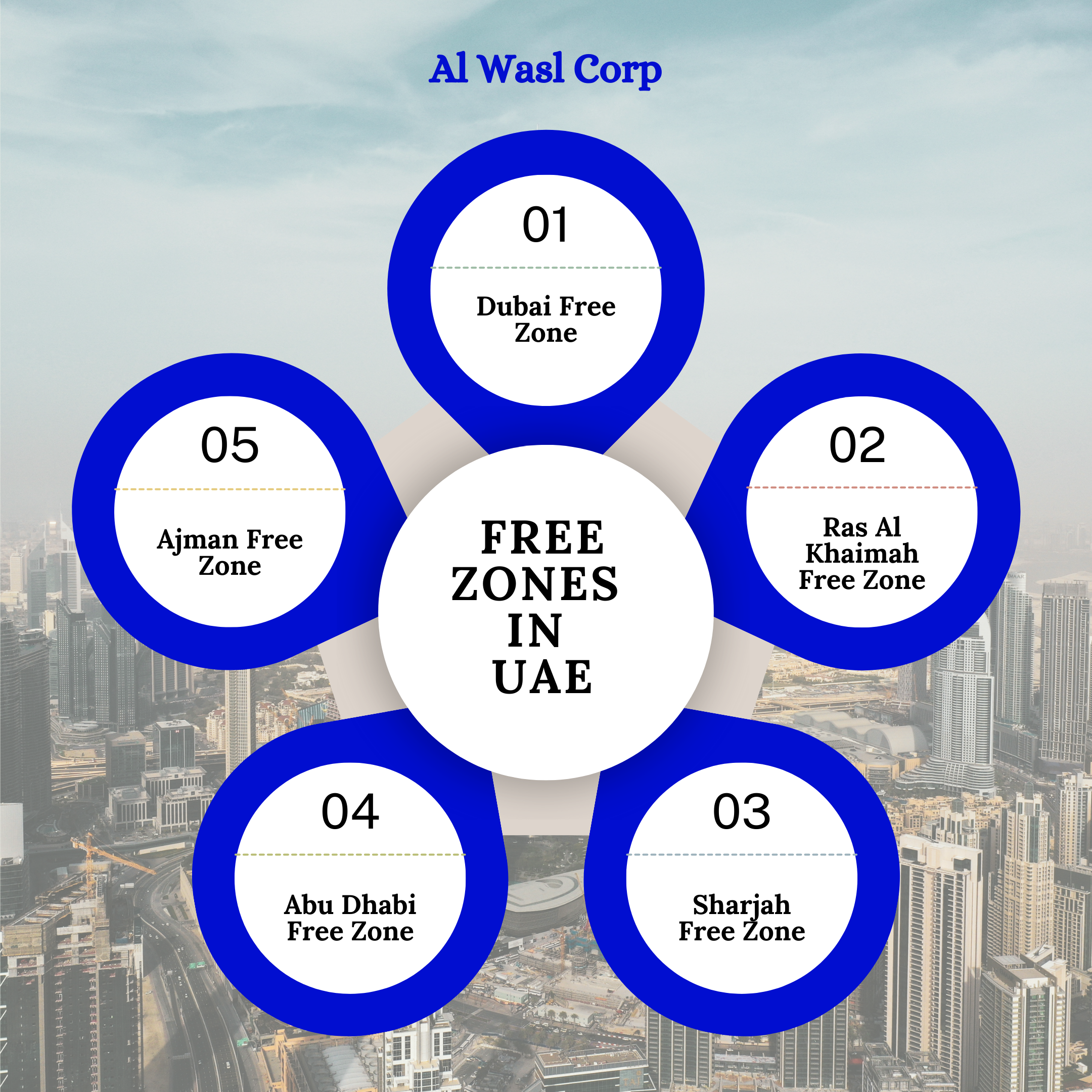
Free zones in Abu Dhabi (ADGM, Masdar City, KIZAD), Sharjah (SAIF Zone, Hamriyah), Ras Al Khaimah (RAKEZ, RAK ICC), Ajman, Fujairah, and Umm Al Quwain are also designated. The full list is available on the Federal Tax Authority’s website and is updated periodically.
The designation relates to the free zone itself meeting regulatory and governance standards. All companies registered within a designated free zone are eligible to apply for QFZP status, provided they individually meet the five conditions outlined above.
For a comprehensive comparison of free zone features, costs, and licensing options, see our Dubai free zones guide.
Adequate Substance Requirements
The substance requirement is the condition most likely to cause free zone companies to lose QFZP status. It requires that the company maintains genuine economic activity in the UAE proportionate to the income it reports.
What Constitutes Adequate Substance
The FTA evaluates substance based on several factors:
- Core income-generating activities (CIGAs) are performed in the UAE: The key functions that generate the company’s income must be conducted by personnel located in the UAE, not outsourced entirely to foreign jurisdictions
- Qualified employees: The company must have employees with the qualifications, experience, and authority to carry out the CIGAs. The number and seniority of employees should be proportionate to the nature and volume of activities
- Operating expenditure: The company must incur adequate operating expenditure in the UAE. A company reporting millions in revenue but minimal local expenses raises red flags
- Physical assets: Where the business requires physical assets (inventory, equipment, IP), these should be held or controlled in the UAE
- Decision-making: Strategic and operational decisions should be made in the UAE by persons with the authority and competence to do so
Outsourcing
A QFZP can outsource activities to a third party or related party in the same free zone or another designated free zone, but the QFZP must:
- Exercise adequate supervision over the outsourced activities
- Retain control over the decision-making related to those activities
- Demonstrate that outsourcing is commercially justified and not merely a substance-simulation exercise
Shell companies with no employees, no offices, and no real activities in the UAE will not qualify for QFZP status regardless of where they are registered. The substance requirement is specifically designed to prevent abuse of the 0% rate by entities that exist on paper in a free zone but conduct all meaningful activities elsewhere.
The FTA has indicated that it will enforce substance requirements rigorously.
Maintaining QFZP Status: Annual Compliance
Maintaining QFZP status is not a one-time exercise. Free zone companies must demonstrate compliance annually through:
Audited Financial Statements
QFZPs must prepare audited financial statements for each tax period. The audit must be performed by a registered auditor in the UAE. Financial statements must be prepared in accordance with IFRS or IFRS for SMEs as applicable. The audit requirement applies regardless of the company’s size or revenue.
Transfer Pricing Compliance
All related-party transactions must be conducted at arm’s length and documented appropriately. The standard transfer pricing documentation thresholds apply:
- Related Party Transactions disclosure form for taxpayers with related-party transactions exceeding AED 40 million in aggregate (AED 4 million per category)
- Local file for entities with revenue exceeding AED 200 million, or that are a Constituent Entity of an MNE Group
- Master file and CbCR for MNE groups with consolidated revenue exceeding AED 3.15 billion
Even free zone companies below these thresholds should maintain contemporaneous documentation supporting the arm’s length nature of intercompany transactions.
Corporate Tax Return Filing
QFZPs must file a corporate tax return within 9 months of the end of their tax period, even if no tax is payable. The return must include the QFZP election, details of qualifying and non-qualifying income, and supporting computations.
For more details on corporate tax filing requirements and deadlines, see our UAE corporate tax guide.
Mainland vs Free Zone: Tax Comparison
The decision between a mainland and free zone structure has always involved trade-offs in market access, costs, and flexibility. The corporate tax regime adds a significant new dimension to this analysis.
| Factor | Free Zone (QFZP) | Mainland |
|---|---|---|
| Corporate tax on qualifying income | 0% | 9% (above AED 375,000) |
| Corporate tax on non-qualifying income | 9% | 9% (above AED 375,000) |
| Small Business Relief available | No (QFZPs excluded) | Yes (revenue < AED 3 million) |
| Audited financial statements required | Yes (mandatory for QFZPs) | Not mandatory for most (but recommended) |
| Transfer pricing compliance | Yes (full requirements) | Yes (full requirements) |
| UAE market access | Restricted | Unrestricted |
| Annual compliance cost | Higher (audit + substance) | Lower (for small businesses) |
| Effective tax rate on AED 2M qualifying income | AED 0 | AED 146,250 |
| Effective tax rate on AED 2M non-qualifying income | AED 146,250 | AED 146,250 |
For businesses with predominantly qualifying income (international trade, free zone-to-free zone transactions, qualifying activities), the free zone structure remains significantly more tax-efficient. For businesses with substantial mainland revenue, the tax savings may not justify the additional compliance costs and market access restrictions.
What Disqualifies a Free Zone Company
Understanding what can cause loss of QFZP status is as important as understanding what qualifies. The following events or circumstances will disqualify a free zone company:
- Non-qualifying revenue exceeding the de minimis threshold: If non-qualifying income exceeds 5% of total revenue or AED 5 million, the company loses QFZP status for the entire tax period
- Inadequate substance: Failing to maintain employees, CIGAs, operating expenditure, or decision-making in the UAE proportionate to the reported income
- Failure to prepare audited financial statements: The audit requirement is mandatory and cannot be waived
- Non-compliance with transfer pricing rules: Failure to price related-party transactions at arm’s length or to maintain required documentation
- Election to be taxed at the standard rate: This is irrevocable once made
- Engaging solely in Excluded Activities: Companies whose core business consists entirely of excluded activities (banking, insurance, personal real estate) cannot earn qualifying income
- Earning income from transactions with natural persons: Revenue from individual customers (not corporate entities) is non-qualifying and counts toward the de minimis threshold
Consequences of Losing QFZP Status
- All income for the tax period is taxed at 9%, not just non-qualifying income
- The FTA may impose a “cooling-off” period before the company can reapply for QFZP status
- Penalties may apply if the company claimed QFZP status on its return but was later found to not qualify
- Back taxes, interest, and administrative penalties can accumulate quickly
Planning Strategies
Free zone companies should consider the following strategies to maintain QFZP status and optimize their tax position:
Segregate Qualifying and Non-Qualifying Activities
If your business involves both qualifying and non-qualifying income streams, consider establishing separate entities: a free zone company for qualifying activities and a mainland company for mainland-facing activities. This prevents non-qualifying income from contaminating the free zone company’s QFZP status.
Monitor the De Minimis Threshold Quarterly
Do not wait until year-end to discover that non-qualifying revenue has breached the threshold. Implement quarterly monitoring of qualifying vs non-qualifying revenue ratios to allow corrective action before the tax period closes.
Invest in Substance
The substance requirement is the most scrutinized condition. Ensure your free zone entity has:
- At least one full-time employee with relevant qualifications based in the UAE
- A physical office or co-working space (not just a virtual address)
- Board meetings and strategic decisions documented as occurring in the UAE
- Operating expenses proportionate to the income generated
Maintain Robust Documentation
Keep comprehensive records of all transactions, particularly those with related parties and other free zone persons. Retain contracts, invoices, proof of delivery, and correspondence that demonstrates the commercial reality of each transaction.
Engage Tax Advisors Early
The QFZP regime is technically complex, and the consequences of non-compliance are significant. Engage a qualified UAE tax advisor before the start of each financial year to review your structure, income streams, and compliance position.
Interaction with VAT
Free zone companies are not automatically exempt from UAE VAT. The VAT treatment depends on whether the free zone is a “designated zone” for VAT purposes (a different designation from the corporate tax designated zone list).
In designated zones for VAT purposes, transfers of goods between companies within the designated zone or between designated zones are not treated as taxable supplies. However, services provided within or from designated zones are subject to the standard 5% VAT rate.
For complete details on VAT registration, rates, and filing requirements, see our UAE VAT guide for businesses.
Conclusion
The 0% corporate tax rate for UAE free zone companies remains available and valuable, but it is no longer automatic. The QFZP framework requires active compliance with substance, income classification, transfer pricing, and audit requirements. Free zone companies that meet all conditions continue to enjoy one of the most favorable tax environments in the world.
Those that fail to comply face full taxation at 9% and potential penalties.
The key to maintaining the free zone tax advantage in 2026 and beyond is proactive management: understanding which income qualifies, monitoring thresholds, investing in substance, and maintaining documentation that can withstand FTA scrutiny. For businesses where the majority of income is qualifying, the free zone structure remains highly tax-efficient.
For businesses with growing mainland revenue, a hybrid structure with both free zone and mainland entities may offer the best balance of tax efficiency and market access.
For related guidance, explore our UAE corporate tax guide, company formation guide, free zones overview, and UAE business laws.
Related Corpy Resources
- UAE & Dubai business guide for a full overview of doing business in UAE & Dubai
- Corporate tax in UAE & Dubai for related articles on this topic
- Company formation in UAE & Dubai to explore adjacent considerations
- Business laws in UAE & Dubai to explore adjacent considerations
- Free zones in UAE & Dubai to explore adjacent considerations