

What is a DUNS number and how do I get one?
A D-U-N-S number is a unique nine-digit identifier assigned by Dun & Bradstreet (D&B) to business entities. It is widely used by lenders, suppliers, and government agencies to assess business credibility. You can request a free DUNS number through the D&B website, which typically takes 30 days. Expedited processing is available for a fee.
Business credit is one of the most valuable yet least understood assets a US company can develop.
A strong business credit profile separates your company’s financial identity from your personal finances, enables access to larger credit lines and better terms, reduces the need for personal guarantees on business obligations, and positions your company for growth opportunities that require demonstrated financial credibility.
Unlike personal credit, which is built passively through consumer financial activity, business credit must be actively and intentionally constructed. A new business starts with no credit history - no score, no file, no track record.
Building from zero to a strong credit profile requires a systematic approach: obtaining the right identifiers, opening the right types of accounts, paying strategically, and monitoring your progress across multiple credit bureaus.
This guide provides a complete roadmap for building business credit in the USA in 2026, from obtaining your DUNS number and establishing your first trade references through building a mature credit profile that supports significant business borrowing.
Understanding Business Credit
How Business Credit Differs from Personal Credit
| Aspect | Personal Credit | Business Credit |
|---|---|---|
| Identifier | Social Security Number | EIN + DUNS Number |
| Score range | 300-850 (FICO) | 1-100 (D&B Paydex), 0-100 (Experian), 101-992 (FICO SBSS) |
| Privacy protection | Fair Credit Reporting Act | No equivalent protection |
| Who can access | Only with permissible purpose | Anyone can purchase reports |
| Number of bureaus | 3 (Equifax, Experian, TransUnion) | 3 main (D&B, Experian Business, Equifax Business) |
| How it is built | Consumer credit accounts | Trade references, business credit accounts |
| Default reporting | Automatic for most accounts | Many creditors do not report to business bureaus |
The Three Business Credit Bureaus
| Bureau | Primary Score | Scale | What It Measures |
|---|---|---|---|
| Dun & Bradstreet (D&B) | Paydex Score | 1-100 | Payment history (80 = on time, 100 = early) |
| Experian Business | Intelliscore Plus | 1-100 | Payment history, credit utilization, business demographics |
| Equifax Business | Business Credit Risk Score | 101-992 | Payment history, legal filings, company size |
The most important thing to understand about business credit is that not all vendors report to business credit bureaus. A vendor may extend you Net 30 terms and you may pay on time every month for years, but if that vendor does not report to D&B, Experian, or Equifax, your payment history does not appear on your business credit report.
When choosing vendors specifically to build credit, verify that they report to at least one major business credit bureau. Many vendors marketed as “credit-building” accounts report to D&B but not necessarily to Experian or Equifax.
Step 1: Establish Your Business Identity
Before you can build credit, your business must have the proper identifiers and registrations in place.
Get Your EIN
Your Employer Identification Number is your business’s federal tax ID and serves as the primary identifier for business credit purposes. If you have not already obtained one, apply free at irs.gov. See our company registration guide for details.
Get Your DUNS Number
The D-U-N-S number is a unique nine-digit identifier assigned by Dun & Bradstreet. It is the single most important identifier for business credit.
| Method | Cost | Timeline |
|---|---|---|
| Free DUNS request (D&B website) | $0 | Up to 30 business days |
| Expedited DUNS request | $229+ | 1-5 business days |
| Through SBA (for government contracting) | $0 | 1-2 business days |
A DUNS number is required for:
- Federal government contracts
- Many corporate vendor applications
- SBA loan applications
- Building a D&B Paydex score
Register with Your State
Ensure your business is properly registered and in good standing with your state of formation. Lenders and credit bureaus may verify your state registration.
Get a Dedicated Business Phone Number
List your business phone number in a directory (411 listing). Credit bureaus and lenders use phone directory listings to verify business legitimacy. A dedicated business phone number (not your personal cell) adds credibility.
Create a Professional Business Presence
- Business website with a professional domain (not a free website builder subdomain)
- Business email at your domain (not Gmail or Yahoo)
- Business address (physical address preferred; PO boxes reduce credibility)
- Consistent business name, address, and phone across all listings (NAP consistency)
Step 2: Open Your First Business Credit Accounts
Starter Vendor Accounts (Net 30)
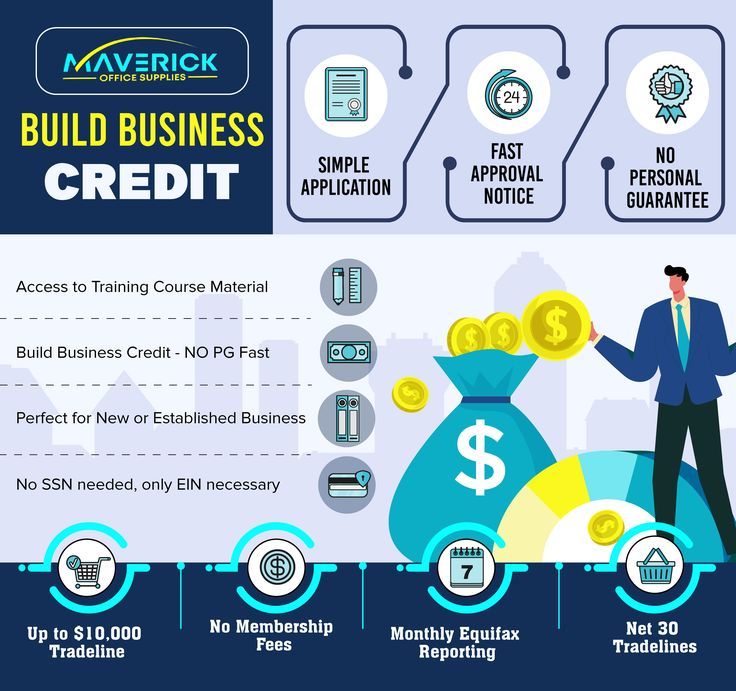
Net 30 accounts are the easiest entry point for building business credit. These vendors extend 30 days of credit for purchases and report payment activity to business credit bureaus.
| Vendor | What They Sell | Reports To | Minimum Order | Credit Limit |
|---|---|---|---|---|
| Uline | Shipping, packing, industrial supplies | D&B | No minimum | $100-$1,000+ |
| Quill | Office supplies | D&B | No minimum | $100-$750+ |
| Grainger | Industrial, safety, MRO supplies | D&B | No minimum | Varies |
| Crown Office Supplies | Office supplies | D&B, Experian, Equifax | No minimum | $100-$1,000 |
| Summa Office Supplies | Office supplies | D&B, Experian | No minimum | $100-$500 |
Strategy for Starter Accounts
- Open 3 to 5 Net 30 accounts in your first month
- Make small purchases on each account monthly
- Pay every invoice on time or early (early payment builds a higher Paydex score)
- Continue for at least 3 to 6 months before applying for larger credit
Paying early is more valuable than paying on time for your D&B Paydex score. The Paydex scoring model awards the highest scores to businesses that pay before the due date. A score of 80 represents on-time payment, while a score of 100 represents payment 30 days early.
Many credit-savvy business owners set up their Net 30 accounts and pay invoices within 1 to 5 days of receipt, which builds the maximum possible score in the shortest time. This strategy can produce a Paydex score of 80+ within 3 to 4 months.
Step 3: Add Business Credit Cards
After establishing 3 to 6 months of trade references, apply for business credit cards. These build your credit profile further and provide revolving credit for business expenses.
Business Credit Cards by Stage
| Stage | Recommended Cards | Typical Requirements |
|---|---|---|
| Startup (0-6 months) | Secured business cards, cards from your bank | Personal guarantee, personal credit check |
| Established (6-12 months) | Capital One Spark, Chase Ink Business Cash | Good personal credit, some business revenue |
| Mature (12+ months) | American Express Business Platinum, Chase Ink Preferred | Strong personal and business credit |
| Strong business credit (24+ months) | Cards with no personal guarantee (rare, high revenue required) | Strong Paydex, significant revenue |
Important Notes on Business Credit Cards
Most business credit cards still require a personal guarantee and check your personal credit score during the application process. True business-only credit (with no personal guarantee) typically requires:
- Annual revenue above $500,000 to $1,000,000
- Established Paydex score of 80+
- At least 2 years of business history
- Multiple trade references reporting
American Express is notable for being more willing to extend business credit based on business metrics and for reporting to business credit bureaus.
Step 4: Build and Diversify Your Profile
Types of Credit to Add Over Time
| Credit Type | When to Add | Benefit |
|---|---|---|
| Net 30 vendor accounts | Month 1 | Foundation of business credit |
| Business credit cards | Month 3-6 | Revolving credit, rewards, build history |
| Business line of credit | Month 6-12 | Flexible borrowing, builds bank relationship |
| Equipment financing | Month 12+ | Secured credit, builds depth of profile |
| SBA loans | Month 12-24+ | Significant credit event, lowest rates |
| Commercial real estate loan | 24+ months | Major credit milestone |
Monitoring Your Business Credit
Regular monitoring is essential because:
- Business credit reports can contain errors
- Unauthorized inquiries or accounts may indicate fraud
- You need to track which vendors are actually reporting
- Lenders and partners may pull your report without your knowledge
| Monitoring Service | Cost | Coverage |
|---|---|---|
| D&B CreditMonitor | $39-$189/month | D&B Paydex and D&B reports |
| Experian Business Credit Advantage | $149/year | Experian business reports |
| Nav | Free (basic) to $29.99/month (premium) | D&B and Experian monitoring |
| CreditSafe | Custom pricing | Multi-bureau monitoring |
Step 5: Maintain and Protect Your Business Credit
Best Practices
- Pay every bill on time or early: One late payment can significantly damage your score
- Keep credit utilization below 30%: Use less than 30% of available revolving credit
- Maintain consistent trade references: Keep early vendor accounts active even after obtaining larger credit
- Update your D&B profile: Ensure your business information is current and accurate
- Separate personal and business credit: Never use personal credit cards for business expenses if you have business alternatives
- Dispute errors promptly: Monitor reports and dispute inaccuracies immediately
Common Mistakes
Opening too many accounts at once: Multiple applications in a short period can signal financial distress. Space applications over several months.
Closing old accounts: Older accounts demonstrate a longer credit history. Keep your first trade references and credit cards open even if you rarely use them.
Ignoring reporting gaps: If a major vendor does not report, those payments are invisible to credit bureaus. Focus your purchasing on reporting vendors.
Relying on personal credit: Using personal credit for business expenses is convenient but does nothing for your business credit profile and increases your personal risk.
Building business credit is a marathon, not a sprint. The businesses with the strongest credit profiles - those that can obtain six-figure credit lines, favorable loan terms, and credit without personal guarantees - have typically spent 2 to 5 years systematically building their profiles.
Start with the foundation (DUNS number, EIN, first trade references), add layers consistently (credit cards, lines of credit), and maintain discipline (early payments, monitoring). The payoff is access to capital on terms that can significantly accelerate your business growth.
Timeline: From Zero to Strong Business Credit
| Timeline | Milestone | Expected Credit Profile |
|---|---|---|
| Month 1 | EIN, DUNS number, 3-5 Net 30 accounts opened | No score yet |
| Month 3 | First payments reported, first purchases on all accounts | Paydex 70-80 |
| Month 6 | Consistent payment history, first business credit card | Paydex 80+, Experian 50+ |
| Month 12 | Multiple trade references, 1-2 credit cards, possible line of credit | Paydex 80-100, Experian 60-75 |
| Month 18 | Diversified credit profile, strong payment history | Paydex 80-100, Experian 70-80 |
| Month 24+ | Mature profile, eligible for larger credit without personal guarantee | Paydex 80-100, Experian 75+ |
For related information on managing your business finances, see our guides on opening a business bank account and payment processing. For funding options that can complement your credit building, see our guide to SBA loans and grants. For understanding how your business structure affects credit and financing, see our entity comparison guide.
Entrepreneurs building business credit across multiple countries should review our banking guides for the United Kingdom and Singapore to understand how business credit systems differ internationally.
Business Credit Bureaus Compared
It is worth understanding the three major business credit bureaus and their scoring methodologies. Unlike consumer credit where FICO dominates, business credit is fragmented and lenders consult different bureaus depending on industry.
| Bureau | Primary Score | Score Range | Methodology Focus | Typical Lenders Pulled |
|---|---|---|---|---|
| Dun & Bradstreet | Paydex | 0-100 | On-time supplier payments | Trade creditors, large suppliers, government contractors |
| Experian Business | Intelliscore Plus | 1-100 | Blended payment, demographic, firmographic | Banks, SBA lenders, insurance underwriters |
| Equifax Business | Business Credit Risk Score | 101-992 | Delinquency likelihood | Commercial lenders, landlords |
| FICO SBSS | Small Business Scoring Service | 0-300 | SBA 7(a) loans require 155+ | SBA lenders |
Starter Net-30 Vendors That Report
Building tradelines requires vendors that actually report to business credit bureaus. Useful starter vendors include:
- Uline (shipping supplies): Reports to D&B and Experian
- Grainger (industrial supplies): Reports to D&B, Experian, Equifax
- Quill (office supplies): Reports to D&B
- Summa Office Supplies: Reports to D&B, Credit Safe
- Crown Office Supplies: Reports to D&B, Experian, Equifax
- Nav Prime Card: Reports to major bureaus; purpose-built for credit building
- Business T-Mobile / Verizon accounts: Report to D&B and Experian after establishment
FICO SBSS Minimum Thresholds
The FICO Small Business Scoring Service (SBSS) is critical for SBA loan approval. SBA applicants should understand the key thresholds.
| SBA Programme | Minimum FICO SBSS Score | Typical Approval Range |
|---|---|---|
| SBA 7(a) Small Loans (<= USD 500,000) | 155 | 160-200 preferred |
| SBA 7(a) Standard | No SBSS minimum (manual review) | 180-220 typical |
| SBA Express (<= USD 500,000) | 160 | 160-200 |
| SBA CAPLines | 140-160 | 170-200 |
| SBA 504 Real Estate | 140-160 | 170-200 |
According to the Small Business Administration Standard Operating Procedure SOP 50 10 7.1, SBA-approved lenders must use a FICO SBSS score of at least 155 for SBA 7(a) Small Loan applications below USD 500,000, with scores below the threshold requiring full underwriting rather than the streamlined credit scoring pathway [6].
Common Credit-Building Mistakes
- Using personal credit for business purchases: Transactions run on personal credit cards do not build business credit history even if the expense is deductible.
- Opening too many accounts simultaneously: Rapid trade-line creation triggers “thin file” algorithms and can temporarily lower scores.
- Failing to verify DUNS information: Incorrect DUNS listing (address mismatch, SIC code error) causes lenders to decline without explanation.
- Allowing a single late payment: A single 30-day late payment can drop Paydex from 80 to 70 overnight; recovery requires 3-6 months of on-time payments.
- Ignoring the UCC-1 impact: Secured lenders file UCC-1 liens visible on D&B and Experian; multiple UCC filings signal heavy debt and deter future lenders.
When to Remove Personal Guarantees
Personal guarantees attached to early loans and credit cards remain enforceable even after the business develops strong credit. Guarantee releases can typically be negotiated once the business qualifies independently.
- Demonstrated 2+ years of profitability with audited or reviewed financials
- Business credit scores above Paydex 80 and Intelliscore 75
- Debt service coverage ratio (DSCR) above 1.25
- Existing guarantees for over 2 years with no late payments
- Formal written request citing creditworthiness metrics and referencing existing lender relationships
Related Corpy Resources
- United States business guide for a full overview of doing business in United States
- Banking in United States for related articles on this topic
- Company formation in United States to explore adjacent considerations
- Corporate tax in United States to explore adjacent considerations
- Business laws in United States to explore adjacent considerations
How many days to get an EIN number?
EIN issuance timing depends on how you apply. US citizens or residents with an SSN get an EIN instantly online through the IRS EIN Assistant at no cost - under 15 minutes. Applications by fax on Form SS-4 without an SSN take 4 to 8 weeks for IRS processing, and mailed Form SS-4 takes 6 to 12 weeks.
Phone applications for international applicants (via the dedicated IRS international EIN line) take 1 to 2 weeks and are available to foreign founders. The EIN itself is always free - the IRS charges nothing. Third-party services that advertise EIN procurement for $50 to $150 simply file Form SS-4 on your behalf.
For US business credit building, you need an EIN before applying for a DUNS number and trade credit accounts.
How to get an EIN number for free?
An EIN is always free directly from the IRS. Apply online at irs.gov/ein if you have an SSN or ITIN - the IRS issues the EIN instantly in under 15 minutes. Without an SSN, foreign founders file Form SS-4 by fax to 855-641-6935 (4 to 8 weeks) or by phone to 267-941-1099 (1 to 2 weeks, IRS international EIN line open 6 AM to 11 PM ET). The IRS charges nothing for any application method.
Third-party services like Stripe Atlas ($500 flat includes formation + EIN), Firstbase ($399), and Doola ($297) charge for preparing and submitting Form SS-4 on your behalf, not for the EIN itself. Any service that claims to sell EINs is misrepresenting the IRS’s free service.
Once obtained, the EIN enables opening US business bank accounts, applying for a DUNS number (free from Dun & Bradstreet), and filing federal tax returns including Form 5472 for foreign-owned single-member LLCs.
How to get a free EIN number in Georgia?
Getting a free EIN for a Georgia LLC works the same as any other state - apply directly with the IRS at no cost. US residents with an SSN or ITIN use the IRS EIN Assistant online at irs.gov/ein for instant issuance. Non-residents file Form SS-4 by fax (855-641-6935, 4 to 8 weeks) or phone (267-941-1099, 1 to 2 weeks). The IRS charges $0 regardless of method.
Georgia LLC formation itself costs $100 online through the Georgia Secretary of State ($110 by mail) plus a $50 annual registration fee due by April 1. Registered agent services in Georgia run $50 to $150/year.
Once the EIN is issued, use it to open a Georgia business bank account at Chase Business Complete ($15/month), Wells Fargo Business ($10/month), Bank of America Business Advantage ($16/month), or fintechs like Mercury (free) and Relay (free). The EIN is tied to the LLC’s federal tax identity - never to the state of formation - so the Georgia address does not affect EIN timing or cost.