

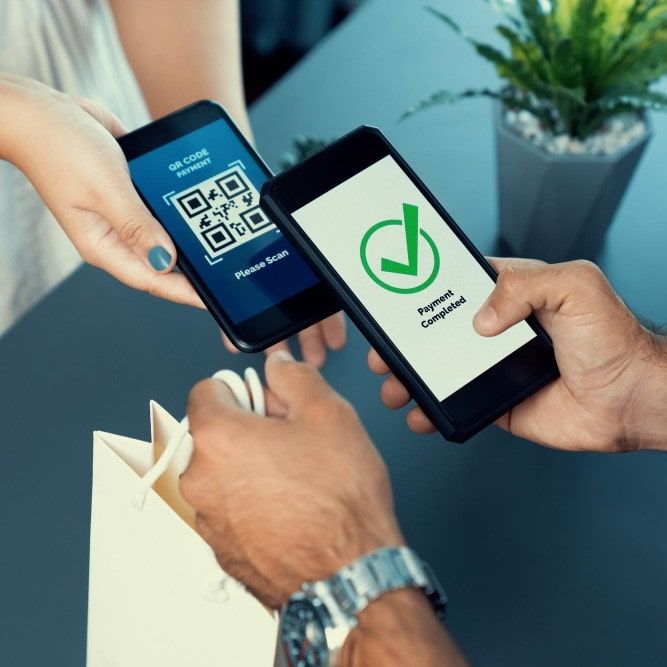
How does PayNow work for Singapore businesses?
PayNow Corporate allows businesses to receive instant payments linked to their Unique Entity Number (UEN). Customers can pay by scanning a PayNow QR code or entering the business UEN in their banking app. Transactions are settled instantly, 24⁄7, with no transaction fees for receiving payments (most banks do not charge merchants for PayNow collections).
Singapore is one of the most advanced cashless payment markets in the world, with electronic payments accounting for over 60% of all point-of-sale transactions. The government’s Smart Nation initiative has accelerated the adoption of digital payments through unified infrastructure, regulatory support, and consumer incentives.
For businesses operating in Singapore, understanding the payment landscape is essential for optimizing checkout experiences, managing transaction costs, and meeting customer expectations across different payment preferences.
This guide covers the complete payment ecosystem in Singapore as of 2026, including PayNow (QR and bank-linked), NETS, GrabPay, credit and debit cards, GIRO standing orders, cross-border payment solutions, and unified point-of-sale systems.
Our research team has compiled this information from the Monetary Authority of Singapore (MAS) publications, payment network documentation, and merchant service provider offerings.
PayNow: Singapore’s Real-Time Payment System
PayNow is Singapore’s peer-to-peer and person-to-merchant real-time payment system, enabling instant fund transfers linked to mobile numbers, National Registration Identity Card (NRIC) numbers, or Unique Entity Numbers (UEN) for businesses.
PayNow for Businesses (PayNow Corporate)
PayNow Corporate allows businesses to receive payments instantly by linking their UEN to a bank account. Customers pay by scanning a PayNow QR code displayed at the point of sale, on invoices, or on e-commerce checkout pages, or by entering the business UEN directly in their banking app.
Key advantages for businesses include instant settlement (funds arrive in the bank account within seconds), zero or minimal merchant fees (most banks do not charge for receiving PayNow payments), 24⁄7 availability (payments can be received at any time, including weekends and public holidays), and automatic reconciliation (payments include reference numbers that can be matched to invoices).
PayNow has fundamentally changed the economics of payment acceptance for small businesses in Singapore. Before PayNow, accepting electronic payments meant paying credit card merchant fees of 1.5% to 3.5% per transaction. With PayNow, a business can accept digital payments at zero cost, making it the most cost-effective electronic payment method available.
For a business processing SGD 50,000 in monthly payments, switching from credit cards to PayNow can save SGD 750 to SGD 1,750 per month in merchant fees.
PayNow QR Code
PayNow uses QR codes as the primary payment interface at physical points of sale. Businesses can display a static QR code (printed and displayed at the counter) that customers scan and then enter the payment amount, or a dynamic QR code (generated per transaction by the POS system) that includes the pre-set payment amount and reference number.
Static QR codes are free to generate through your bank and require no special equipment. Dynamic QR codes require a POS system or payment terminal capable of generating QR codes, but provide a faster and more accurate checkout experience.
NETS: Singapore’s Domestic Debit Network
NETS (Network for Electronic Transfers Singapore) is Singapore’s domestic debit payment network, connecting all major banks and enabling direct debit payments from bank accounts at merchant terminals.
NETS Debit and NETS QR
NETS Debit allows customers to pay using their ATM or debit cards at NETS-enabled terminals. NETS QR extends this to QR code-based payments, enabling bank account debit through QR code scanning. NETS processes over 1 billion transactions annually in Singapore.
NETS Merchant Fees
NETS charges merchants a transaction fee that varies by business type and volume, typically ranging from 0.4% to 1.0% of the transaction value. This is significantly lower than credit card merchant fees, making NETS an attractive option for businesses with price-sensitive customers who prefer debit over credit.
| Payment Method | Typical Merchant Fee | Settlement Time | Equipment Required |
|---|---|---|---|
| PayNow (QR) | 0% (most banks) | Instant | QR code (printed or generated) |
| NETS Debit (card) | 0.4-1.0% | T+1 to T+2 | NETS terminal |
| NETS QR | 0.4-0.8% | T+1 to T+2 | QR code display |
| Visa/Mastercard | 1.5-2.5% | T+1 to T+3 | Card terminal |
| American Express | 2.5-3.5% | T+1 to T+3 | Card terminal |
| GrabPay | 1.0-1.5% | T+1 to T+2 | QR code or GrabPay terminal |
Credit and Debit Cards
Credit and debit cards remain widely used in Singapore, particularly for higher-value transactions, online purchases, and by foreign visitors. Visa and Mastercard are universally accepted, while American Express is accepted by most larger merchants but less so by smaller businesses due to higher merchant fees.
Merchant Discount Rates
The Merchant Discount Rate (MDR) is the fee charged to merchants for processing card payments. Rates vary by card network, card type (consumer vs. commercial, domestic vs. international), business category, and monthly transaction volume.
Typical MDR ranges in Singapore are Visa and Mastercard domestic consumer cards at 1.5% to 2.0%, Visa and Mastercard international consumer cards at 2.0% to 2.5%, Visa and Mastercard commercial/corporate cards at 2.0% to 3.0%, and American Express cards at 2.5% to 3.5%.
Businesses can negotiate lower rates based on monthly transaction volume. High-volume merchants (processing over SGD 100,000 per month) can often negotiate rates 0.2% to 0.5% below standard rates.
Contactless Payments
Contactless card payments (tap-to-pay) have become the default payment method at physical points of sale in Singapore. Most card terminals support NFC contactless payments for both cards and mobile wallets (Apple Pay, Google Pay, Samsung Pay). The transaction limit for contactless payments without PIN verification is SGD 200.
The rise of contactless payments has increased transaction speeds and improved the checkout experience for both merchants and customers. For businesses, contactless payments also reduce the handling of cash and the associated costs (cash counting, bank deposits, security).
Investing in a modern payment terminal that supports contactless NFC, chip-and-PIN, and QR code scanning is essential for any physical retail or food and beverage business in Singapore.
Digital Wallets
GrabPay
GrabPay is the payment arm of Grab, Southeast Asia’s largest super-app. GrabPay allows customers to pay in-store (via QR code), online, and through the Grab app ecosystem. Merchant fees for GrabPay range from 1.0% to 1.5%, lower than credit cards but higher than PayNow.
GrabPay’s main advantage for merchants is access to Grab’s customer base and marketing ecosystem. Merchants can participate in Grab promotions, offer GrabRewards points, and reach customers through the Grab app’s merchant discovery features.
Other Digital Wallets
Singapore supports multiple digital wallets including Apple Pay and Google Pay (which link to existing credit or debit cards and function as contactless payments), Alipay+ and WeChat Pay (primarily used by Chinese tourists and residents, increasingly integrated through SGQR), and FavePay (offering cashback rewards and merchant discovery features).
SGQR: Singapore’s Unified QR Code
SGQR is Singapore’s unified QR code standard, combining multiple payment schemes into a single QR code. Instead of displaying separate QR codes for PayNow, NETS QR, GrabPay, Alipay+, and other schemes, merchants display one SGQR code that supports all integrated payment methods.
Benefits of SGQR
For merchants, SGQR simplifies counter management (one QR code instead of many), reduces confusion for customers, and supports the widest possible range of payment methods. For customers, the familiar QR code format works with their preferred payment app.
Obtaining an SGQR Code
SGQR codes are distributed through participating banks and payment service providers at no cost. Merchants register with their preferred provider, specify which payment schemes they want to accept, and receive a unified QR code for display.
| SGQR Feature | Detail |
|---|---|
| Supported Schemes | PayNow, NETS QR, GrabPay, Alipay+, WeChat Pay, and others |
| Cost to Merchant | Free (code issuance); individual scheme fees apply |
| Format | Static (printed) or dynamic (generated per transaction) |
| Registration | Through participating banks or payment providers |
| Acceptance | Over 200,000 merchants in Singapore |
GIRO (General Interbank Recurring Order)
GIRO enables automated recurring payments by direct debit from a bank account. It is commonly used for utility payments, insurance premiums, subscription services, loan repayments, and government fees. For businesses, GIRO is valuable for billing customers on a recurring basis (subscription models) and for making recurring payments such as rent, insurance, and supplier invoices.
GIRO setup requires the payer’s bank to authorize the direct debit, typically through a GIRO application form signed by the payer. Processing is done in batches (not real-time) and typically takes 1 to 3 business days.
Cross-Border Payments
Singapore businesses engaged in international trade have several options for cross-border payments.
SWIFT Transfers
Traditional bank-to-bank international transfers via SWIFT remain the standard for large-value cross-border payments. Singapore banks charge SGD 20 to SGD 30 per outgoing SWIFT transfer, plus cable charges and potential intermediary bank fees. Total costs for a single international transfer can range from SGD 30 to SGD 80 depending on the destination and correspondent bank chain.
Fintech Alternatives
Digital platforms like Wise, Airwallex, and Aspire offer significantly lower costs for international transfers, with fees typically ranging from 0.3% to 1.0% of the transfer amount and near-interbank exchange rates. For businesses making frequent international payments, these platforms can reduce cross-border payment costs by 50% to 80% compared to traditional bank transfers.
PayNow-PromptPay Linkage
Singapore’s PayNow is linked to Thailand’s PromptPay, enabling real-time, low-cost transfers between Singapore and Thailand. Similar linkages with other ASEAN countries are planned or in development, which will further reduce the cost and increase the speed of regional payments.
Cross-border payment costs are a significant but often overlooked expense for international businesses. A company making 20 international transfers per month at SGD 50 per transfer (including fees and FX markup) spends SGD 12,000 per year on payment processing alone. Switching to a fintech platform that charges SGD 10 per transfer with better exchange rates can save SGD 9,600 per year.
For growing businesses, evaluating and optimizing cross-border payment methods should be a regular exercise.
Unified POS Solutions
Modern POS systems in Singapore integrate multiple payment methods into a single terminal or software platform, accepting cards (contactless, chip-and-PIN), QR code payments (PayNow, NETS QR, GrabPay, SGQR), and mobile wallets (Apple Pay, Google Pay) through one device.
Leading unified POS providers in Singapore include NETS’ payment terminals (supporting NETS, Visa, Mastercard, SGQR), PayMate and Fave (integrated QR and card payments), and cloud-based solutions from providers like Square and Stripe (primarily for online and omnichannel businesses).
For businesses handling high volumes across multiple payment methods, a unified POS simplifies reconciliation, reduces the number of terminal devices, and provides consolidated reporting across all payment channels.
For information on the regulatory framework governing payment services, see our article on Singapore fintech regulations.
E-Commerce Payment Integration
For online businesses, Singapore’s payment ecosystem offers several integration options beyond traditional card processing.
Payment Gateways
Leading payment gateways serving Singapore e-commerce businesses include:
- Stripe (comprehensive global coverage with local payment methods)
- PayPal (widely recognized, good for cross-border transactions)
- Adyen (enterprise-level payment processing with local optimization)
- and eNETS (NETS’ online payment gateway for direct bank transfers). Most payment gateways charge between 2.4% and 3.5% per transaction for card payments
- with lower rates for local payment methods
Buy Now, Pay Later (BNPL)
BNPL services have gained significant traction in Singapore’s e-commerce market. Providers include Atome, Grab PayLater, and ShopBack PayLater, which allow customers to split purchases into interest-free installments. Merchants pay a fee (typically 2% to 6% of the transaction value) but often benefit from higher conversion rates and larger average order values.
Subscription and Recurring Payments
For subscription-based businesses, GIRO provides the most cost-effective recurring payment method for Singapore customers. For international subscriptions, card-on-file with tokenization (through payment gateways like Stripe) is the standard approach. Payment mandate management and automated retry logic for failed payments are essential features for subscription businesses.
Regulatory Framework for Payment Services
All payment service providers in Singapore must comply with the Payment Services Act 2019 (PS Act), which regulates various payment activities including merchant acquisition, domestic and cross-border money transfers, and e-money issuance. Businesses that process payments on behalf of others, issue stored value instruments, or operate payment platforms must obtain the appropriate MAS license.
For detailed information on fintech regulations, see our guide on Singapore fintech regulations.
Choosing the Right Payment Mix
The optimal payment mix depends on your business type, customer demographics, and transaction patterns. A food and beverage business serving primarily local customers should prioritize PayNow QR (zero cost) and NETS (low cost), with card acceptance as a secondary option.
An e-commerce business targeting international customers should prioritize credit card acceptance (Visa, Mastercard) and potentially digital wallets for specific markets (Alipay+ for Chinese customers). A B2B services firm should use PayNow Corporate for invoice payments and GIRO for recurring billing.
Cash Handling and Cash-Intensive Businesses
Despite Singapore’s rapid shift toward cashless payments, cash remains relevant for certain business types, particularly hawker stalls, traditional retail, and businesses serving older demographics.
Businesses that handle significant cash volumes should implement proper cash management procedures including daily cash reconciliation, secure storage, regular bank deposits, and segregation of cash handling duties.
Bank deposit services for cash-intensive businesses typically include over-the-counter deposits during business hours, night safe deposit facilities, and cash collection services (for high-volume businesses) at fees of SGD 100 to SGD 300 per collection. The Anti-Money Laundering requirements apply to all businesses handling cash, and banks may ask questions about the source of large cash deposits.
For businesses looking to reduce cash handling, encouraging PayNow adoption is the most effective strategy, as it provides zero-cost electronic payment acceptance that even the smallest merchant can implement with nothing more than a printed QR code.
For a comprehensive guide to opening and managing a business bank account, see our article on opening a business bank account in Singapore.
Merchant Fees by Payment Method
Understanding payment mix economics is essential for Singapore merchants. Fees below are representative of 2026 pricing for small and medium merchants.
| Payment Method | Merchant Fee (%) | Fixed Fee (SGD) | Settlement | Typical Use Case |
|---|---|---|---|---|
| PayNow QR | 0% | 0 | Real-time | Peer, SME retail, digital invoicing |
| NETS (debit at POS) | 0.5-0.8% | 0.05 | T+1 | Physical retail, local debit |
| NETS FlashPay (stored value) | 0.5-0.8% | 0.05 | T+1 | Transport, low-value retail |
| Visa / Mastercard (local) | 1.5-2.5% | 0.30 | T+1 to T+2 | E-commerce and POS |
| Visa / Mastercard (international) | 2.5-3.8% | 0.50 | T+2 | Tourist-facing merchants |
| American Express | 2.8-3.8% | 0.30 | T+2 | Premium merchants |
| PayPal | 2.9-4.4% | 0.50 | T+1 | Cross-border e-commerce |
| GrabPay | 2.5-3.2% | 0.30 | T+1 | Super-app users |
| Alipay / WeChat Pay | 2.0-2.8% | 0.30 | T+1 to T+3 | Chinese tourists |
| Stripe (card acceptance) | 3.4% + 0.50 | Included | T+2 | Developer-friendly stack |
SGQR and Payment Aggregation
SGQR is the unified Singapore QR code standard mandated by MAS, allowing a single QR to be decoded by multiple wallets (PayNow, GrabPay, Fave, Liquid, etc.). Retail merchants should:
- Register SGQR through their primary acquirer or via NETS BCP at zero cost.
- Display SGQR prominently at checkout; customer choice of wallet drives the aggregator routing.
- Reconcile daily through the merchant dashboard of whichever wallet provider leads the SGQR onboarding.
- Understand that merchant fees apply per wallet; PayNow acceptance remains zero-cost even within SGQR.
According to the Monetary Authority of Singapore (MAS) Payment Services Act 2019 and subsequent amendments, all payment service providers offering specified payment services in Singapore must hold an MAS licence (Standard Payment Institution, Major Payment Institution, or Money-Changing Licence) and comply with segregation of customer funds, AML/CFT obligations, and safeguarding requirements [5].
Real-Time Cross-Border Payments
Singapore is at the forefront of cross-border real-time payments through MAS-driven infrastructure.
| Link | Counterpart | Launch | Use Case |
|---|---|---|---|
| PayNow-PromptPay | Thailand | 2021 (first cross-border RTGS link globally) | Remittances up to SGD 1,000/day |
| PayNow-UPI | India | 2023 | Remittances up to SGD 1,000/day |
| PayNow-DuitNow | Malaysia | 2023 | Cross-border payments and remittances |
| Project Nexus (ASEAN+) | Multilateral | Phased from 2025 | Aggregated ASEAN RTGS connectivity |
These corridors allow SMEs to send and receive cross-border retail payments at near-zero cost and near-instant settlement, replacing traditional correspondent banking for covered use cases.
Licensing Thresholds for Payment Service Providers
Merchants do not need an MAS licence, but payment facilitators, wallet operators, and crypto processors do. Selecting the appropriate class depends on projected transaction volume:
| Licence Class | Monthly Transaction Threshold | Capital Requirement (SGD) |
|---|---|---|
| Standard Payment Institution | Up to S$3 million single service / S$6m combined | 100,000 |
| Major Payment Institution | Above SPI thresholds | 250,000 |
| Money-Changing Licence | Money changing only | Not prescribed (fit-and-proper) |
Conclusion
Singapore’s payment ecosystem is among the most advanced and diverse in the world, offering businesses multiple options for accepting payments at every price point from zero-cost PayNow QR to premium credit card acceptance.
The SGQR unified standard simplifies multi-method acceptance at physical points of sale, while the growing fintech ecosystem provides increasingly cost-effective solutions for international payments. For businesses operating in Singapore, the key is to offer a payment mix that matches customer preferences while managing transaction costs.
PayNow should be the foundation of any payment strategy due to its zero merchant cost and instant settlement, supplemented by NETS for debit transactions and card acceptance for customers who prefer credit or are visiting from overseas.
Related Corpy Resources
- Singapore business guide for a full overview of doing business in Singapore
- Banking in Singapore for related articles on this topic
- Company formation in Singapore to explore adjacent considerations
- Corporate tax in Singapore to explore adjacent considerations
- Business laws in Singapore to explore adjacent considerations