

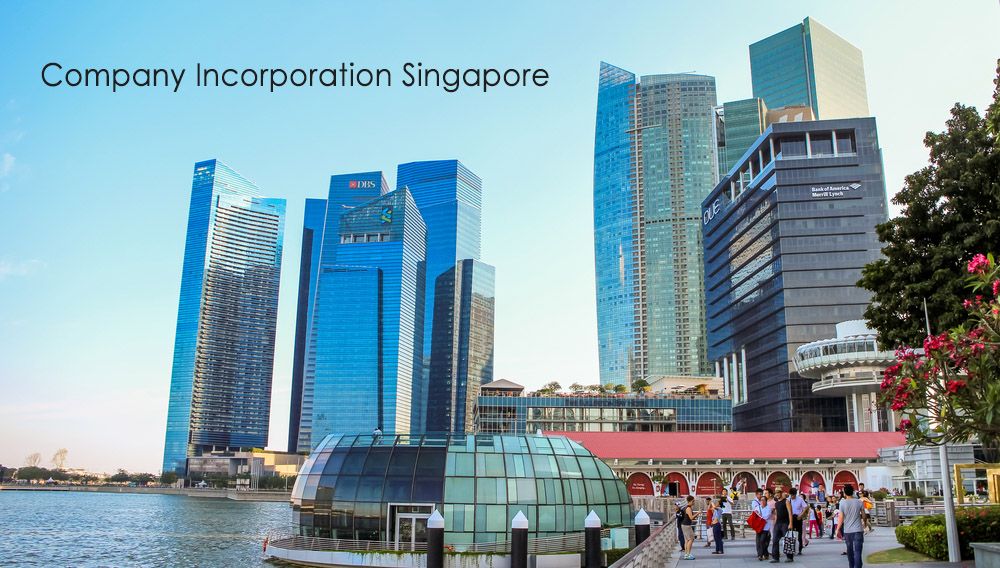
Can an Indian citizen own 100% of a Singapore Pte Ltd?
Yes. Singapore permits 100% foreign shareholding in a private limited company with no local equity requirement. However, the company must appoint at least one ordinarily resident director, which for non-resident Indian founders typically means engaging a nominee director service until the founder relocates on an EntrePass or Employment Pass.
Singapore is not a foreign city for most Indian founders; it is a near-shore extension of the subcontinent’s business map. More than 360,000 people of Indian origin live in Singapore, nearly 9% of the resident population is ethnically Indian, and Tamil is one of the republic’s four official languages.
The India-Singapore Comprehensive Economic Cooperation Agreement (CECA), signed in 2005 and upgraded through its 2018 protocol, gave Indian professionals and capital a structured bridge into ASEAN that no other treaty has since replicated. For a Bengaluru SaaS founder, a Mumbai family office, or a Chennai logistics operator, Singapore is often the first and most logical overseas entity.
The practical case is just as strong as the historical one. Singapore’s headline corporate tax rate sits at 17% against India’s 25% base rate (22% under the concessional regime), with start-up exemptions that can effectively bring the first three years close to single digits.
The country shares roughly the same business day as most of India, separated by only two and a half hours, and direct flights from Delhi, Mumbai, Bengaluru, Hyderabad and Chennai land in under six hours.
Incorporation itself can be completed in one to three business days through ACRA’s BizFile+ portal, while the Monetary Authority of Singapore runs one of the most respected financial regulators in Asia.
This 2026 guide walks Indian nationals through every real-world decision - visa, structure, nominee director obligations, banking, CECA and DTAA mechanics, RBI reporting, and the full cost stack in both SGD and INR.
Why Singapore for Indian Founders
Indian founders rarely choose Singapore in isolation. The realistic comparison set is Dubai, Hong Kong and London, each solving a different problem. The table below grades them on the five criteria Indian founders actually weigh.
| Criterion | Singapore Pte Ltd | UAE Freezone | Hong Kong Ltd | UK Limited |
|---|---|---|---|---|
| Corporate tax (2026) | 17% headline, ~0-8% effective first 3 years with STE | 9% above AED 375K, 0% in qualifying freezones | 8.25% first HKD 2M, 16.5% above | 25% main rate, 19% small profit |
| Personal tax on founder | Progressive 0-24% resident | 0% personal income tax | 2-17% progressive | 20-45% + NIC |
| India tax treaty quality | DTAA + CECA, source-based capital gains post-2016 | Limited DTAA, no CECA equivalent | Narrow DTAA, no ASEAN access | Full DTAA, no regional bloc |
| Banking for Indian non-resident | Medium friction, improving with Aspire/Airwallex | Easy via Emirates NBD, Mashriq | High friction post-2020 | Medium friction, Wise/Revolut ease it |
| ASEAN market access | Primary hub, 10-country bloc | Indirect, via re-export | Declining for ASEAN | None, Commonwealth ties only |
| Visa for founder | EntrePass, EP, Tech.Pass, ONE Pass | Golden Visa, Investor Visa | Limited investor pathway | Innovator Founder, Global Talent |
| Setup time (entity only) | 1-3 business days | 5-10 business days | 5-7 business days | 24 hours |
| Nominee requirement | Yes, resident director mandatory | No (UBO is director) | No | No |
Singapore’s edge is not that it is the cheapest or the fastest; it is that every line of the treaty, tax, banking and visa architecture has been negotiated with India specifically in mind. No other jurisdiction on this list can make that claim.
For a founder whose customers sit across Indonesia, Vietnam, the Philippines and Thailand, Singapore is effectively the only answer. For a founder whose entire revenue is in USD from US customers, a Delaware C-corp or a UK Ltd may still beat it.
Visa and Residency Pathway
Indian passport holders do not enjoy visa-free entry to Singapore. Every traveller from India needs an e-Visa issued in advance, which is usually a two-working-day process through an authorised visa agent or the ICA portal. For founders planning to relocate, Singapore offers a tiered system of work passes that align cleanly with different stages of business maturity.
The EntrePass is the entrepreneur route.
It has no minimum paid-up capital requirement (the old S$50,000 rule was abolished in 2017), but requires a ready-to-operate business plan, at least 30% equity held by the applicant, and one of several supporting qualifications: venture funding from a recognised investor, ownership of registered intellectual property, placement in a government-recognised incubator, or an established track record of business achievement.
EntrePass renewals tighten the bar: by year three the company is expected to have created local jobs, hit annual business spending thresholds, and in most cases generated at least S$100,000 in revenue.
The Employment Pass (EP) is the route most Indian founders actually use once the company has revenue. To qualify, the applicant - including a founder employing themselves - must earn at least S$5,600 per month (S$6,200 in financial services), rising with age and sector to S$10,700+ by the mid-40s, and the company must meet the Complementarity Assessment Framework (COMPASS) points test.
The Tech.Pass sits above the EP and targets senior tech operators with at least US$20,000 monthly salary history. The newest entrant, the ONE Pass (Overseas Networks and Expertise Pass), opens the door for founders with S$30,000 monthly fixed salary or comparable entrepreneurial credentials and grants five-year validity with family benefits.
Permanent Residency is a realistic horizon once a founder has held an EP or EntrePass and paid meaningful Singapore tax for two to three years, with most successful applications approved between year three and year six. PR status removes the nominee director dependency entirely, because the founder themselves becomes the ordinarily resident director the Companies Act requires.
Pte Ltd Structure and the Nominee Director Requirement
This is the single most misunderstood rule for Indian founders evaluating Singapore. Section 145 of the Companies Act requires that every Singapore company have at least one director who is “ordinarily resident in Singapore” - defined as a Singapore citizen, Singapore Permanent Resident, or holder of an EntrePass, Employment Pass or Dependant’s Pass with a letter of consent.
An Indian founder sitting in Bengaluru does not meet this test, which means the company cannot be registered without appointing a nominee director.
Nominee director services are offered by every corporate services firm in Singapore and are entirely legitimate when structured correctly. The nominee is a legal director with fiduciary duties, not a signatory to operational matters.
A properly drafted indemnity deed separates the nominee from commercial, banking and tax decisions, while the Indian founder retains full executive control through a managing director or executive director role.
| Nominee Director Element | Market Standard 2026 | Notes for Indian Founders |
|---|---|---|
| Annual fee | S$1,500 - S$3,000 | Lower end is purely passive, higher end includes AGM support |
| Security deposit | S$2,000 - S$5,000 refundable | Held against indemnity triggers, returned on resignation |
| Indemnity deed | Mandatory | Must exclude operational, banking and tax signatory duties |
| Banking co-signatory | Usually no | Avoid any arrangement where the nominee signs payments |
| Replacement on PR/EP grant | Standard clause | Ensure 30-day exit on founder receiving EP or PR |
| ACRA filings in nominee name | Yes | Founder’s name still appears as UBO in corporate register |
The nominee director is a bridge, not a partner. The moment your EntrePass or EP is approved, you resign the nominee and take over as sole director. Every day beyond that point is unnecessary cost and unnecessary exposure.
Singapore is a single-jurisdiction country, not a federation of freezones. There is no Singapore equivalent of DMCC, IFZA or DIFC. Every Pte Ltd follows the same Companies Act, the same corporate tax regime, and the same ACRA filing rules, regardless of whether it operates in Jurong, Raffles Place or from a virtual office on Orchard Road.
Required Documents for Indian Nationals
ACRA’s BizFile+ portal accepts all incorporation documents digitally, but the KYC pack that corporate service providers assemble before filing is where Indian founders spend most of their preparation time.
Standard documents include a certified copy of the Indian passport, a recent Indian address proof (utility bill, bank statement or Aadhaar with address), a CV or professional background summary, and a declaration on Politically Exposed Person (PEP) status covering the founder and immediate family.
Indian founders do not need to provide an NRIC because one does not exist for them, but the Indian PAN is useful to collect early for two reasons: it is required for any DTAA treaty claim Singapore will make back to India, and it is required for RBI reporting under the LRS or ODI routes. A Form 15CA-CB combination may be needed from the Indian side when remitting the initial paid-up capital.
Corporate shareholders add a layer: certified Certificate of Incorporation, Memorandum and Articles, a recent Certificate of Good Standing, a register of directors and shareholders, and a board resolution authorising the Singapore investment.
Step-by-Step Pte Ltd Formation
- Reserve the company name on BizFile+ - ACRA’s name search is instant and the reservation fee is S$15. The name cannot be identical or confusingly similar to an existing entity, and certain controlled words (bank, finance, academy, clinic) require sectoral approval. Reservation is valid for 120 days.
- File incorporation documents and pay the S$300 fee - BizFile+ processes most applications within 15 minutes to 3 hours. Where the directors or shareholders are corporate entities from India, ACRA may refer the application for manual review, extending the timeline to 2-14 days.
- Appoint the nominee director and sign the indemnity deed - This must happen on or before the day of incorporation because the single resident director requirement applies from minute one. Corporate service providers typically bundle nominee appointment with incorporation.
- Appoint a company secretary within six months - The secretary must also be ordinarily resident in Singapore and qualified under the Companies Act. Most Indian founders outsource this to the same corporate services firm handling the nominee, with fees ranging S$500-1,500 per year.
- Open the corporate bank account - This is the real timeline bottleneck. Traditional banks take 2-8 weeks, digital providers 1-7 days. Start the application on day one of incorporation, not after, because most providers accept the Business Profile from BizFile+ as soon as it is issued.
Entity formation itself is usually complete within 72 hours of starting the process. The full operational stack - entity, nominee, secretary, bank, accounting engagement and GST readiness - realistically takes 4 to 10 weeks.
Banking Realities for Indian Founders
Banking is the single hardest part of the Singapore setup for a non-resident Indian founder, and it is also the area where the market has changed most between 2022 and 2026.
Traditional banks have not relaxed their in-person requirement, but a credible ecosystem of digital-first providers now exists, and the Indian-owned branches in Singapore have quietly become the most pragmatic option for founders with an existing Indian banking relationship.
| Bank | Indian Founder Acceptance | Remote Onboarding | Typical Minimum Balance | Notes |
|---|---|---|---|---|
| DBS Bank | Medium, case-by-case | No, in-person required | S$30,000 | Strongest local network, slowest KYC |
| OCBC | Medium, case-by-case | No, in-person required | S$30,000 | Good for ASEAN cross-border |
| UOB | Medium, case-by-case | No, in-person required | S$30,000 | Competitive for SMEs |
| Aspire | High | Yes, fully remote | S$0 | Digital-first, India KYC friendly |
| Airwallex | High | Yes, fully remote | S$0 | Strong multi-currency, India INR rails |
| Wise Business | High | Yes, fully remote | S$0 | Cheapest FX, limited lending |
| SBI Singapore | High for existing SBI customers | Partial, usually one visit | S$25,000 | Full-service branch, INR familiarity |
| ICICI Bank Singapore | High for existing ICICI customers | Partial | S$25,000 | Strong Indian corridor, trade finance |
| HDFC Bank Singapore | Wholesale-focused | No | Negotiable | Primarily NRI and trade |
Most Indian founders in 2026 run a two-account setup: a digital provider (Aspire, Airwallex or Wise Business) for day-one operations, and a traditional bank (DBS or SBI Singapore) opened in months two to four for institutional credibility, credit facilities and SGX-listed customer mandates.
India-Singapore CECA (2005)
The Comprehensive Economic Cooperation Agreement was India’s first full trade-and-investment treaty with any country and it remains the deepest.
CECA combines a free trade agreement in goods, a liberalisation framework for services, an investment protection chapter, mutual recognition of professional qualifications, and a mobility regime that has moved more than 1,000 Indian IT and technical professionals per year into Singapore.
The 2018 second protocol updated tariff schedules, modernised rules of origin, and aligned CECA with the revised DTAA architecture.
For Indian founders, CECA delivers three tangible benefits. First, it gives Indian professionals and intra-corporate transferees a fast-tracked visa route that complements the standard EP regime. Second, it gives Indian investors contractual protection against unfair treatment under international law, backed by an investor-state dispute mechanism.
Third, it provides tariff concessions on a wide list of goods that matter to mid-market exporters, from textiles to electronics to processed foods. CECA is not a tax treaty - that job belongs to the DTAA - but the two instruments are read together in almost every cross-border planning exercise.
India-Singapore DTAA
The 2016 protocol to the India-Singapore Double Taxation Avoidance Agreement was the single most important tax event for Indian founders using Singapore in the last decade. Before 2016, capital gains on the sale of Indian shares by a Singapore resident were taxable only in Singapore, which because Singapore does not tax most capital gains effectively meant zero tax.
The 2016 revision aligned the DTAA with India’s crackdown on treaty shopping, shifting capital gains from residence-based to source-based taxation with a transitional grandfathering window that closed on 31 March 2019.
| DTAA Category | 2026 Rate | Conditions |
|---|---|---|
| Dividends | 10% (>=25% holding), 15% otherwise | Paid by India-resident company |
| Interest | 10-15% | 15% general, 10% for bank interest with conditions |
| Royalties | 10% | Including equipment rental historically |
| Fees for technical services | 10% | Broad definition, includes consultancy |
| Capital gains on shares | Source-based since April 2017 | Indian shares taxed in India |
| Tax residency tie-breaker | Place of effective management | Critical for dual-qualifying entities |
The treaty still matters enormously because dividends, royalties and technical service fees are where most genuine India-Singapore structures actually earn their tax savings.
A Singapore holding company licensing IP to an Indian operating subsidiary, or receiving technical service fees from an Indian client, benefits from the 10% withholding rate rather than the 20-25% rate that would apply without the treaty.
Indian Regulatory Obligations
Indian residents do not get to ignore RBI and the Income Tax Department just because the company sits in Singapore. Three reporting regimes run in parallel. The Liberalised Remittance Scheme (LRS) caps individual outward remittance at USD 250,000 per financial year, covering equity subscription, loans to the Singapore entity, and maintenance expenses.
Corporates use the Overseas Direct Investment (ODI) route under FEMA, where a resident corporate can invest up to 400% of its net worth subject to RBI Master Direction on Overseas Investment (2022 revision, updated 2024).
Form FC-GPR is filed for inward Indian investment, while Form ODI Part I and Part II cover outbound.
At the individual level, Schedule FA of the Indian tax return requires full disclosure of foreign assets, bank accounts and financial interests held at any point during the financial year, with penalties under the Black Money Act that have reached 10x the undisclosed value plus prosecution in egregious cases.
Every Indian founder running a Singapore entity should assume Schedule FA disclosure applies from day one and should pre-brief their Indian chartered accountant before incorporation rather than after.
Singapore Tax for Indian Founders
Singapore’s tax design flatters new businesses deliberately. The 17% headline corporate tax rate is only the starting point. The Start-up Tax Exemption (STE) exempts 75% of the first S$100,000 of chargeable income and 50% of the next S$100,000 for the first three years of assessment, reducing the effective rate on the first S$200,000 from 17% to roughly 6-8%.
After year three, the partial exemption scheme takes over: 75% of the first S$10,000 and 50% of the next S$190,000 remain exempt, which keeps small and mid-sized companies comfortably below the headline rate.
GST was raised to 9% in January 2024 and remains there in 2026, with registration mandatory once taxable turnover crosses S$1 million. Personal income tax is progressive from 0% to 24%, with residents (183+ days) enjoying the lower brackets and non-residents taxed at a flat 15% or the progressive rate, whichever is higher.
Tax residency for companies rests on either the statutory incorporation test or the common-law test of where the board of directors meets and controls the business. For an Indian founder running the board from Bengaluru, the place-of-effective-management risk is real and is the single most common reason a Singapore entity loses its treaty benefits.
Real Cost Breakdown
Pricing a Singapore Pte Ltd honestly means separating ACRA fees from service fees and counting the nominee director cost, which is the single largest recurring expense in year one. Exchange rates as at Q1 2026 run approximately S$1 = INR 62.
| Cost Item | SGD | INR (approx) | Notes |
|---|---|---|---|
| ACRA name reservation | 15 | 930 | One-time, 120-day validity |
| ACRA incorporation fee | 300 | 18,600 | One-time, government fee |
| Nominee director (year 1) | 1,500 - 3,000 | 93,000 - 186,000 | Recurring annually until EP/PR |
| Nominee security deposit | 2,000 - 5,000 | 124,000 - 310,000 | Refundable |
| Company secretary (year 1) | 500 - 1,500 | 31,000 - 93,000 | Recurring, mandatory |
| Registered office address | 300 - 1,200 | 18,600 - 74,400 | Recurring |
| Accounting and tax filing | 1,200 - 3,000 | 74,400 - 186,000 | Recurring, scales with volume |
| Corporate service provider setup | 800 - 1,800 | 49,600 - 111,600 | One-time bundle |
| GST registration (if needed) | 0 | 0 | Free, compliance costs recur |
| First-year total (mid range) | 8,000 - 12,000 | 496,000 - 744,000 | Excluding bank minimum balance |
This excludes the S$50,000 paid-up capital for EntrePass candidates, which is not a cost but an equity deployment sitting on the balance sheet.
Common Pitfalls Indian Founders Face
Experience across hundreds of Indian founder incorporations surfaces the same mistakes repeatedly. The first is underestimating the nominee director line item. Founders anchor on the S$300 ACRA fee and discover only at closing that the real year-one bill is ten times that amount. The second is expecting a freezone-style structure with ring-fenced tax and regulatory perimeters.
Singapore is a single-zone country; there is no IFZA equivalent and no 0% jurisdiction within its borders.
The third pitfall is banking impatience. Founders who pitch investors with a “Singapore company” on day three and then discover the bank account takes six weeks lose credibility unnecessarily. Start the bank conversation before incorporation is filed.
The fourth is the post-2016 DTAA capital gains misunderstanding - advisers who last studied the treaty in 2014 still sometimes pitch tax-free Indian equity exits that have not been legal for seven years. The fifth is GST blindness: once revenue crosses S$1 million, registration is mandatory within 30 days, and backdated GST on unregistered supplies is painful.
The sixth is Schedule FA and Black Money Act exposure at the individual level. A Singapore directorship and shareholding must appear on the Indian tax return of every resident Indian involved, every year, from the moment of incorporation.
The seventh is place-of-effective-management drift: if every board meeting happens in Bengaluru and every executive decision is signed in India, the Indian tax authorities have a credible argument that the company is actually tax-resident in India regardless of its Singapore incorporation.
Verdict
Singapore is the right answer for an Indian founder when the business is building for ASEAN, when fintech or SaaS treaty architecture matters, when a regional holding company for Southeast Asian subsidiaries is on the roadmap, or when genuine IP and technical service licensing between India and the rest of Asia will run through the entity.
The 17% rate, the STE, CECA mobility, and the DTAA withholding reductions all earn their keep under those conditions.
Singapore is the wrong answer when the business is a lifestyle consultancy earning USD from US clients (Delaware is simpler), when the founder’s tax priority is personal income tax (UAE wins), or when capital markets access and English-law contracts are the priority (London wins).
The decision should be driven by where customers and capital sit, not by where other Indian founders have planted flags.
For those who choose Singapore, the sequence is clear: validate the visa path first, budget the nominee director honestly, start the bank conversation before incorporation, pre-brief the Indian CA on LRS/ODI and Schedule FA, and structure board meetings to defend tax residency. Done properly, the Singapore Pte Ltd is one of the cleanest cross-border vehicles an Indian founder can operate.
FAQ
Can an Indian citizen own 100% of a Singapore Pte Ltd? Yes. Singapore permits 100% foreign shareholding in a private limited company with no local equity requirement. However, the company must appoint at least one ordinarily resident director, which for non-resident Indian founders typically means engaging a nominee director service until the founder relocates on an EntrePass or Employment Pass.
Do Indian founders still benefit from the India-Singapore DTAA after the 2016 protocol? Yes, but the capital gains exemption that defined the treaty until 2016 has been phased out. The revised protocol shifted capital gains taxation from residence-based to source-based, aligning with India’s stance against treaty shopping.
Dividends, interest, royalties and technical service fees remain subject to reduced withholding rates, so the DTAA still delivers meaningful value for genuine operational structures.
How much capital does an Indian founder need for an EntrePass? The EntrePass requires at least S$50,000 in paid-up capital, a viable business plan, and either venture funding, IP ownership, incubator support or recognised business network credentials.
Salary benchmarks, local hiring commitments and business spending thresholds apply at renewal, so founders should plan capital deployment across at least 24 months.
Does the LRS cap of USD 250,000 limit Indian founders incorporating in Singapore? For individuals, yes. The Liberalised Remittance Scheme caps outward remittance at USD 250,000 per financial year per resident individual, covering equity investment and maintenance expenses. Corporates follow the separate Overseas Direct Investment (ODI) route under FEMA with different limits tied to net worth.
Founders usually combine LRS for initial seed equity and ODI once scale requires it.
Can I run my Singapore company from India without travelling? Legally yes, because Singapore allows remote management once the local director requirement is met via a nominee. Practically, banking is the friction point. DBS, OCBC and UOB typically request an in-person meeting, while digital-first providers such as Aspire, Airwallex and Wise Business enable fully remote onboarding.
Most Indian founders plan at least one Singapore visit within the first 90 days to finalise banking and meet compliance partners.
Is Singapore a better base than Dubai or London for an Indian tech founder? Singapore is usually stronger for ASEAN market access, Indian-favourable treaty architecture through CECA, and fintech or SaaS holding structures serving Asia. Dubai wins on personal tax (0% personal income tax vs Singapore’s progressive rate) and speed of freezone setup.
London wins on capital markets depth and English-law familiarity. The right answer depends on where customers, investors and the founder’s own residency plans sit.
For deeper country-level context, see our Singapore jurisdiction overview, company formation hub, corporate tax guide, banking playbook, and visas and residency directory.
Related Corpy Resources
- Singapore business guide for a full overview of doing business in Singapore
- Company formation in Singapore for related articles on this topic
- Corporate tax in Singapore to explore adjacent considerations
- Business laws in Singapore to explore adjacent considerations
- Free zones in Singapore to explore adjacent considerations
How to register a company in India as Pvt Ltd for Indian founders in Singapore?
Indian founders in Singapore register Indian Pvt Ltd through SPICe+ at mca.gov.in for INR 1,000 to 10,000 in government fees plus DSC costs (INR 300 to 500 per director).
Requirements: 2 shareholders, 2 directors (at least one Indian resident, 182+ days Indian presence in prior year - OCI card holders qualify), INR 1 lakh minimum authorized capital (INR 1 paid-up acceptable), Indian registered office in the state of operation. Timeline 3 to 10 business days. Singapore-based Indian founders without OCI need an Indian resident co-director.
Singapore-India tax treaty (revised 2017) prevents double taxation on dividends, interest, royalties, and capital gains - Singapore-India DTAA is among the most founder-friendly with LOB (Limitation on Benefits) provisions. Indian corporate tax: 22% for new regime without exemptions, 25% for turnover up to INR 400 crore, 30% above.
For Singapore-based Indian founders running Singapore Pte Ltd (SGD 315 formation + SGD 1,800 to 3,800/year nominee + secretary + office) plus Indian Pvt Ltd, the combined annual compliance cost is approximately SGD 3,000 to 7,000 + INR 50,000 to 200,000.
The structure is popular for Indian founders targeting both Indian domestic market (through Pvt Ltd) and global customers (through Singapore Pte Ltd as the holding company with favorable 0% to 8.5% effective tax on first SGD 100K to 300K profits).